
Indo Count Industries Ltd's Strategic Resilience Amid U.S. Tariff Challenges
Financial Performance Amid Tariff Pressures
The U.S. tariff regime has undeniably squeezed Indo Count's profitability. A 27.2% decline in net profit in FY25 underscores the immediate impact of these trade barriers. However, the company has prioritized market share retention over short-term margins, adopting a customer-centric approach to renegotiate pricing and terms on a case-by-case basis. This strategy, while eroding near-term profitability, positions Indo Count to maintain long-term relationships in a critical market. Looking ahead, the company anticipates EBITDA margins stabilizing at 15–16%, a range that, while lower than historical averages, reflects disciplined cost management.
Diversification: Brands, Regions, and Revenue Streams
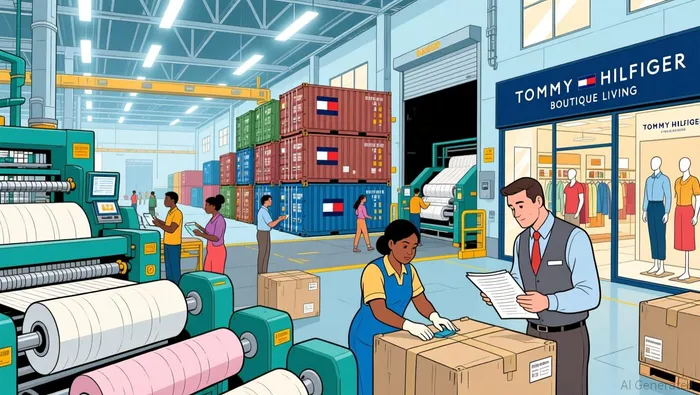
Indo Count's resilience hinges on its aggressive diversification across brands, regions, and product categories. The licensing agreement with Tommy Hilfiger for utility bedding products has already contributed 17% of Q2 revenues, with the segment growing 40% quarter-on-quarter. This partnership, alongside acquisitions of U.S.-based brands like Wamsutta and Modern Home Textiles Inc., has diversified its revenue base and reduced reliance on a single market.
Regionally, the company is leveraging the India-UK Free Trade Agreement to expand its footprint in Europe while fortifying its domestic presence. The addition of 700 new retail counters for Boutique Living and Layers in Q2 FY26 highlights its commitment to capturing India's growing middle-class demand. Meanwhile, greenfield investments-such as a $15 million manufacturing facility in North Carolina-signal a long-term bet on U.S. market access despite current tariffs.
Cost Optimization and Sustainability as Competitive Advantages
Indo Count's cost-optimization measures are equally critical to its medium-term outlook. A debt-to-equity ratio of 0.46x as of March 2024, coupled with unencumbered cash reserves of ₹225.23 crore, provides financial flexibility to fund acquisitions and capital expenditures. The company's sustainability initiatives further enhance its appeal: a 6.2% reduction in emissions in FY24, a solar power plant in Gujarat, and a target to source 60% of materials sustainably by 2030. These efforts align with global ESG trends and could mitigate future regulatory risks.
Balancing Risks and Opportunities
While Indo Count's strategies are robust, investors must weigh ongoing risks. The U.S. tariff environment remains uncertain, and margin pressures could persist until trade policies stabilize. Additionally, the company's reliance on brand acquisitions-such as Wamsutta and Fieldcrest-requires integration expertise to realize synergies.
However, the potential rewards are substantial. The utility bedding and U.S. branded segments are projected to generate $275 million in revenue over three years, while digital transformation partnerships with Accenture aim to boost operational efficiency. For a company with a strong balance sheet and a diversified growth playbook, these factors suggest a compelling medium-term investment case.
Conclusion
Indo Count Industries Ltd exemplifies how strategic foresight can turn external shocks into opportunities. By diversifying its brand portfolio, expanding regionally, and investing in sustainability, the company is insulating itself from U.S. tariff volatility while positioning for long-term growth. For investors willing to navigate near-term margin pressures, Indo Count's disciplined approach and financial strength make it a noteworthy contender in the textile sector.







Comentarios
Aún no hay comentarios