
IndiGo's Global Expansion and Strategic MRO Partnerships: A Catalyst for Aviation Sector Growth and MRO Market Opportunities in Emerging Markets
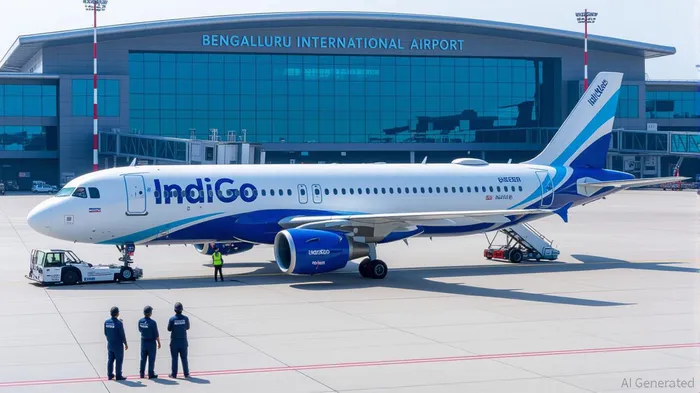
India's aviation sector is undergoing a seismic shift, driven by the aggressive international ambitions of IndiGo, the country's largest low-cost carrier. With a domestic market share of 64.5% as of FY 2025, IndiGo's strategic pivot toward global expansion—coupled with its innovative MRO (Maintenance, Repair, and Overhaul) partnerships—has positioned it as a transformative force in the aviation industry. For investors, the airline's dual focus on fleet modernization and localized infrastructure investments offers a compelling lens to assess emerging market opportunities in aviation and MRO sectors.
IndiGo's Global Expansion: A Strategic Blueprint for Emerging Markets
IndiGo's FY 2025 annual report outlines an ambitious roadmap to increase international capacity from 28% to 40% by 2030. This shift is underpinned by the induction of long-haul aircraft such as the Airbus A321XLR and A350-900, as well as wet-leased BoeingBA-- 787 Dreamliners. The airline has already added 10 new international destinations in 2025, including Manchester, Amsterdam, and Nairobi, with plans to extend its reach to London, Athens, and Hanoi. These routes are not only diversifying IndiGo's revenue streams but also creating downstream demand for MRO services in Southeast Asia, Africa, and the Middle East.
The airline's expansion into underserved markets is particularly significant for emerging economies. For instance, IndiGo's direct flights to Nairobi, Kenya, align with Africa's post-pandemic aviation recovery, where passenger traffic has rebounded to 108% of pre-2019 levels. Similarly, its focus on Southeast Asia—via routes to destinations like Denpasar, Bali—capitalizes on the region's growing middle class and urbanization trends. By leveraging fuel-efficient long-haul aircraft, IndiGo is also addressing the cost barriers that have historically limited low-cost carriers in these regions.
Strategic MRO Partnerships: A Model for Operational Resilience
IndiGo's MRO strategy is a cornerstone of its global ambitions. The airline has adopted a hybrid approach, combining in-house infrastructure investments with global partnerships to ensure operational efficiency. Its 31-acre MRO hub in Bengaluru, expected to reduce turnaround times by 20–30%, is a testament to this strategy. This facility, paired with a 31-acre maintenance hub at Bangalore International Airport, will service both narrow-body and wide-body aircraft, reducing reliance on third-party providers and insulating the airline from supply chain disruptions.
Simultaneously, IndiGo has deepened its partnership with Lufthansa Technik, a global MRO leader, to handle base maintenance for its Airbus A320-family fleet. This collaboration includes services at Lufthansa Technik's facilities in Sofia, Bulgaria, and the Philippines, ensuring access to technical expertise as IndiGo adds nearly one aircraft per week to its fleet. The partnership also extends to single-component maintenance at Lufthansa Technik's Hamburg workshop, further enhancing the airline's ability to manage maintenance costs and downtime.
For investors, these partnerships highlight a broader trend: the importance of localized MRO infrastructure in emerging markets. As IndiGo expands into Southeast Asia, Africa, and the Middle East, its reliance on global MRO networks will likely spur demand for regional MRO providers capable of supporting long-haul operations. This dynamic is already evident in the Middle East, where the MRO market is projected to grow at a CAGR of 5.06% through 2030, driven by fleet expansions and defense aviation investments.
MRO Market Opportunities in Emerging Markets
IndiGo's global expansion is catalyzing MRO demand in three key regions:
Southeast Asia: The airline's focus on long-haul routes to destinations like Hanoi and Denpasar will require localized MRO capabilities to manage maintenance for its A321XLR and A350 fleets. While the text does not explicitly detail partnerships in this region, IndiGo's route expansion suggests opportunities for Southeast Asian MRO providers to collaborate with the airline or its partners.
Africa: IndiGo's Nairobi route, coupled with its A321XLR fleet, could stimulate demand for MRO services in East Africa. The continent's aviation sector is projected to grow despite challenges like political instability and infrastructure gaps, with MRO providers in countries like Kenya and South Africa well-positioned to benefit.
Middle East: IndiGo's strategic alignment with Lufthansa Technik's global MRO network could facilitate its entry into the Middle East, a region where Etihad Airways and Emirates are expanding their fleets. The UAE's investment in defense aviation further underscores the potential for MRO growth in this market.
Financial Resilience and Long-Term Growth
IndiGo's financial strength underpins its ability to execute its expansion plans. With FY 2025 revenue exceeding $10 billion and a net profit of ₹73 billion, the airline has demonstrated resilience amid macroeconomic headwinds, including fuel price volatility and aircraft groundings. Its disciplined capacity growth—adding 13% year-on-year—has allowed it to maintain a cancellation rate of just 1.03%, outperforming industry benchmarks.
Moreover, IndiGo's sustainability initiatives, including a 23% reduction in CO2 emissions per available seat kilometer (ASK) by FY 2030, align with global environmental goals. Over 78% of its fleet consists of next-generation, fuel-efficient aircraft, and its investment in AI-driven tools like “6Eskai” has optimized operational efficiency. These factors enhance the airline's appeal to eco-conscious investors and position it as a leader in the transition to green aviation.
Investment Implications
For investors, IndiGo's strategies offer two key opportunities:
1. Aviation Sector Exposure: IndiGo's international expansion is a bellwether for the broader aviation sector in emerging markets. Airlines in Southeast Asia, Africa, and the Middle East that adopt similar MRO strategies and fleet modernization plans could benefit from IndiGo's market validation.
2. MRO Infrastructure Providers: Companies like Lufthansa Technik, which are already integrated into IndiGo's MRO ecosystem, are well-positioned to capitalize on the airline's growth. Additionally, regional MRO firms in emerging markets with the capacity to support long-haul operations (e.g., Kenya Air Navigation Services, Singapore Technologies Engineering) could see increased demand.
Conclusion: A Win-Win for Investors and Emerging Markets
IndiGo's global expansion and strategic MRO partnerships are not just transforming India's aviation landscape but also creating ripple effects in emerging markets. By combining in-house infrastructure investments with global MRO expertise, the airline is setting a precedent for operational efficiency and cost leadership. For investors, this model underscores the importance of aligning with companies that can navigate the complexities of emerging markets while leveraging technology and sustainability to drive long-term growth.
As IndiGo continues to scale its international operations, its success will likely spur further investment in MRO infrastructure and aviation connectivity across Southeast Asia, Africa, and the Middle East. For those seeking to capitalize on this trend, a diversified portfolio that includes both aviation sector stocks and MRO infrastructure providers offers a compelling path to growth in the years ahead.





Comentarios
Aún no hay comentarios