
Indigenous Partnerships in Mining: A Goldmine for ESG Investors?
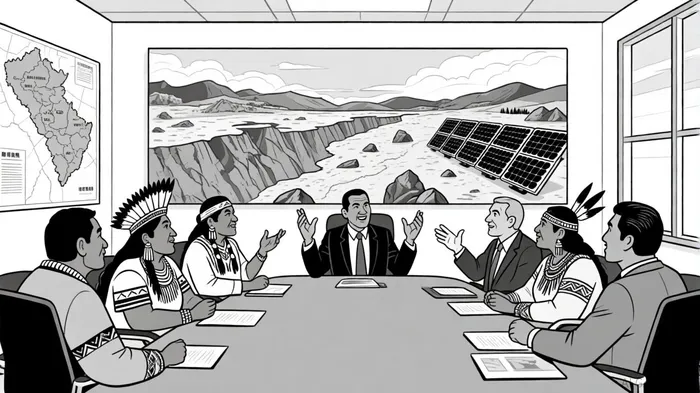
In the high-stakes world of resource exploration, the old playbook of extractive projects with minimal community engagement is crumbling under the weight of ESG scrutiny. Investors are now demanding more than just profit—they want proof of sustainable value creation. And here's where the mining sector is hitting a home run: strategic Indigenous partnerships. These collaborations aren't just ethical checkboxes; they're catalysts for measurable ESG outcomes, , and long-term profitability. Let's break it down.
The Shift from Consultation to Collaboration
Gone are the days when mining companies could get away with token consultations. Today, forward-thinking firms like BHP and Teck Resources are embedding Indigenous knowledge into project planning. , for instance, isn't just a donation—it's a strategic investment in education, employment, and business development, directly tied to the communities where their operations thrive [1]. Similarly, Teck's Cardinal River coal mine in Alberta integrates traditional ecological knowledge into reclamation efforts, ensuring culturally significant plant species are prioritized [1].
This isn't charity—it's . By aligning with the United Nations Declaration on the Rights of Indigenous Peoples (UNDRIP) and the principle of Free, Prior, and Informed Consent (FPIC), companies reduce legal friction and build trust. As one report by notes, “Meaningful collaboration isn't just good for communities—it's a regulatory lifeline in an era of heightened scrutiny” [1].
Measurable ESG Wins: Carbon Cuts and Community Gains
Let's talk numbers. , a critical minerals player, has turned Indigenous partnerships into a competitive edge. , the first Indigenous group in Canada to back a critical minerals project at this scale [2]. This isn't just symbolic—it gives the Indigenous community a board seat and aligns corporate and community interests.
But the real kicker? Canada Nickel's , turning its Crawford Nickel project into one of North America's largest carbon sinks [2]. , and you've got a recipe for ESG excellence [2].
Meanwhile, in Chile offers another blueprint. The Quechua Indigenous Community of Ollagüe holds a 5% free-carried interest and a board seat, ensuring their voice shapes the project's future [3]. In Canada, the 's equity stakes in mining projects have funneled profits into housing and education, building generational wealth [3]. These aren't isolated cases—they're part of a broader trend where Indigenous ownership isn't just tolerated but celebrated.
Investor Confidence: The New GoldNGD-- Standard
Why should investors care? Because these partnerships are and boosting returns. In 2024 alone, Indigenous businesses in Canada generated in economic activity through mining ties [4]. That's not just community development—it's a financial multiplier effect.
Take British Columbia, where 38% of new projects in 2023–2025 required at least 25% Indigenous equity ownership [4]. The province's Hydro Call for Power 2024 mandate? It's a game-changer. By forcing meaningful Indigenous ownership, it's creating a pipeline of projects with built-in social license. And let's not forget the , , fueling larger-scale investments [4].
Data from the also tells a story. , . But companies like Canada Nickel, , are proving that inclusive governance isn't just moral—it's a competitive advantage [5].
The Road Ahead: Equity Over Extraction
The bottom line? Investors who ignore Indigenous partnerships are missing the . These collaborations aren't just about avoiding backlash—they're about creating value. From carbon capture to community reinvestment, the metrics are clear: strategic alliances with Indigenous communities are accelerating the energy transition while delivering sustainable returns.
But there's work to do. As ScienceDirect notes, inconsistencies in ESG reporting and supply chain transparency remain hurdles [5]. The fix? Demand standardized frameworks that hold companies accountable. And for investors? Prioritize projects where Indigenous voices aren't just heard but leading the charge.





Comentarios
Aún no hay comentarios