
Indian Point Nuclear Revival Being Considered — for $10 Billion
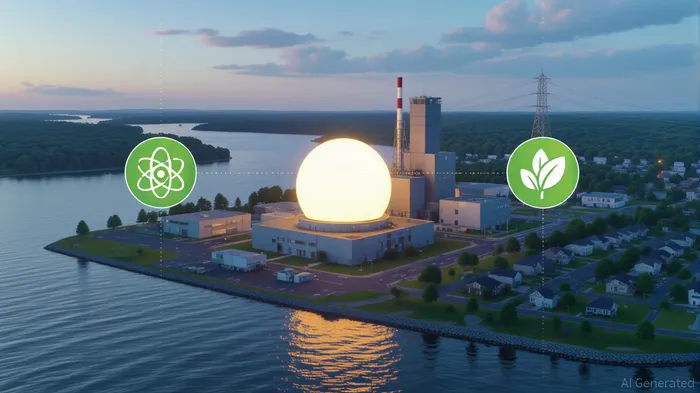
The proposed revival of the shuttered Indian Point Nuclear Generating Station in New York has reignited debates about the role of nuclear energy in balancing decarbonization goals and energy security. With a reported $10 billion investment on the table, the project represents both a high-stakes gamble and a potential cornerstone for New York's clean energy transition. However, its success hinges on navigating technical, regulatory, and public sentiment challenges while aligning with broader U.S. climate and energy strategies.
Strategic Rationale: Nuclear as a Decarbonization Tool
Nuclear energy's low lifecycle carbon emissions—ranging from 4–12 gCO₂e/kWh[1]—position it as a critical complement to renewable energy in achieving net-zero targets. The closure of Indian Point in 2021 removed 2,069 megawatts of zero-emission capacity from New York's grid, forcing the state to rely more heavily on natural gas and contributing to a measurable rise in emissions[2]. Reviving the plant could reverse this trend, offering a stable baseload power source that mitigates the intermittency of wind and solar.
The Prairie Island Nuclear Plant extension in Minnesota provides a relevant case study. By securing operations through 2053, the facility supports Minnesota's 2040 carbon-free electricity goal while generating $335 million annually in GDP[3]. Such models demonstrate how nuclear infrastructure can coexist with renewables, diversifying the energy mix and enhancing grid resilience. For Indian Point, similar outcomes would require infrastructure upgrades, including expanded spent fuel storage and modernized reactor systems, to meet current safety standards[3].
Regulatory and Technical Hurdles
The Nuclear Regulatory Commission (NRC) has signaled openness to extending reactor licenses beyond 60 years, with some permits now allowing operations up to 80 years[4]. This creates a regulatory pathway for Indian Point, though the plant's decommissioning process has already degraded critical components, complicating restart efforts. As noted by site manager Rich Burroni, retraining a reduced workforce and reactivating dormant systems pose significant technical risks[5].
Financially, the $10 billion investment must justify its scale against alternative decarbonization strategies. While the Inflation Reduction Act (IRA) offers tax incentives for nuclear projects, the high upfront costs of reviving a shuttered plant—compared to building new small modular reactors (SMRs) or expanding renewables—remain a point of contention. EDF's strategic reallocation of resources toward domestic nuclear projects in France and the UK highlights the sector's demand for long-term, predictable returns[6], a factor that will test the economic viability of Indian Point.
Energy Security and Geopolitical Context
The U.S. Department of Energy's push to strengthen domestic uranium supply chains adds another layer of urgency to the project[4]. By reducing reliance on foreign uranium imports, which currently account for 95% of U.S. needs[4], Indian Point's revival could bolster energy security amid global geopolitical tensions. This aligns with broader trends, including India's 2025–2026 budget for indigenous SMR development and China's 9-GW reactor fleet expansion[7], underscoring nuclear energy's growing role in national resilience strategies.
However, the plant's location—30 miles from New York City—intensifies public safety concerns. Despite advancements in reactor safety, the dense population surrounding Indian Point makes it a focal point for anti-nuclear activism. Overcoming this opposition will require transparent risk assessments and community engagement, a challenge that has historically derailed similar projects.
Conclusion: A High-Risk, High-Reward Proposition
The Indian Point Nuclear Revival embodies the dual promise and peril of nuclear energy in the 21st century. While its potential to reduce emissions and enhance grid stability aligns with decarbonization and energy security goals, the technical, financial, and political hurdles are formidable. Success would depend on securing regulatory clarity, leveraging IRA incentives, and addressing public concerns through robust stakeholder dialogue.
For investors, the project underscores the need to balance long-term climate imperatives with the realities of capital-intensive infrastructure. As global nuclear capacity grows—from France's EDF partnerships to India's SMR ambitions—the Indian Point case will serve as a litmus test for whether traditional nuclear plants can adapt to a rapidly evolving energy landscape.







Comentarios
Aún no hay comentarios