
Indian Mid-Cap Equities Shine in Q2 2025 Earnings: A Deep Dive into Outperformers and Resilience Drivers
In a year marked by macroeconomic volatility and sector-specific headwinds, India's mid-cap equities have emerged as unexpected stars. The Q2 2025 earnings season revealed a striking concentration of outperformers, with companies like Hindustan Petroleum Corporation, Laurus Labs, and Suzlon Energy posting stratospheric profit growth. These results underscore a broader narrative of operational resilience, strategic repositioning, and sectoral tailwinds that defy conventional market skepticism.
The Outliers: Who Rose to the Occasion?
Hindustan Petroleum Corporation (HINDPETRO.NS) led the pack with a staggering 2,605% year-on-year (YoY) surge in net profit to ₹3,859 crore in the September 2025 quarter according to reports. This performance was fueled by a combination of improved refining margins, disciplined cost management, and a favorable crude oil price differential. Similarly, Laurus Labs, a key player in the generics and contract manufacturing space, reported a 993% YoY jump in net profit to ₹194 crore, driven by robust demand for antiretroviral (ARV) drugs and a 35% YoY revenue increase to ₹1,653 crore according to data.
Suzlon Energy, the renewable energy major, also defied expectations with a 538% YoY profit growth to ₹1,279 crore according to earnings reports, a testament to its recovery from debt restructuring and a surge in order inflows. Meanwhile, APL Apollo Tubes and Bharat Heavy Electricals (BHEL) demonstrated resilience in capital goods and infrastructure, with net profit increases of 460% and 303% YoY, respectively according to market analysis.
Sectoral Tailwinds and Strategic Shifts
The earnings outperformance was not random but rooted in sector-specific dynamics. Energy and materials sectors, in particular, benefited from a confluence of factors. For Hindustan Petroleum, the global energy transition created a unique arbitrage opportunity: lower crude prices in Asia compared to Europe and the U.S. allowed the company to maximize refining margins. Laurus Labs, on the other hand, capitalized on the global demand for affordable ARVs and the growing CDMO (contract development and manufacturing organization) trend, with its CDMO division contributing ₹471 crore in Q2 revenue according to financial reports.
Suzlon Energy's revival highlights the transformative power of debt restructuring. By shedding liabilities and focusing on high-margin wind energy projects, the company positioned itself to capture India's renewable energy boom according to analysts. APL Apollo Tubes, meanwhile, navigated a challenging monsoon season by shifting its product mix toward higher-margin value-added tubes, which now account for 57% of its sales according to company data.
Valuation Metrics: Are These Gains Sustainable?
While the earnings numbers are impressive, valuation metrics offer a nuanced perspective. Hindustan Petroleum's EV/EBITDA ratio stands at 5.60 as of November 2025 according to valuation data, reflecting its strong cash flow generation and low valuation relative to peers. In contrast, BHEL's EV/EBITDA of 56.58 appears elevated, with its stock trading at a 32.9% premium to a calculated fair price of ₹188.85 according to financial analysis. This discrepancy raises questions about whether the market is overestimating BHEL's long-term growth potential in power and railway electrification projects.
Laurus Labs, with an EBITDA margin of 26% according to financial reports, appears undervalued given its CDMO expansion and ARV sales guidance of ₹2,500 crore for FY26. Suzlon Energy's EV/EBITDA of 38.8x according to financial data, however, suggests a premium valuation that may be justified by its renewable energy pipeline but warrants caution.
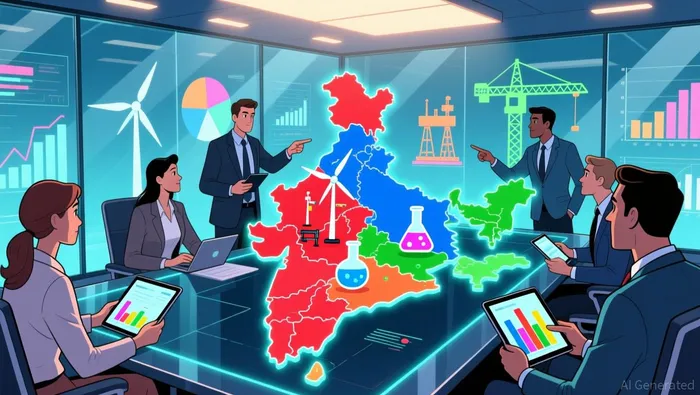
The Road Ahead: Balancing Optimism and Caution
The Q2 2025 results suggest that Indian mid-caps are no longer the "forgotten" segment of the market. However, investors must balance optimism with prudence. For instance, while APL Apollo Tubes' 460% YoY profit growth is commendable according to earnings reports, its EV/EBITDA of 32.7x according to financial analysis indicates a valuation that may not sustain such momentum without further demand in the steel and construction sectors.
The key takeaway is that these outperformers are not isolated cases but part of a broader trend: companies leveraging structural shifts in energy, healthcare, and infrastructure to drive profitability. As global markets grapple with inflation and geopolitical risks, India's mid-cap firms-rooted in domestic demand and export resilience-may offer a compelling risk-reward profile.







Comentarios
Aún no hay comentarios