
India's Urban Development and the Amaravati Model: Strategic Infrastructure and Climate-Resilient Growth as High-Impact Investment Opportunities
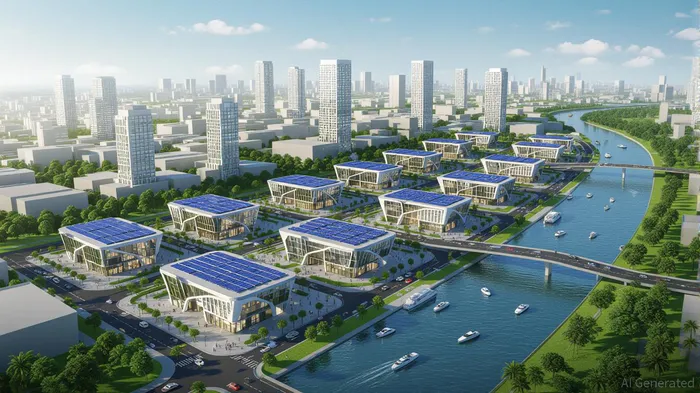
India's urban development narrative is increasingly defined by ambitious projects that blend strategic infrastructure with climate resilience. Among these, the Amaravati Model in Andhra Pradesh stands out as a transformative case study. With a projected investment of Rs 50,000 crore and a completion timeline of 2028, Amaravati is not merely a capital city but a blueprint for sustainable urbanization. This analysis explores how its innovative financial mechanisms, climate-resilient infrastructure, and alignment with India's urbanization goals position it as a high-impact investment opportunity.
Strategic Infrastructure: A Foundation for Growth
Amaravati's development is anchored in a vision to create a modern administrative and economic hub. The city's infrastructure framework includes advanced transportation networks, smart city technologies, and a focus on a knowledge-based economy. According to a report by the Amaravati Development Corporation Limited, 51% of the city's area is allocated to green spaces, ensuring a balance between urbanization and environmental sustainability [2]. This design not only enhances livability but also attracts private sector investment in education, research, and technology sectors [2].
The Indian government's commitment to the project is evident in the 2024 Union Budget, which allocated INR 15,000 crore for Amaravati's development [2]. This funding, combined with state-level investments, underscores the city's strategic importance in India's urbanization agenda. As Andhra Pradesh Chief Minister N. Chandrababu Naidu emphasized, the completion of these projects by 2028 will position Amaravati as a global hub for investment and tourism [2].
Climate-Resilient Strategies: Mitigating Risks, Ensuring Longevity
Climate resilience is a cornerstone of Amaravati's planning. The city's location along the Krishna River necessitates robust flood management systems, including advanced water management infrastructure and green buffers. Recent efforts, such as the translocation of over 4,000 trees to protect green infrastructure, highlight the project's commitment to ecological balance [2]. Additionally, the integration of renewable energy into the city's master plan—such as solar power installations—aligns with India's net-zero goals and reduces long-term operational costs [2].
The use of sustainable materials and smart technologies further enhances Amaravati's resilience. For instance, the city's design incorporates permeable pavements and rainwater harvesting systems to mitigate flooding risks [2]. These measures not only address immediate environmental challenges but also create a scalable model for other Indian cities facing similar vulnerabilities.
Financial Mechanisms: Innovation and Inclusivity
Amaravati's success hinges on its innovative financial models. The voluntary land pooling scheme, where farmers donated 33,000 acres in exchange for developed plots and 10-year lease payments, has been pivotal in accelerating development without displacing communities [1]. This approach not only secured land at minimal cost but also fostered local buy-in, ensuring smoother project execution.
Public-private partnerships (PPPs) are another critical component. By leveraging private sector expertise and capital, the government aims to fast-track infrastructure projects while sharing risks. For example, private developers are expected to play a key role in constructing residential and commercial zones, aligning with the city's goal to attract a knowledge-based economy [2]. The 2024 Union Budget allocation further reinforces this model, signaling confidence in Amaravati's long-term viability [2].
The Investment Case: Why Amaravati Matters
Amaravati's combination of strategic infrastructure, climate resilience, and financial innovation creates a compelling investment case. By 2028, the city is projected to become a major economic hub, attracting private investment in sectors like education, technology, and tourism [2]. The involvement of global investors, coupled with government guarantees, reduces risk while offering high-growth potential.
Moreover, Amaravati's focus on sustainability aligns with global ESG (Environmental, Social, and Governance) investment trends. As climate risks intensify, cities that integrate resilience into their planning—like Amaravati—are likely to outperform traditional urban centers in attracting capital.
Conclusion
The Amaravati Model exemplifies how strategic infrastructure and climate resilience can drive urban growth while offering high-impact investment opportunities. By leveraging innovative financial mechanisms and sustainable practices, Andhra Pradesh is setting a precedent for India's urban future. For investors, Amaravati represents not just a city in the making, but a forward-looking model that balances economic, environmental, and social priorities.







Comentarios
Aún no hay comentarios