
India's Specialty Chemicals and APIs: A Structural Bull Market with Caveats for the Disciplined Investor
The Indian chemical industry, particularly its specialty chemicals and Active Pharmaceutical Ingredients (API) segments, is at an inflection pointIPCX--. Driven by secular tailwinds including domestic demand surges, global supply chain diversification, and government-backed incentives, these sectors are primed for decades of growth. Yet investors must tread carefully: the path to long-term gains is littered with pitfalls like margin volatility and regulatory hurdles. This is a story of structural opportunity—but only for those who prioritize fundamentals over hype.
The Case for Secular Growth
India's specialty chemicals market—accounting for 47% of the domestic chemical sector—is a linchpin of industrial progress. With annual growth of 9-10%, it's being propelled by rising consumption in electronics, automotive, and construction (India's urbanization rate is 35%, rising to 40% by 2030). Agrochemicals alone form a $5.5 billion sub-sector, set to claim 40% of India's total chemical exports by 2040. This isn't just about selling to local farmers; it's about supplying a global market hungry for eco-friendly pesticides and fertilizers.
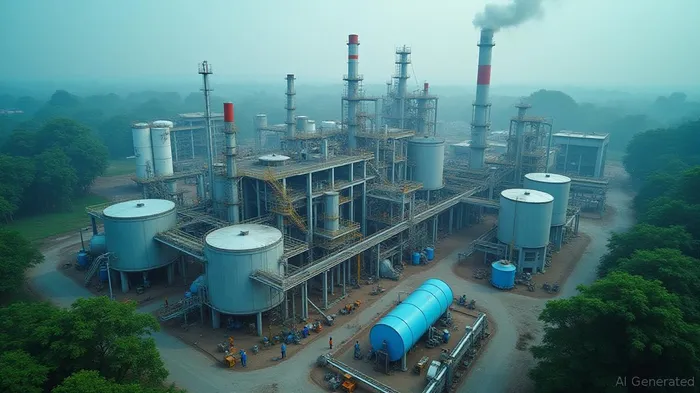
The global supply chain reshuffle is another pillar of this story. Post-pandemic, companies are no longer content relying solely on China for critical chemicals. India's cost competitiveness (wage costs are 40-50% lower than in China for similar sectors), skilled labor, and strategic location are luring multinational firms. Specialty chemicals exports have already surged 20% since 2021, with the U.S., Europe, and Southeast Asia as key buyers. The “China+1” strategy isn't a fad—it's a structural shift.
Government support is turbocharging this momentum. The ₹1.97 lakh crore Production-Linked Incentive (PLI) Scheme for pharmaceuticals and APIs aims to slash India's $10 billion drug import bill while boosting exports. Meanwhile, special economic zones like PCPIRs (Petroleum, Chemicals, and Petrochemicals Investment Regions) are set to attract $420 billion in investments by 2040, streamlining supply chains and reducing logistics costs.
The Dark Side of the Bull Case
Yet here's the catch: valuation discipline is non-negotiable. While the long-term outlook is robust, near-term headwens include:
- Margin pressure: Petrochemicals' EBIT margins collapsed from 24% in 2021 to 8.6% in 2024 due to crude oil volatility and overcapacity. Specialty chemicals have fared better but face similar risks as input costs (e.g., natural gas) fluctuate.
- Regulatory bottlenecks: Environmental clearances for new plants can take years, slowing expansion plans.
- Speculative retail mania: Some stocks have already been bid up on hope. For instance, shows froth in names like Divi's Laboratories, which has surged 150% since 2021 on PLI optimism—yet its debt-to-equity ratio remains a concern.
How to Play It: Quality Over Quantity
Investors must avoid the trap of mistaking secular trends for a free pass. The winners will be firms with:
1. Resilient earnings models: Look for companies with pricing power and exposure to high-margin niches. For example, UPL (agrochemicals) has a 25% gross margin and a $1 billion R&D pipeline for eco-friendly products.
2. Sustainability credentials: Companies like Deepak Nitrite, which has invested in zero-liquid-discharge plants, are better positioned to meet EU and U.S. environmental standards.
3. PLI Scheme beneficiaries: Divi's Laboratories (APIs) and Federal Pharmaceuticals are set to gain from the ₹50 billion PLI fund for bulk drug makers.
Avoid firms with excessive debt or reliance on volatile petrochemicals. Also, watch for execution risks: 19% cost overruns plague many projects in the sector.
Valuation Check: Are We Overpaying?
Even high-quality names aren't immune to overvaluation. Take UPL, which trades at a forward P/E of 24x—above its 5-year average of 18x. Unless it can sustain its 12% annual EBIT growth (a big ask given input costs), this looks rich. Contrast that with Bharat Petroleum, which is trading at 15x forward earnings and has a diversified portfolio (petrochemicals, plastics) but less exposure to margin-pressured segments.
Conclusion: The Long Game Requires Patience
India's specialty chemicals and API sectors are undeniably in a secular growth phase. The $64 billion specialty chemicals market by 2025 and the $10 billion PLI-driven API export target are not pipe dreams—they're backed by real demand and policy muscle. But this is not a “buy everything” story. Success hinges on avoiding overpriced momentum stocks and focusing on firms with:
- Defensible niches (e.g., UPL's agrochemicals, Deepak's green tech)
- Debt discipline and ESG compliance
- Execution capability in project delivery
For now, the sector is a “buy the dip” story. Wait for corrections in frothy names and prioritize companies trading at 10-12x forward earnings with 15%+ ROE. India's chemical renaissance is real—but only for those who stick to the fundamentals.
Data as of Q1 2025. Past performance is not indicative of future results.







Comentarios
Aún no hay comentarios