
India's Semiconductor Surge: How HCL-Foxconn is Redrawing Global Supply Chains
The HCL-Foxconn semiconductor joint venture, approved by India’s cabinet in May 2025, marks a pivotal moment in the global race to secure chip sovereignty. With a total investment of ₹3,706 crore ($435 million), the venture aims to produce 20,000 wafers monthly—enough to fulfill 40% of India’s domestic demand for display driver chips by 2027. This project, nestled near Jewar Airport in Uttar Pradesh’s industrial corridor, is more than a factory; it is a blueprint for India’s ambition to become a semiconductor superpower. 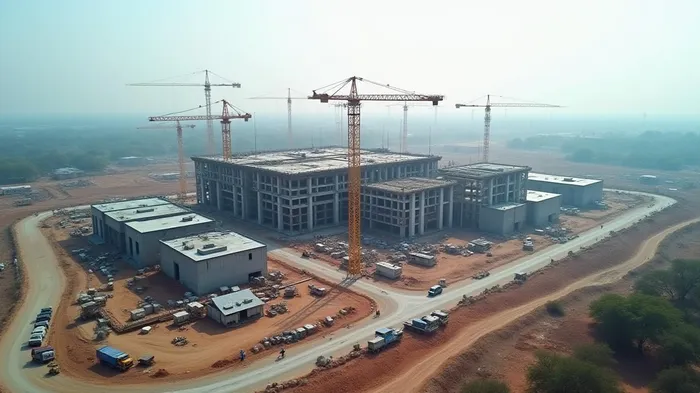
The Strategic Localization Play
India’s Semiconductor Mission, launched in 2021, has already catalyzed $18 billion in committed investments, with HCL-Foxconn being its sixth approved project. The venture leverages two critical pillars:
1. Government subsidies: The Production-Linked Incentive (PLI) scheme offers up to 70% fiscal support for capital expenditure, while Uttar Pradesh added ₹8,500 crore ($100 million) in tax breaks and infrastructure incentives.
2. Strategic partnerships: HCL’s local tech ecosystem expertise and Foxconn’s manufacturing scale form a formidable duo. Foxconn’s 40% stake (via its subsidiary) and HCL’s operational leadership ensure alignment with India’s “Atmanirbhar” (self-reliant) vision.
This model addresses a glaring gap: India imports 90% of its semiconductors. By 2027, the HCL-Foxconn plant alone will reduce that reliance by 15%, setting a template for further localization in advanced nodes like 14nm chips.
Ripple Effects on Global Supply Chains
The venture’s impact extends far beyond India’s borders:
- Chip shortages: Global automakers and electronics firms face recurring shortages due to overconcentration in Taiwan. HCL-Foxconn’s focus on display drivers—a critical component for smartphones, EVs, and IoT devices—directly targets this vulnerability.
- Geopolitical resilience: As the U.S.-China trade war and Taiwan tensions escalate, diversified production hubs like India become non-negotiable. The venture’s OSAT (outsourced semiconductor assembly and testing) model allows it to serve both domestic and export markets, reducing reliance on Taiwan’s foundries.
- Regional tech sovereignty: India’s Semiconductor Mission is not just about manufacturing—it’s about building an ecosystem. The project’s proximity to the Medical Device Park and partnerships with EPC firms like L&T and CTCI signal a holistic approach to supply chain resilience.
Investment Opportunities in the Making
The HCL-Foxconn venture opens doors for investors in three key areas:
1. Indian semiconductor suppliers: Firms like Semiconductor Manufacturing International Corporation (SMIC) and JSW Group (involved in substrate production) stand to benefit from localized demand.
2. Special Economic Zones (SEZs): Real estate in Uttar Pradesh’s Yamuna Expressway Industrial Development Authority (YEIDA) is primed for growth. Land prices in Sector 28, where the plant is located, have risen 20% since 2023.
3. EPC and logistics partners: Firms like Larsen & Toubro (LTI) and CTCI (a Taiwanese EPC giant) are critical to the venture’s execution.
Why Act Now?
The HCL-Foxconn project is not an isolated bet—it’s part of a structural shift. Over 270 Indian academic institutions and 70 startups are now engaged in semiconductor R&D, while global giants like Tata Group ($10.44 billion fab) and Micron ($2.75 billion) are also expanding in India. This momentum is irreversible:
- Market tailwinds: Global chip demand is expected to hit $600 billion by 2030, with EVs alone requiring a 40% increase in semiconductor supply.
- Valuation upside: The venture’s 2,000 jobs and 40% domestic demand capture create a multiplier effect for ancillary industries.
Risks and Mitigations
Critics cite past failures, like Foxconn’s collapsed $19.5 billion venture with Vedanta in 2023. However, the HCL-Foxconn model differs:
- Niche focus: Display drivers are high-demand, lower-risk chips compared to advanced logic nodes.
- Government backing: Unlike Vedanta-Foxconn, this venture benefits from India’s PLI guarantees and land allocation certainty.
Conclusion: A New Semiconductor Order
The HCL-Foxconn joint venture is more than a factory—it’s a geopolitical statement. By 2027, India will no longer be a passive consumer of chips but a key player in reshaping global supply chains. Investors ignoring this shift risk missing out on a decade-defining opportunity. The time to act is now: allocate capital to India’s semiconductor ecosystem before the rest of the world catches on.
The semiconductor sector is at a crossroads. India’s ambition—and the HCL-Foxconn venture—are turning it into a crossroads of opportunity.







Comentarios
Aún no hay comentarios