
India's Russian Oil Dilemma: Navigating Geopolitical Risks and Energy Security in a Fractured Global Market
India's energy landscape in 2025 is a high-stakes chessboard where geopolitical tensions, economic pragmatism, and environmental ambition collide. At the center of this drama lies the country's reliance on Russian crude oil—a lifeline that has saved billions in energy costs but now risks entangling India in a web of U.S. tariffs and EU sanctions. For investors, this dilemma is not just a test of resilience but a goldmine of opportunities in refining, infrastructure, and the green energy transition.
The Russian Oil Gamble: A Double-Edged Sword
Since the Ukraine war, India has become Russia's largest oil customer, importing 36% of its crude in FY25. This surge was fueled by discounts of up to $12 per barrel in 2022–2023, which shrank to $2–$5 by 2025. While these savings have been a boon for Indian refiners, the U.S. has responded with a 50% tariff on Indian goods, citing “illegitimate” Russian oil purchases. The economic toll? Analysts estimate a $11 billion annual hit to India's import bill if it pivots to alternatives like West Asian or U.S. crude.
Yet, India's hands are tied. Russian Urals crude is a medium-sour grade that Indian refineries are optimized to process, unlike the heavier crudes from the Middle East or West Africa. Replacing 1.7–2.0 million barrels per day of Russian oil would require a logistical and financial overhaul. For now, Indian refiners like Reliance Industries and Nayara Energy are hedging their bets, diversifying crude sources while maintaining Russian imports.
Refining the Future: Strategic Infrastructure and Margins
India's refining sector is a powerhouse, with a capacity of 256.8 million metric tons per annum (MMTPA) and ambitions to reach 310 MMTPA by 2030. Reliance's Jamnagar complex, the world's largest refinery, is a case study in adaptability. By leveraging Russian discounts, Reliance has maintained refining margins while exporting refined products to Europe and Asia. However, EU bans on Russian-origin refined products and U.S. tariffs threaten to erode these margins.
The solution? Diversification. Indian refiners are now sourcing crude from the U.S., Iraq, and West Africa, while redirecting exports to Africa and Southeast Asia. This pivot is not without risks—higher freight costs and geopolitical uncertainties—but it underscores India's strategic flexibility. For investors, companies with diversified supply chains and strong export capabilities (e.g., Nayara Energy, Indian Oil Corporation) are prime candidates.
The Green Hydrogen Revolution: A Long-Term Play
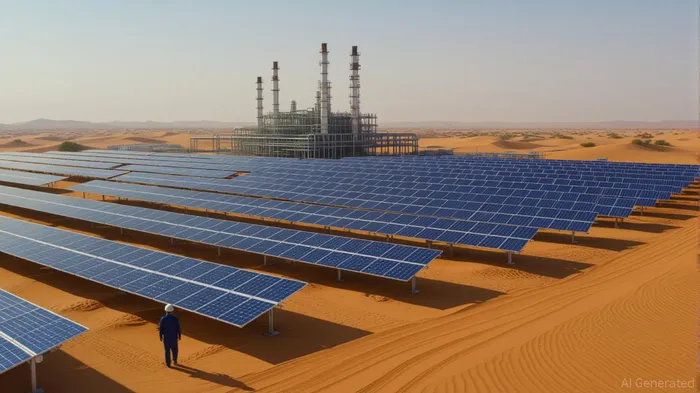
While Russian oil keeps the lights on today, India's future lies in renewables. The country has installed 220 GW of renewable energy by 2025, with solar and wind leading the charge. The National Green Hydrogen Mission, backed by $2.3 billion in funding, aims to produce 5 million tonnes of green hydrogen annually by 2030. This isn't just about reducing carbon emissions—it's about energy independence.
Green hydrogen could displace $11.7 billion in fossil fuel imports and cut 50 million metric tonnes of CO₂ annually. For investors, the green hydrogen value chain—from electrolyzers to storage—offers a compelling long-term play. Reliance's $17.8 billion investment in green hydrogen and Brookfield's $10 billion commitment signal institutional confidence.
Critical Minerals and Battery Storage: The Next Frontier
India's push for electric vehicles (EVs) and renewable integration hinges on securing critical minerals like lithium, cobalt, and nickel. The National Critical Mineral Mission, with a $343 million budget, is a strategic move to reduce reliance on imports. By 2031–32, India aims to deploy 47.23 GW of battery energy storage systems (BESS), a critical enabler for renewable grid stability.
Investors should watch companies involved in mineral exploration and battery manufacturing. The U.S.-India Critical Minerals Partnership and India's partnerships with Guyana for lithium and cobalt are early indicators of a resource-driven energy transition.
Navigating the Risks: A Call for Pragmatism
India's energy strategy is a balancing act. While U.S. tariffs and EU sanctions create short-term volatility, the country's long-term vision is clear: energy self-reliance through a mix of refined infrastructure, diversified imports, and green innovation. For investors, the key is to separate noise from signal.
- Short-Term Risks: U.S. tariffs could disrupt export markets for Indian refiners.
- Long-Term Opportunities: Renewable energy, green hydrogen, and critical minerals offer scalable growth.
- Strategic Sectors: Refiners with diversified supply chains, renewable infrastructure developers, and battery storage firms.
Final Take: The India Play in a Fractured World
India's Russian oil dilemma is a microcosm of global energy politics. But for investors, it's a reminder that crises breed innovation. The country's ability to adapt—whether by refining Russian crude, building green hydrogen hubs, or securing critical minerals—positions it as a linchpin in the new energy order.
The message is clear: bet on India's resilience. As the world grapples with energy insecurity, India's strategic positioning in commodities and emerging markets offers a rare combination of risk mitigation and growth potential. For those with the patience to ride out the geopolitical turbulence, the rewards could be transformative.







Comentarios
Aún no hay comentarios