
India-Russia Nuclear Energy Collaboration: A Strategic Power Play for Energy Security and Geopolitical Resilience
The India-Russia nuclear energy partnership is no longer a footnote in global energy markets-it's a seismic shift with profound implications for investors. As the world grapples with energy transitions and geopolitical realignments, this collaboration is emerging as a linchpin for India's energy security and Russia's economic survival. Let's break down why this is a must-watch for investors in nuclear infrastructure, energy transition, and strategic trade diversification.
The Infrastructure Boom: From Kudankulam to SMRs
India's Kudankulam Nuclear Power Plant (NPP) is the crown jewel of this partnership. With six VVER-1000 reactors under construction, the plant is on track to reach full capacity by 2027, adding 6 GW of baseload power to India's grid according to industry reports. But the real game-changer is the push for Small Modular Reactors (SMRs). Rosatom has already pitched its floating nuclear power solutions to India, and the two nations are eyeing localized production of SMRs to meet India's 100 GW nuclear target by 2047.
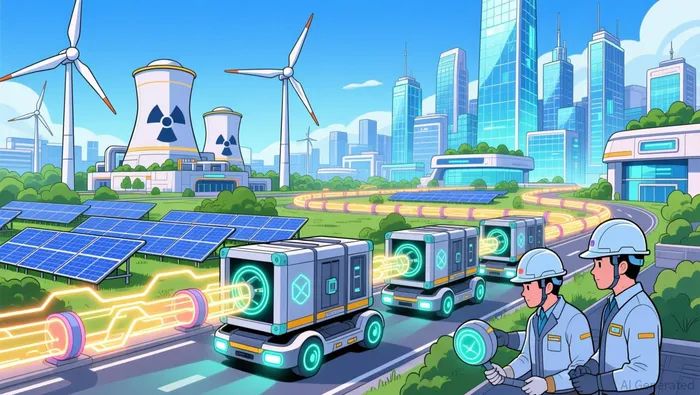 This isn't just about reactors-it's about localization. India and Russia are collaborating to manufacture nuclear equipment domestically, reducing reliance on global supply chains and creating a $200 billion R&D fund for SMR development. For investors, this means a surge in demand for steel, advanced materials, and engineering services, all of which are critical to scaling nuclear infrastructure.
Energy Transition: Nuclear as the Baseload Anchor
India's energy transition is a balancing act. While renewables like solar and wind have boomed-reaching 170 GW of capacity in 2024-intermittency and storage costs remain hurdles according to the IEA. Nuclear energy, with its 24/7 output and low carbon footprint, is stepping in as the unsung hero. By 2040, nuclear's share of India's electricity generation is projected to jump from 3% to 12%, outpacing coal and gas according to industry analysis.
Compare this to coal, which still accounts for 70% of India's power but faces mounting environmental and financial risks. Russian coal imports to India surged 34% in May 2025, but the long-term outlook is murky as India pivots to cleaner energy. Nuclear, by contrast, offers a stable, scalable alternative. With Rosatom's TVC-2M fuel enabling 18-month refueling cycles at Kudankulam, operational efficiency is improving, making nuclear a more attractive ROI proposition.
Geopolitical Trade Shifts: Diversification as a Strategic Imperative
The India-Russia partnership isn't just about energy-it's about economic survival. As U.S. sanctions squeeze Russian oil and gas exports, India has become a critical market. In Q4 2025, bilateral trade is set to surpass $100 billion, driven by defense deals (like the $2 billion nuclear submarine lease) and energy imports. This diversification is a win-win: India secures energy at lower prices, while Russia gains a lifeline to its global economy.
But the stakes go deeper. With the U.S. pressuring India to reduce Russian oil imports, the two nations are doubling down on non-dollar trade. Over 96% of India-Russia transactions now use rupees and rubles, insulating them from Western financial systems. For investors, this signals a shift toward a multipolar trade order, where energy and currency alliances are reshaping global markets.
Risk vs. Reward: Nuclear vs. Renewables
Critics argue that nuclear energy is plagued by high upfront costs and regulatory hurdles. India's nuclear program has historically missed targets due to land acquisition delays and public opposition according to research. However, the government's recent push to open the sector to private players-alongside Rosatom's localization efforts-could mitigate these risks according to industry analysis.
Renewables, while cheaper to deploy, face their own challenges. India's renewable sector is grappling with off-taker risk, where distribution companies owe $9 billion in unpaid bills, and transmission bottlenecks that have stalled 60 GW of capacity according to sector reports. Nuclear, by contrast, offers a more predictable ROI, especially with India's 100 GW target backed by a dedicated Nuclear Energy Mission according to economic analysis.
The Bottom Line: A High-Stakes Bet with Long-Term Payoff
For investors, the India-Russia nuclear collaboration is a high-stakes bet with massive upside. The Kudankulam expansion, SMR localization, and strategic trade diversification are creating a virtuous cycle of demand, innovation, and geopolitical resilience. While risks like regulatory delays and public sentiment persist, the scale of India's energy needs and Russia's technological edge make this partnership a compelling long-term play.
As the 2025 India-Russia summit underscores, this isn't just about reactors-it's about redefining energy security in a fractured world. And for those who can navigate the risks, the rewards could be nuclear.







Comentarios
Aún no hay comentarios