
India's Renewable Energy Transition: NTPC's Revised Costs as a Barometer for Sectoral Investment Risks and Opportunities
India's energy transition is at a pivotal juncture, with renewable energy rapidly outpacing thermal power in cost efficiency and policy favorability. At the heart of this shift is NTPC Limited, India's largest power producer, whose revised cost estimates for thermal projects and aggressive renewable expansion plans offer a critical lens for evaluating sectoral investment risks and opportunities.
NTPC's Thermal Projects: Rising Costs and Strategic Rationale
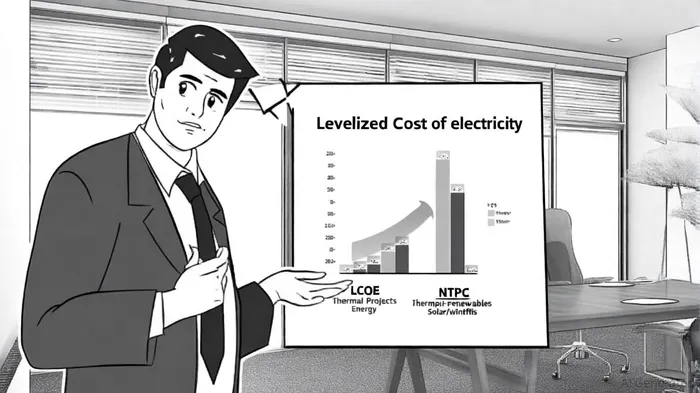
NTPC has revised its thermal capacity addition target to 30,000 MW by 2031-32, up from 26,000 MW by 2030-31[1]. This includes projects like the North Karanpura Super Thermal Power Project (3X660 MW), whose cost has ballooned to ₹21,495.25 crore[2], translating to a levelized cost of approximately ₹3.35/kWh. Such figures underscore the escalating capital intensity of thermal projects, driven by inflation, regulatory delays, and the need for advanced pollution control technologies.
Despite these costs, NTPC's thermal expansion is strategically justified by India's immediate energy security needs. With peak demand expected to exceed 270 GW in 2025[3], coal remains a critical baseload resource. NTPC's focus on enhancing coal production through subsidiaries like NTPC Mining—targeting 67 million tonnes by FY29[4]—further highlights its commitment to fuel security. However, the high upfront costs and long gestation periods of thermal projects pose liquidity risks, particularly as global capital flows increasingly favor decarbonized assets[5].
Renewable Energy: Cost Competitiveness and Policy Tailwinds
Renewable energy, by contrast, is becoming the low-cost leader in India's power mix. Solar tariffs, for instance, have plummeted to ₹2.15/kWh in recent auctions[6], outpacing thermal costs by 37%. Wind energy, though slightly higher at ₹3.42/kWh[6], benefits from stable long-term power purchase agreements (PPAs) and declining technology costs. NTPC's own renewable arm, NTPC Green Energy, aims to add 5,000 MW of capacity in FY26[7], leveraging government incentives like the National Green Hydrogen Mission and revised biomass policies[8].
The financial case for renewables is further strengthened by NTPC's access to diverse funding sources, including an initial public offering (IPO) and external commercial borrowing[9]. With a target of 60 GW of renewable capacity by 2032[10], the company is aligning with India's 50% renewables-by-2030 goal, a target bolstered by a 46% budgetary increase for the Ministry of New and Renewable Energy in 2024-25[11].
Balancing Risks: Thermal's Resilience vs. Renewables' Uncertainties
While renewables offer lower costs and policy tailwinds, they are not without risks. Land acquisition challenges, supply chain vulnerabilities (e.g., reliance on Chinese components), and intermittency issues remain hurdles[12]. NTPC's foray into hybrid projects and battery storage—such as its ₹80,000 crore capex plan for thermal and renewable projects[13]—aims to mitigate these risks, but the upfront capital required could strain its debt-to-equity ratio (currently 1.0x in FY24[14]).
Thermal projects, meanwhile, face existential risks from global decarbonization trends and India's own cross-subsidy reforms, which could reduce billing distortions favoring coal[15]. Yet, their role in ensuring grid stability and meeting peak demand ensures a prolonged relevance, particularly as NTPC diversifies into nuclear and green hydrogen[16].
Strategic Implications for Investors
For investors, NTPC's dual strategy presents a nuanced opportunity. Thermal projects, while capital-intensive, offer stable returns through long-term PPAs and India's energy security imperatives. Renewables, though riskier in execution, benefit from scalable growth and alignment with global ESG trends. The key lies in NTPC's ability to balance these portfolios while navigating regulatory and financial uncertainties.
India Ratings' “IND AAA” credit rating for NTPC Renewable Energy[17] signals confidence in the company's renewable ambitions, but investors must remain vigilant about stranded asset risks in thermal assets. Meanwhile, the government's push for international projects in Sri Lanka, Africa, and Saudi Arabia[18] could unlock new revenue streams, though geopolitical and operational risks in these markets require careful evaluation.
Conclusion
NTPC's revised cost estimates for thermal projects and its renewable energy push encapsulate the broader dynamics of India's energy transition. While thermal power remains a necessary bridge to a cleaner future, renewables are fast becoming the cornerstone of sustainable growth. For investors, the path forward lies in hedging against volatility by diversifying across both sectors while prioritizing projects with strong policy backing and technological innovation.







Comentarios
Aún no hay comentarios