
India-Oman FTA Fuels Export Push, Cuts Tariffs on 98% of Goods
India and Oman have finalized a free trade agreement that eliminates tariffs on the majority of goods and simplifies market access, marking a significant step in New Delhi's broader economic strategy in the Middle East. The pact, inked during a state visit by Prime Minister Narendra Modi, grants India duty-free access to 98% of Oman's tariff lines, spanning key sectors like textiles, pharmaceuticals, and engineering. In return, India has agreed to liberalize tariffs on 77.79% of its products while shielding sensitive sectors such as dairy and gold according to reports.
The trade deal is part of India's efforts to diversify its export destinations amid challenges like Washington's 50% tariffs on Indian goods. This follows a major trade agreement with the UK earlier this year and ongoing negotiations with the European Union. Oman's strategic location near the Strait of Hormuz and its role as a key energy supplier to India further underscore the importance of the partnership according to reports.
India-Oman trade reached $10.6 billion in the 2024–25 fiscal year, with petroleum products and urea accounting for a large share of India's imports. The agreement is expected to boost exports in sectors like machinery, rice, and pharmaceuticals, while Indian firms gain a "strategic gateway" to the Gulf and beyond according to analysts. However, the relatively small size of Oman's economy means the agreement is unlikely to deliver a massive surge in trade volumes according to projections.
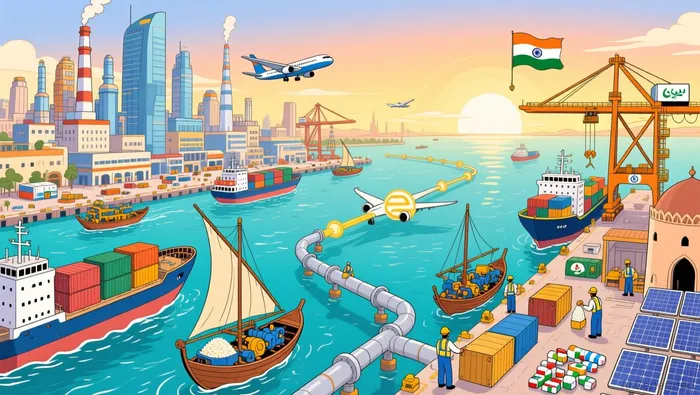
Strategic Economic and Geopolitical Implications
The trade agreement is more than just an economic boost—it is a strategic move to strengthen India's presence in the Gulf. India has already signed a free trade agreement with the UAE and is in talks with other GCC countries. With over 6,000 joint ventures and Indian investments exceeding $7.5 billion in Oman, the deal is also seen as a reinforcement of regional ties according to economic experts.
Oman, for its part, benefits from improved access to Indian energy and industrial inputs. The country is a major supplier of liquefied natural gas to India, and the agreement could streamline supply chains for critical chemical inputs like methyl alcohol and anhydrous ammonia. Omani businesses also gain access to Indian markets through a quota-based system for certain goods according to trade data.
Key Sectors and Exclusions
The FTA excludes sensitive sectors for India, including dairy, gold, silver, and footwear, which are not subject to tariff cuts. This move is intended to protect domestic producers from potential competition. Omani exports to India will face limited tariff concessions under a quota system. For instance, Oman will allow Indian companies to import marble blocks, a product previously banned in the Gulf according to trade reports.
India's Commerce and Industry Minister Piyush Goyal highlighted the potential for collaboration in sectors like textiles, auto components, and renewable energy. He emphasized Oman's role as a gateway to the GCC, Eastern Europe, and Africa. Goyal also noted the importance of expanding cooperation in services like healthcare, education, and tourism according to official statements.
Broader Regional Engagement
Modi's visit also underscores India's broader economic engagement with the Middle East. The government is pursuing a series of FTAs with countries like New Zealand, Chile, and Peru to offset the loss of access to the U.S. market. The India-Oman deal is one of several steps in a long-term strategy to deepen economic and strategic ties in the region according to analysis.
India and Oman have also expanded cooperation beyond trade, including discussions on defense, maritime security, and energy. Indian investments in Oman have grown significantly, particularly in green steel and logistics. The two countries are also exploring joint ventures in renewable energy and infrastructure development according to official sources.
Outlook and Market Impact
While the trade pact is expected to benefit Indian exporters in the long term, its immediate impact on trade volumes will be limited. Omani market access is constrained by its relatively small economy, with a population of about five million and a GDP of $115 billion. Still, the agreement is a strategic move that supports India's goals of diversifying trade and strengthening its economic footprint in the Gulf according to market forecasts.
Experts suggest that the FTA will reinforce existing supply chains rather than create entirely new ones. For instance, many of the chemical inputs imported from Oman already enjoy low tariffs under other trade agreements. This means the CEPA will provide continuity and stability for businesses rather than a radical shift in trade patterns according to industry analysis.
What This Means for Investors
For investors, the India-Oman FTA presents opportunities in sectors like machinery, pharmaceuticals, and renewable energy. Indian firms with a presence in Oman can now benefit from improved market access and streamlined regulatory processes. The agreement also includes provisions for streamlined approval pathways for pharmaceutical products already cleared by U.S., U.K., and EU regulators, similar to India's agreement with the UAE according to regulatory experts.
Omani investors, in turn, gain more access to India's vast market for energy and industrial goods. The investment flows between the two countries, which have already exceeded $7.5 billion, are expected to grow further, particularly in sectors like green hydrogen and logistics according to investment reports.
As India continues to expand its trade partnerships in the Middle East, the Oman deal sets a precedent for future agreements. It demonstrates New Delhi's commitment to building deeper economic ties with key regional partners, even as global trade dynamics shift. With more FTAs in the pipeline, India's economic outreach in the Gulf is set to become more robust and diversified in the coming years according to market analysts.







Comentarios
Aún no hay comentarios