
India's Infrastructure Surge: A 3.8% Growth Signal for Strategic Investors
India’s infrastructure sector has emerged as a cornerstone of the country’s economic revival, with the Index of Eight Core Industries reporting a 3.8% year-on-year rise in March 2025, driven by robust performance in sectors like steel, cement, and electricity. This growth, coupled with ambitious government initiatives, positions India as a compelling destination for infrastructure-linked investments. Let’s dissect the opportunities and challenges for investors.
Sectoral Breakdown: Where the Growth is Hiding
The March data reveals a mixed but encouraging picture across key sectors:
- Coal production rose by 1.6%, sustaining thermal power plants and industrial demand. Cumulative growth of 5.1% over the fiscal year highlights India’s reliance on this resource, even as it transitions to renewables.
- Crude oil and natural gas declined, reflecting global supply chain challenges and shifting energy priorities. This underscores the urgency of India’s push toward renewable energy, which now accounts for 45% of installed capacity.
- Steel and cement stood out, with cement output surging 14.5% year-on-year in January 2025—a direct indicator of construction activity. Meanwhile, refinery products jumped 8.3%, signaling stronger demand for petrochemicals.
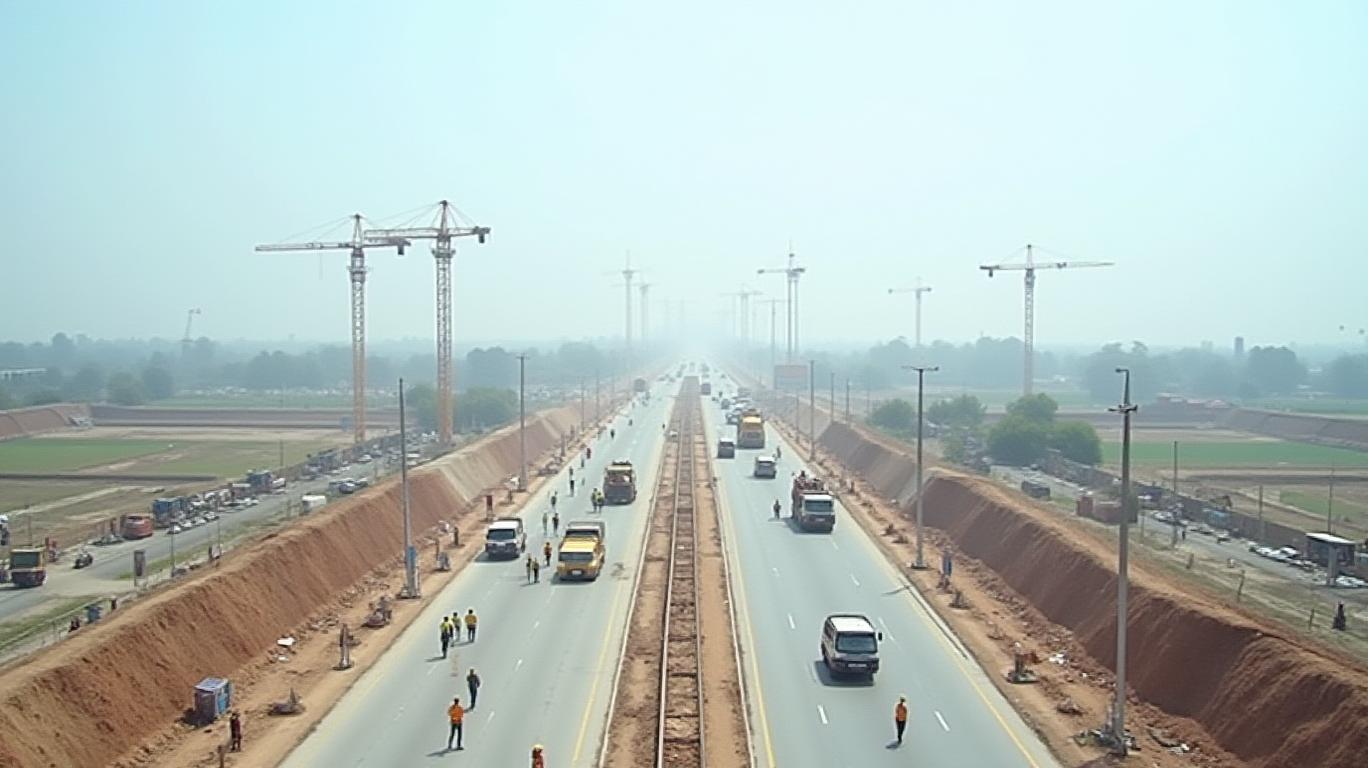
Government Initiatives: The $1.3 Trillion Catalyst
The National Infrastructure Pipeline (NIP) remains central to India’s growth strategy. With $1.9 trillion allocated across 9,142 projects, the pipeline is accelerating investments in:
1. Transportation:
- Railways are prioritizing modernization, including converting 40,000 bogies to Vande Bharat standards.
- Roads and highways received Rs. 2.76 lakh crore ($33.4 billion), funding projects like the Northern Patiala Bypass and 1,026 km of highways in Manipur.
- The Gati Shakti Master Plan aims to integrate logistics, targeting 100 multimodal terminals by 2027 to reduce logistics costs to 8% of GDP from the current 14%.
- Energy and Renewables:
- India is on track to achieve 500 GW of renewables by 2030, with solar allocations increasing to Rs. 8,500 crore ($1.02 billion) in FY2024-25.
Gas infrastructure investments of $67 billion will boost the share of natural gas in the energy mix to 15% by 2030.
Urban Development:
- The Smart Cities Mission and PM Awas Yojana are driving housing construction, with 20 million additional homes planned over five years.
Challenges and Risks
Despite the optimism, risks persist:
- Trade Deficit: Merchandise exports fell 10.9% YoY in February 2025 due to weak global demand, though imports declined 16.3%, narrowing the deficit.
- Inflation: While headline inflation dipped to 3.6%, core inflation rose to 4.1%, signaling persistent cost pressures.
- Funding Gaps: While FDI in construction and real estate reached $26.6 billion and $33.9 billion respectively, the government’s $133.8 billion CAPEX allocation may face execution hurdles in complex regions like the Northeast.
Investment Outlook: Where to Look
The data points to three key themes for investors:
1. Renewables and Green Energy: Companies like Adani Green Energy (ADANIGREEN.NS) and ReNew Power (RENEWPOWER.NS) are well-positioned to capitalize on India’s renewable targets.
2. Logistics and Transportation: Infrastructure firms involved in multimodal terminals (e.g., IRB Infrastructure (IRBINFRA.NS)) and highway projects (e.g., NHAI) could benefit from the NIP’s focus on reducing logistics costs.
3. Urban Development: Real estate and construction stocks linked to affordable housing and smart cities, such as Piramal Realty (PIRAMALRE.NS), may see sustained demand.
Conclusion: A Decade of Infrastructure-Driven Growth
India’s 3.8% infrastructure growth in March 2025 is not just a statistical blip but a harbinger of a long-term trend. With the NIP targeting an 11.4% CAGR in infrastructure spending through 2026 and $100 billion in foreign investments pledged by Saudi Arabia, the sector is poised to catalyze India’s journey toward a $5 trillion economy.
Investors should prioritize firms aligned with government priorities: renewables, logistics integration, and urbanization. While challenges like inflation and execution risks linger, the historically low urban unemployment rate of 6.4% and strong job growth in manufacturing suggest a resilient economy. For those willing to navigate these complexities, India’s infrastructure boom offers a rare opportunity to profit from a structural transformation.
As the 35 Multimodal Logistics Parks (valued at $5.5 billion) and 500 GW renewable capacity goals take shape, now is the time to position for a decade of growth. The question is not if, but which companies will lead the charge.
Data sources: Ministry of Statistics & Programme Implementation, Interim Budget 2024-25, Government of India policy documents.







Comentarios
Aún no hay comentarios