
India's HPCL Boosts Vizag Refinery Capacity by 20%: A Step Towards Energy Transition
Generado por agente de IACyrus Cole
lunes, 10 de febrero de 2025, 10:17 pm ET2 min de lectura
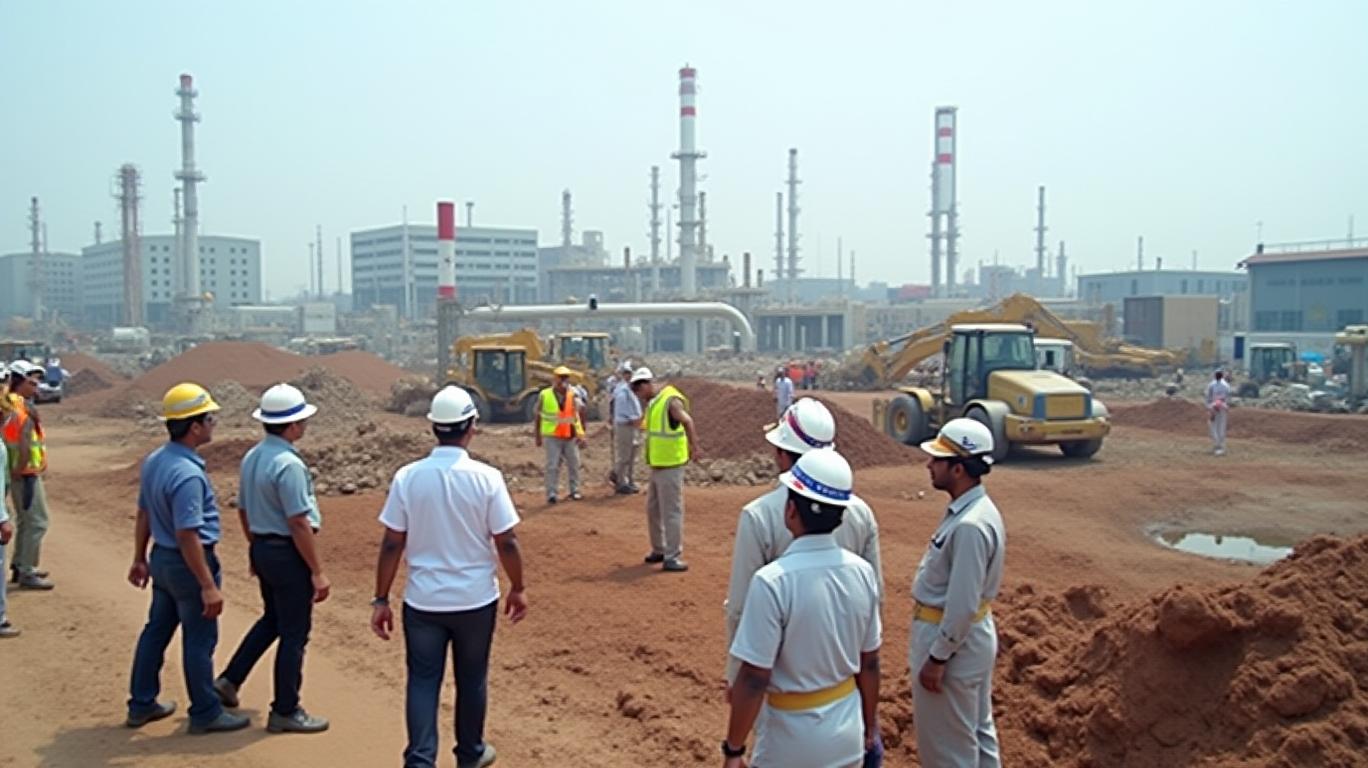
India's state-owned Hindustan Petroleum Corporation Limited (HPCL) has announced plans to raise the capacity of its Vizag oil refinery by as much as 20%. This expansion, set to be completed by June 2023, will significantly enhance HPCL's crude processing capabilities and contribute to India's broader energy transition goals. The project, valued at Rs 20,000 crore, aims to increase the refinery's capacity from 8.33 million metric tonnes per annum (MMTPA) to 15 MMTPA.
The Vizag refinery modernization project (VRMP) involves the construction of various process and utility units, including a 9 MMTPA crude distillation unit, LPG and off-gas treating units, a hydrogen generation unit, and a highly energy-efficient 9 MMTPA crude distillation unit. These units will enable the refinery to produce BS-VI compliant fuel products, increase refining capacity, and improve distillate yields.
The expansion project also includes the construction of a 3.5 MMTPA hydrocracker, a sulphur recovery unit, and a residue hydrocracker, which will help upgrade heavier feeds into value-added fuels such as jet fuel, gasoline, and diesel. Additionally, HPCL plans to be the first Indian refiner to start an electrolyser with a capacity of 370 tpy in two months, which will help produce green hydrogen for the Vizag refinery.
The increased capacity at the Vizag refinery will have several implications for India's crude oil import dynamics, considering the current global geopolitical tensions and supply chain disruptions. The expansion will enable HPCL to process more crude oil, leading to an increase in crude imports. To mitigate the risks associated with relying on a single source of crude oil, HPCL will need to diversify its crude sources. This diversification will help India manage its dependence on global markets and potential supply disruptions.
Moreover, the increased crude oil imports may have an impact on India's trade balance, as the country will need to spend more foreign exchange to meet its crude oil requirements. To ensure energy security, India may need to build up its strategic petroleum reserves (SPR) to mitigate the risks associated with increased dependence on global crude oil markets.
The planned expansion aligns with India's broader energy transition goals, particularly its commitment to reducing greenhouse gas emissions and promoting cleaner fuels. The increased production of BS-VI compliant fuel, improved distillate yields, and green hydrogen production will help reduce emissions from the transportation sector and contribute to India's climate change mitigation efforts.
In conclusion, HPCL's plans to raise the Vizag refinery capacity by 20% is a significant step towards India's energy transition goals. The expansion will enhance HPCL's crude processing capabilities, contribute to India's crude oil import dynamics, and support the country's commitment to reducing greenhouse gas emissions and promoting cleaner fuels. As India continues to diversify its energy mix and transition towards a low-carbon economy, investments in modernizing and expanding refineries like the Vizag refinery will play a crucial role in achieving its energy and climate goals.



Divulgación editorial y transparencia de la IA: Ainvest News utiliza tecnología avanzada de Modelos de Lenguaje Largo (LLM) para sintetizar y analizar datos de mercado en tiempo real. Para garantizar los más altos estándares de integridad, cada artículo se somete a un riguroso proceso de verificación con participación humana.
Mientras la IA asiste en el procesamiento de datos y la redacción inicial, un miembro editorial profesional de Ainvest revisa, verifica y aprueba de forma independiente todo el contenido para garantizar su precisión y cumplimiento con los estándares editoriales de Ainvest Fintech Inc. Esta supervisión humana está diseñada para mitigar las alucinaciones de la IA y garantizar el contexto financiero.
Advertencia sobre inversiones: Este contenido se proporciona únicamente con fines informativos y no constituye asesoramiento profesional de inversión, legal o financiero. Los mercados conllevan riesgos inherentes. Se recomienda a los usuarios que realicen una investigación independiente o consulten a un asesor financiero certificado antes de tomar cualquier decisión. Ainvest Fintech Inc. se exime de toda responsabilidad por las acciones tomadas con base en esta información. ¿Encontró un error? Reportar un problema




Comentarios
Aún no hay comentarios