
India-France HAMMER JV: Cash Flow Sustainability and Compliance Risk Assessment
The 2025-2026 defense budget reflects this strategic shift, growing 9.53% to $78.3 billion overall. Crucially, 26.4% of the total budget funds new acquisitions, with a large majority – 75% – now earmarked for domestic procurement to boost self-reliance. This significant allocation tilt toward local industry creates a complex dynamic: while providing guaranteed near-term demand for the BEL-Safran JV, it may also constrain the volume of HAMMER orders if budgetary resources get redirected to other indigenous platforms competing for the same funding pool.
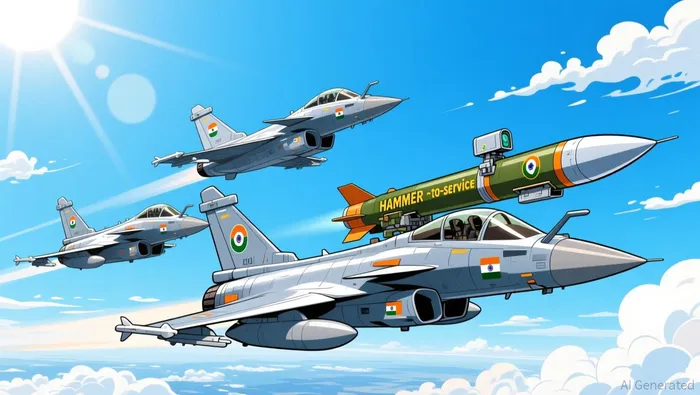
The tight coupling between geopolitical urgency, ambitious production targets, and the domestic procurement mandate means cash flow for the JV is highly sensitive to budget execution. Any delays in meeting the ₹3 trillion production goal or shifts in allocation priorities within the acquisition budget could directly impact the project's revenue trajectory.
Cash Flow Execution Risks
India's defense production surge has strained supply chains and working capital buffers. Production jumped 174% since 2014-15 to ₹1.27 trillion in FY 2023-24-a 10% annualized growth rate that outpaced supplier capacity. Delays in component deliveries, particularly for advanced electronics and precision machining, have compressed cash conversion cycles. Companies report receivables stretching to 120 days while payables remain due in 60 days, creating liquidity gaps that force reliance on short-term debt.
The $93 million U.S. Javelin missile deal introduces budgetary uncertainty through hybrid procurement terms. While accelerating capability gaps, the agreement requires U.S. oversight of Indian production processes. This regulatory friction could divert funds from the HAMMER joint venture if compliance costs exceed projections. The UK's parallel £350 million Martlet deal further signals Western pressure on procurement autonomy, potentially forcing reallocations from domestic R&D programs.
Working capital depletion compounds these risks. With export growth targets at ₹50,000 crore by 2029, firms face competing demands for inventory expansion and technology licensing fees. The defense budget's 40% real-term growth since 2013-14 provides runway, but sudden compliance costs or delivery delays could trigger covenant breaches in private manufacturers already operating on thin margins.
Regulatory & Execution Headwinds
The 50:50 BEL-Safran JV for the HAMMER missile lays the groundwork for India's 60% indigenization target by 2029, but regulatory and operational hurdles could derail progress. Local sourcing bottlenecks for sub-assemblies remain a significant risk; the JV's phased production plan relies heavily on building domestic capabilities, but delays in scaling local suppliers could push back the timeline for meeting the 60% indigenization mandate. Compounding this is incomplete documentation evidence, suggesting potential deficiencies in export control compliance under regimes like EAR/ITAR, which could trigger shipment delays or legal challenges if not resolved.
Budgetary shifts toward domestic production create additional pressure. While aligned with national goals, the focus on local manufacturing strains working capital, especially as export targets ($7.2 billion/₹50,000 crore by 2029) outpace current acquisition funding streams. This imbalance risks liquidity crunches during the critical indigenization phase, where upfront investment in local suppliers and R&D may exceed revenue generation. Even with strong order momentum, any delay in resolving sourcing bottlenecks or compliance gaps could force revisions to timelines, directly impacting the JV's ability to meet both the 60% local content goal and the aggressive export targets. The path to full indigenization remains contingent on overcoming these operational and regulatory frictions without compromising cash flow stability.







Comentarios
Aún no hay comentarios