
India's Evolving Crypto Ecosystem and Policy Outlook
India's cryptocurrency landscape is a paradox: a nation of 1.4 billion people, teeming with tech-savvy entrepreneurs and a $4.5 billion crypto asset pool, yet shackled by regulatory hesitation and punitive taxation. This tension between innovation and caution is shaping a unique investment environment where political adoption and regulatory delays are both barriers and catalysts for crypto infrastructure and fintech.
The Regulatory Hesitation: A Double-Edged Sword
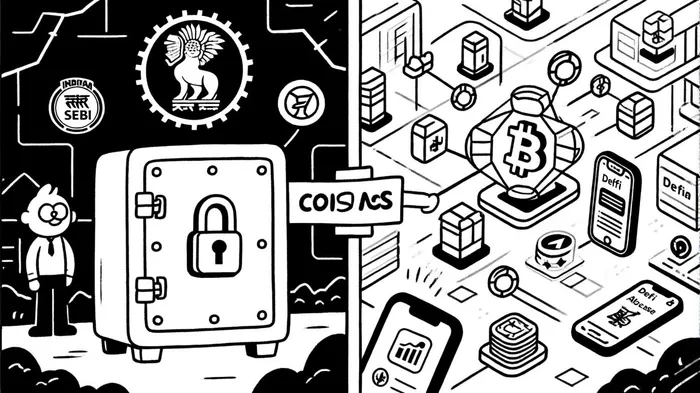
India's approach to crypto has been defined by caution. The Reserve Bank of India (RBI), under Governor Shaktikanta Das, has repeatedly warned of the systemic risks posed by digital assets, arguing that regulation could inadvertently legitimize a market it fears will spiral beyond control. This has led to a deliberate delay in passing a comprehensive legislative framework, with policymakers opting instead for partial oversight and a 30% tax on crypto gains—a rate that has stifled formal financial interactions between banks and the sector.
The result? A fragmented ecosystem where private investment thrives but institutional participation is stifled. According to a report by Mitrade, India's crypto holdings exceed $4.5 billion, yet banks remain hesitant to engage due to legal ambiguities. This creates a vacuum where informal capital flows dominate, but scalability and trust remain elusive.
The COINS Act: A Glimpse of Clarity
Enter the COINS Act 2025, a privately drafted model law proposed by Hashed Emergent and Black Dot. This initiative aims to transform India's crypto regulatory landscape by introducing the Crypto Assets Regulatory Authority (CARA) and aligning with global standards. Key features include:
- Self-custody rights for virtual digital assets (VDAs), reducing reliance on third-party custodians.
- Tax reforms, eliminating the 30% levy and 1% TDS on crypto transactions.
- A Strategic Bitcoin Reserve, overseen by Parliament, to stabilize the market.
The COINS Act is positioned as a “rights-first” roadmap, addressing the current “regulatory minefield” and aiming to reverse the offshoring of Indian crypto talent. If adopted, it could unlock investment in decentralized finance (DeFi) and blockchain infrastructure, particularly in a market where 70% of crypto users are under 35.
Geopolitical Leverage: Easing Chinese Investment
While crypto remains contentious, India is simultaneously recalibrating its foreign investment policies. NITI Aayog, the country's top think tank, has proposed easing restrictions on Chinese firms investing in Indian companies, relaxing security clearances for stakes up to 24%. This move, aimed at improving post-2020 border clash relations, could indirectly benefit crypto infrastructure by attracting foreign capital into India's tech ecosystem.
The interplay between these policies—strict domestic crypto regulation and open foreign investment—is creating a hybrid environment. Investors must navigate a landscape where geopolitical pragmatism and regulatory conservatism coexist, offering both risks and opportunities.
Investment Opportunities in the Gray Zone
For investors, India's crypto ecosystem presents a high-risk, high-reward scenario. The delay in formal regulation has created a “wild west” atmosphere, where startups like CoinDCX and WazirX have flourished despite legal uncertainties. However, the lack of clarity also means that infrastructure projects—such as blockchain-based payment gateways or DeFi protocols—face execution risks.
The COINS Act, if passed, could catalyze a surge in institutional interest. By reducing tax burdens and establishing CARA, it would provide a framework for venture capital and private equity to fund innovation in areas like cross-border remittances (a $100 billion market) and tokenized real estate.
Conclusion: Navigating the Transition
India's crypto policy is in a transitional phase, balancing between risk aversion and the potential for growth. For investors, the key lies in hedging against regulatory uncertainty while capitalizing on the COINS Act's potential to unlock a $100 billion market. The next 12–18 months will be critical: if the COINS Act gains traction, India could emerge as a crypto innovation hub. If not, the current stalemate may force further offshoring of talent and capital.
In this evolving landscape, patience and agility will be the twin virtues for those seeking to profit from India's crypto renaissance.
Source:
[1] India's Caution: Crypto Framework Delayed Over Systemic Risk [https://www.mitrade.com/au/insights/news/live-news/article-3-1113377-20250911]
[2] COINS Act 2025 Offers a 'Rights-First' Roadmap [https://cryptoadventure.com/indias-crypto-crossroads-coins-act-2025-offers-a-rights-first-roadmap/]
[3] India's Crypto Tax Policies: A Barrier to Innovation? [https://www.onesafe.io/blog/indias-crypto-tax-policies-barrier-to-innovation]
[5] COINS Act Model Law to Guide India's Crypto Regulation [https://cointelegraph.com/news/coins-act-india-crypto-model-law]
[6] India's Top Think Tank Recommends Easing Investment Rules for Chinese Firms [https://www.reuters.com/world/china/indias-top-think-tank-recommends-easing-investment-rules-chinese-firms-sources-2025-07-18/]






Comentarios
Aún no hay comentarios