
India's Equity Market at a Crossroads: Navigating U.S. Tariff Risks and Fed Policy Uncertainty
In the second quarter of 2025, India's equity market found itself at a pivotal juncture, caught between the dual pressures of U.S. tariff threats and the Federal Reserve's uncertain policy path. While the S&P 500 surged to record highs, the iShares MSCI IndiaINDA-- ETF (INDA) eked out a modest 1.6% gain year-to-date, underscoring the fragility of investor sentiment in a high-uncertainty environment. For emerging market investors, the challenge lies in balancing India's long-term growth potential with its exposure to geopolitical and macroeconomic headwinds.
The U.S. Tariff Overhang: A Double-Edged Sword
The U.S. has maintained a reciprocal tariff of 26% on Indian exports since April 2025, a rate set to remain in effect until August 1, 2025. This punitive measure, part of broader trade tensions under President Donald Trump's administration, targets India's trade surplus and its reliance on U.S. markets for key sectors like textiles, chemicals, and pharmaceuticals. Deloitte's analysis suggests that a sustained 28.2% effective tariff could reduce India's trade surplus with the U.S. by up to 30% and shave 0.1–0.3% off GDP growth in FY 2025–26.
However, India's economic resilience lies in its diversified export basket and its role as a manufacturing alternative to China. Multinational firms, including AppleAAPL-- and AmazonAMZN--, have accelerated production shifts to India, drawn by its low labor costs and supply chain flexibility. This “reshoring” trend has benefited sectors like automotive and electronics, though companies like Tata Motors face margin pressures from delayed U.S. market access.
Fed Policy: A Tailwind or Headwind?
The Federal Reserve's policy trajectory adds another layer of complexity. In its June 2025 projections, the FOMC signaled a median real GDP growth of 1.4% for 2025, with a federal funds rate expected to trend downward to 3.9% by year-end. While a dovish shift could boost capital inflows into emerging markets, the Fed's cautious approach to rate cuts—median projections of 3.6% for 2026—means liquidity support may arrive too late to offset near-term volatility.
India's currency, the rupee, has fluctuated between 84.30 and 86.44 against the dollar in 2025, reflecting divergent monetary policies and trade uncertainties. A Fed easing cycle, expected to begin in late 2025, could weaken the dollar and strengthen the rupee, benefiting Indian exporters but increasing import costs. Investors must also contend with the risk of a “stagflationary” scenario, where persistent U.S. inflation and protectionist policies force the Fed to maintain higher rates for longer.
Strategic Positioning for Emerging Market Investors
Sectoral Diversification and Selectivity
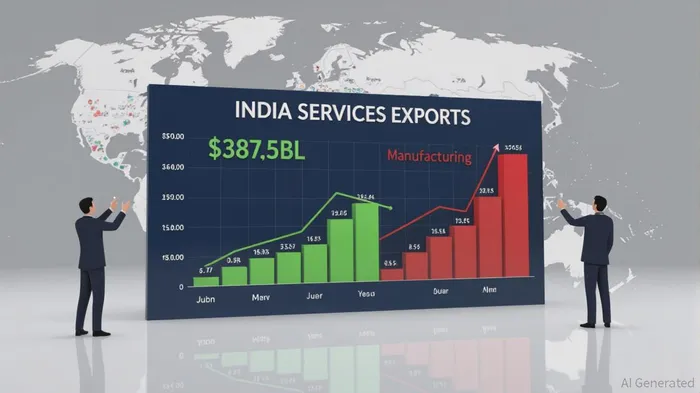
Investors should prioritize sectors with tariff immunity and strong domestic demand. India's IT services and pharmaceuticals sectors—exempt from U.S. tariffs—have outperformed, with companies like Tata Consultancy Services and Sun Pharmaceutical Industries demonstrating resilience. Meanwhile, manufacturing and automotive firms with dual sourcing capabilities (e.g., Maruti Suzuki, Bajaj Auto) offer hedged exposure to global supply chains.Currency and Hedging Strategies
Given the rupee's volatility, investors should consider partial hedging against dollar strength, particularly in trade-exposed sectors. Unhedged exposure via ETFs like the iShares India 50 (INDY) has outperformed hedged alternatives like the WisdomTreeWT-- India Hedged Equity Fund (INDH) by 3% over six months, but aggressive hedging is unnecessary unless tariffs are reinstated.Leveraging Policy Catalysts
The resolution of U.S.-India trade negotiations—targeting tariffs below 20%—could unlock growth in export sectors like chemicals and apparel. A mid-2025 Fed rate cut would likely trigger fresh capital inflows, pushing the rupee below 83.50 and boosting equity valuations in dollar terms. Investors should monitor these catalysts closely.
Conclusion: A Paradox of Risk and Opportunity
India's equity market remains a paradox: vulnerable to global trade tensions yet resilient due to its services-led economy and demographic dividend. For emerging market investors, the key is to adopt a disciplined, long-term approach. Allocate 2–3% to INDY with a target entry below $29.50, and maintain a balanced portfolio that includes short-term debt and gold to hedge against macroeconomic shocks. While valuations may appear stretched, India's growth story—anchored by supply chain diversification and a robust retail investor base—offers compelling rewards for those willing to navigate the crossroads of uncertainty.





Comentarios
Aún no hay comentarios