
India's Energy Security and the Strategic Case for Nuclear Infrastructure Expansion
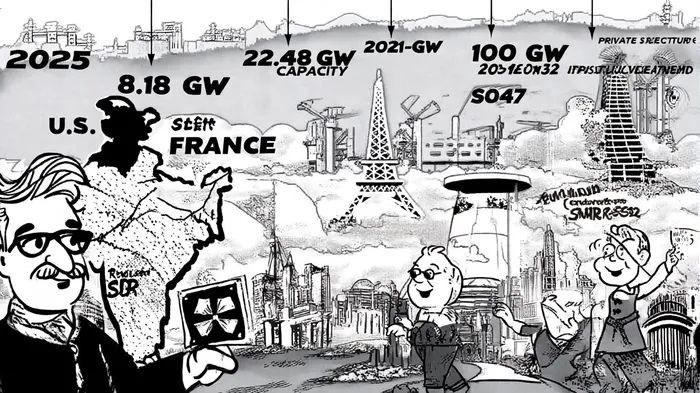
India's nuclear energy sector is undergoing a transformative phase, driven by a confluence of policy reforms, technological innovation, and strategic international partnerships. For institutional investors, this represents a compelling long-term opportunity to engage with a market poised to scale from 8.18 GW of current capacity to 100 GW by 2047[1]. The government's Nuclear Energy Mission for Viksit Bharat has laid out a clear roadmap, allocating ₹20,000 crore ($240 million) for Small Modular Reactor (SMR) research and development, with a goal of operationalizing five indigenously designed SMRs by 2033[2]. These reactors, including the 200 MWe Bharat SMR and high-temperature gas-cooled reactors, are tailored for industrial applications such as hydrogen production and repurposing retired coal plants[3].
Policy Reforms and Investor-Friendly Frameworks
A critical enabler of this expansion is the proposed amendment to India's Civil Liability for Nuclear Damage Act, which will cap supplier liability and align the country's legal framework with international norms[4]. This shift addresses a long-standing barrier to foreign participation, as U.S. firms like General Electric and Westinghouse have historically hesitated to enter the Indian market due to unlimited liability risks[5]. The government is also liberalizing the sector by allowing private companies—such as Tata Power and Vedanta—to operate reactors under a public-private partnership (PPP) model, where private entities provide land and capital while the Nuclear Power Corporation of India Limited (NPCIL) manages safety and operations[6].
Strategic Partnerships and Supply Chain Resilience
India's nuclear ambitions are underpinned by a multi-alignment foreign policy, with key partnerships including the U.S.-India Initiative on Critical and Emerging Technology (iCET) and the India-France Special Task Force on Civil Nuclear Energy[7]. These collaborations focus on technology transfer for SMRs, advanced reactor designs, and critical mineral supply chains. For instance, the U.S. Department of Energy has authorized Holtec International to transfer SMR technology to Indian firms like Larsen & Toubro, while France and India have signed a Declaration of Intent to jointly develop Advanced Modular Reactors (AMRs)[8]. Such partnerships not only diversify India's reactor technology portfolio but also mitigate geopolitical risks in uranium supply chains, which currently rely on imports from Uzbekistan, Canada, and Kazakhstan[9].
Financial and Operational Challenges
Despite these strides, challenges persist. India's domestic supplier base for advanced reactor technologies remains underdeveloped, necessitating a National Quality Upgradation Programme to meet international standards[10]. Cybersecurity vulnerabilities in nuclear infrastructure also demand urgent attention, as highlighted by foreign vendors flagging gaps in India's supplier ecosystem[11]. Additionally, the high upfront costs of SMRs—estimated at $180 billion in total infrastructure financing by 2047[12]—require innovative financing models, including green bonds and public-private partnerships.
The Investment Thesis
For institutional investors, the strategic case for nuclear infrastructure in India hinges on three pillars:
1. Energy Security: Nuclear power is central to India's goal of achieving 500 GW of non-fossil fuel-based energy by 2030[13].
2. Technological Leadership: Indigenous SMR and BSR development positions India to export reactor technology and expertise in the Global South.
3. Supply Chain Diversification: India's push to localize uranium processing and expand its Nuclear Fuel Complex's capacity to 600 tons of uranium dioxide annually[14] creates opportunities in critical minerals and fuel fabrication.
Conclusion
India's nuclear energy expansion is not merely a domestic energy strategy but a global investment opportunity. By addressing regulatory, financial, and technological hurdles, the country is positioning itself as a leader in clean energy innovation. For institutional investors, the window to engage with this high-growth sector—through reactor technology providers, supply chain participants, and infrastructure developers—is both timely and strategically aligned with long-term decarbonization goals.







Comentarios
Aún no hay comentarios