
India's Energy Infrastructure and Renewable Expansion: A Strategic Investment Opportunity in 2025
Policy Reforms and Project Rationalization: Clearing the Path for Growth
The Indian government has taken decisive steps to address bottlenecks in renewable energy deployment. A critical move involves reviewing 42 GW of stalled projects lacking power purchase agreements (PPAs), a measure aimed at streamlining the pipeline and reducing grid congestion, according to an Electronics Forum report. This reflects a broader effort to align project execution with India's 2030 clean energy goals. However, challenges persist, particularly for financially strained state distribution companies (discoms), which struggle to commit to renewable power without robust energy storage solutions, as the same Electronics Forum report notes.
Regional Partnerships: Hydropower as a Strategic Pillar
India's energy diplomacy has gained momentum, particularly in the Himalayan region. The inauguration of Bhutan's 1,020-megawatt Punatsangchhu-II hydroelectric project in 2025 marks a milestone in India-Bhutan collaboration, according to a Financial Express report. This project, part of five Indian-backed hydropower initiatives generating nearly 3,000 megawatts, underscores India's strategic pivot to secure clean energy while countering China's growing influence in the region, as noted in a Global Diplomacy analysis. A ₹4,000 crore ($455 million) line of credit extended to Bhutan further solidifies this partnership, according to a Business World article. Private Indian firms like Adani and Tata Power are also deepening ties, with Adani Power planning a 570 MW Wangchhu hydroelectric project to begin construction by mid-2026, as Financial Express reported.
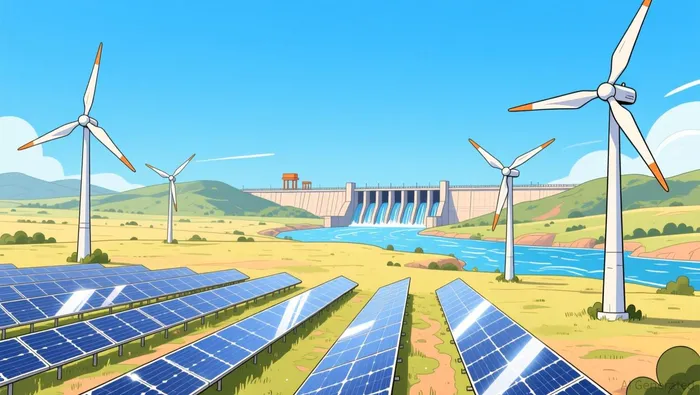
Investment Momentum: Clean Energy Dominates the Sector
India's energy infrastructure is attracting record investments, with 83% of power sector funding in 2024 directed toward clean energy, according to the IEA India report. Development finance institutions (DFIs) contributed $2.4 billion in 2024, propelling non-fossil power generation to 44% of total capacity-a figure expected to rise to 50% by 2030, per the IEA India report. Foreign direct investment (FDI) in the energy sector reached $5 billion in 2023, as noted in the IEA India report, while the government's INR 320 billion ($3.8 billion) allocation for four pumped-storage hydropower plants in July 2025 highlights its commitment to grid stability, as described in a Solaris Energy Infrastructure investor presentation.
Infrastructure Projects: Scaling Solar and Storage
Rajasthan has emerged as a clean energy powerhouse, with the Rajasthan Electricity Regulatory Commission (RERC) finalizing a 2025-26 roadmap prioritizing solar and renewable expansion, as a Solar Quarter report notes. Key initiatives include captive solar projects for industries (up to 200% of connected load) and battery storage integration to address intermittency, as the same Solar Quarter report details. On the national front, PTC India and NLC India Renewables have formed a joint venture to develop 2,000 MW of green energy projects, blending solar, wind, hydro, and storage, as reported in a PSU Watch update. Meanwhile, NTPC's plan to develop 20 GW of hydropower by 2032, with 3–5 GW expected by 2032, underscores the sector's long-term potential, as noted in the Solaris Energy Infrastructure investor presentation.
Challenges and Risks: Navigating the Hurdles
Despite the optimism, investors must remain cautious. High capital costs for renewables in India-compared to advanced economies-and unpaid discom dues exceeding $9 billion as of March 2025, as noted in the IEA India report, pose significant risks. Additionally, the success of cross-border projects like those in Bhutan hinges on geopolitical stability and regulatory alignment.
Conclusion: A Golden Opportunity for Strategic Investors
India's energy transition is not merely a domestic imperative but a global opportunity. With policy clarity, cross-border partnerships, and a surge in clean energy investments, the sector offers a unique blend of scale, resilience, and growth. For investors, the key lies in aligning with projects that address both technical and financial gaps-such as storage solutions and PPA guarantees-while leveraging India's strategic regional alliances. As the nation charts its path to 500 GW of renewables, the time to act is now.







Comentarios
Aún no hay comentarios