
India's Disinflationary Trend: A Strategic Opportunity for Monetary Easing and Equity Gains
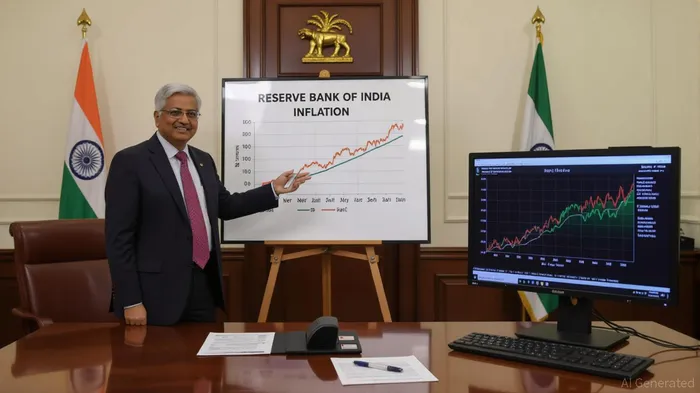
India's economy is navigating a historic disinflationary phase, with headline inflation plummeting to 1.55% in July 2025—the lowest since June 2017. This nine-month decline, driven by collapsing food prices and favorable monsoon conditions, has created a unique window for the Reserve Bank of India (RBI) to recalibrate its monetary policy. As the central bank balances inflation control with growth support, investors are presented with compelling opportunities in equities and debt markets.
The Disinflationary Tailwinds
The current inflationary environment is a product of both structural and cyclical factors. Food inflation, a critical component of the Consumer Price Index (CPI), has dived to -1.76% year-on-year, the lowest since January 2019. This is attributed to robust agricultural output, including a record kharif sowing season, and buffer stock interventions that have stabilized prices for staples like pulses, vegetables, and cereals. Rural and urban headline inflation have eased to 1.18% and 2.05%, respectively, reflecting a broad-based cooling in essential goods.
The RBI's revised inflation forecast of 3.1% for fiscal year 2026 (down from 3.7%) underscores confidence in this trend. However, the central bank has warned of a potential rebound in Q4 2026 and Q1 2027, driven by base effects and global trade pressures, including U.S. tariffs on Indian goods. This duality—benign near-term inflation and looming risks—has positioned the RBI to adopt a flexible, data-driven approach.
RBI's Policy Flexibility and Market Implications
The RBI's August 2025 Monetary Policy Committee (MPC) meeting reaffirmed a neutral stance, maintaining the repo rate at 5.5%. While the central bank paused rate cuts, it emphasized its readiness to ease further if inflation remains subdued and growth pressures persist. The cumulative 100-basis-point cuts since February 2025 have already begun to stimulate credit flow, with banks reporting improved loan disbursement in sectors like housing and consumer durables.
For investors, this policy flexibility translates into two key opportunities:
1. Equity Market Gains: Lower borrowing costs and accommodative liquidity are fueling demand for rate-sensitive sectors such as banking, real estate, and automobiles. The Nifty 50 index has already reflected this optimism, with banking stocks outperforming due to declining deposit rates and expanding credit growth.
2. Debt Market Stability: A pause in rate cuts has stabilized bond yields, making long-duration instruments attractive. Investors are advised to adopt a barbell strategy, combining short-term instruments for liquidity and long-term bonds for yield. Corporate bonds and structured debt instruments (SDIs) are particularly compelling in this low-interest-rate environment.
Strategic Sectors for Equity Exposure
The disinflationary backdrop favors sectors poised to benefit from monetary easing and domestic demand resilience:
- Banking: With deposit rates declining and credit growth accelerating, banks with strong retail portfolios are well-positioned to capitalize on lower funding costs.
- Consumer Durables: A surge in disposable income due to falling inflation is boosting demand for automobiles, electronics, and home appliances.
- Real Estate: Easier access to financing and stable interest rates are driving affordability, particularly in affordable housing and commercial real estate.
However, investors must remain cautious about external risks, such as U.S. tariffs on Indian goods, which could dampen export-driven sectors. Diversification across sectors and geographies is recommended to mitigate these headwinds.
Debt Market Opportunities
The RBI's neutral stance has created a favorable environment for debt investors:
- Government Bonds: With inflation expectations tempered, 10-year government bond yields have stabilized around 6.2%, offering a safe-haven yield.
- Corporate Bonds: High-grade corporate bonds are trading at attractive spreads, reflecting strong credit fundamentals and low default risks.
- Structured Debt Instruments (SDIs): These instruments, which combine fixed and floating rate components, provide a hedge against potential rate volatility.
Conclusion: Balancing Caution and Opportunity
India's disinflationary trend, while temporary, has provided the RBI with the flexibility to support growth through monetary easing. For investors, this translates into a strategic opportunity to overweight equities in sectors benefiting from lower borrowing costs and to adopt a balanced approach in debt markets. However, the path forward is not without risks—global trade tensions and potential inflationary rebounds in late 2026 must be monitored closely.
As the RBI prepares for its next policy meeting in September 2025, investors should remain agile, leveraging the current benign inflation environment while hedging against macroeconomic uncertainties. The key lies in aligning portfolios with sectors and instruments that can thrive in a low-inflation, growth-supportive regime.







Comentarios
Aún no hay comentarios