
India's Bourbon Whisky Tariff Slash: A Boon or Bane for Local Industry?
Generado por agente de IAWesley Park
viernes, 14 de febrero de 2025, 9:35 am ET3 min de lectura
AIG--
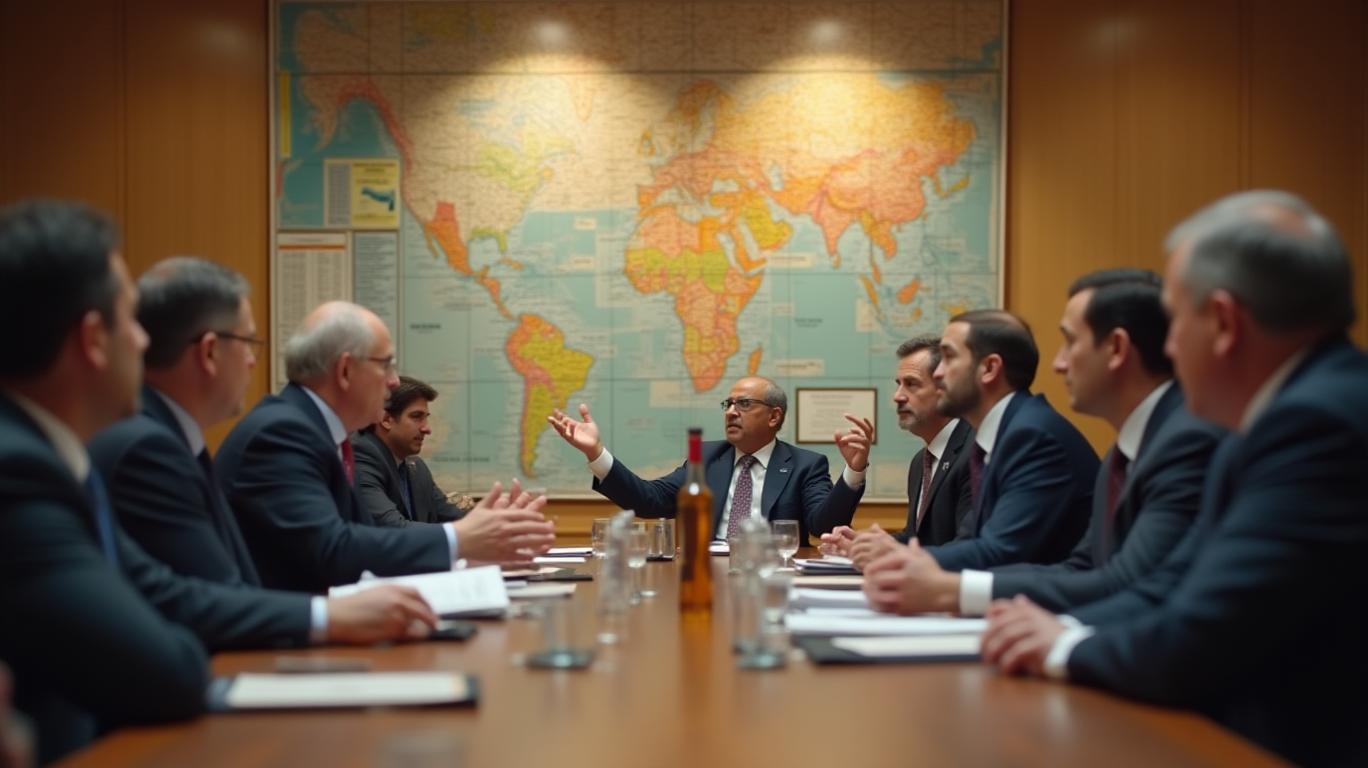
India's decision to slash tariffs on imported bourbon whisky has sparked both excitement and concern among industry players. The move, aimed at boosting trade relations with the United States, could have significant economic and political implications for both countries. But what does this mean for the domestic Indian spirits industry, particularly in terms of competition and potential displacement of local brands?
Economic Implications for India
The reduction in tariffs on American whiskey could lead to increased imports, benefiting U.S. distillers and potentially displacing some locally produced brands. According to the Distilled Spirits Council, India is the world's largest market for all whiskies by volume, and Scotch whisky sales in India rose by 93% in 2022 to £282 million (US$340.2m). A tariff reduction could further boost these numbers, benefiting American whiskey producers and potentially displacing some locally produced brands.
However, there are concerns that overseas distillers with bottling units in India might not invest in fresh capacity or may even reduce their existing capacity, negatively impacting employment in the industry. The Times of India reported that even a US$1 difference in the Minimum Import Price (MIP) could trigger a significant increase in the shipments of popular Scotch imports, potentially leading to job displacement in the domestic industry.
Moreover, a reduction in tariffs could lead to a loss of revenue for the Indian government. However, this could be offset by increased economic activity and job creation in the broader economy.
Political Implications for the United States
For the United States, a tariff reduction on American whiskey exports to India could have several political implications. A reduction in tariffs would likely lead to an increase in exports of American whiskey to India, benefiting American distillers and the broader economy. According to the Distilled Spirits Council, American whiskeys account for 63% of all U.S. spirits exports, and a tariff reduction could further boost these numbers.
A tariff reduction could also help alleviate some of the trade tensions between the United States and India. However, it is important to note that Trump has alternately said he sees import taxes as a tool to force concessions on issues such as immigration, but also as a source of revenue to help close the government's budget deficit. A tariff reduction could potentially complicate these negotiations.
Impact on the Domestic Indian Spirits Industry
The reduction of India's 150% tariff on imported spirits to 75% or even lower could significantly impact the domestic Indian spirits industry, particularly in terms of competition and potential displacement of local brands. A lower tariff would make imported spirits more affordable, intensifying competition with locally produced brands. For instance, Diageo, the world's largest spirits producer, has stated that a 7.5% reduction in consumer prices could be achieved if the tariff is halved (Source: "Consumers in India could enjoy a 7.5% reduction in spirits prices should the region’s 150% tariff laws be halved, Diageo said."). This could make imported brands more attractive to Indian consumers, increasing their market share and potentially displacing local brands.
The increased competition from imported brands could lead to a reduction in market share for local brands. For example, The Times of India reported that even a US$1 difference in the Minimum Import Price (MIP) – from US$5 to US$4 – could trigger a significant increase in the shipments of popular Scotch imports such as Johnnie Walker Black Label, Chivas Regal, and The Glenlivet into India (Source: "The Times of India has reported that there are fears that overseas distillers with bottling units in India might not invest in fresh capacity and may even reduce their existing capacity, negatively impacting employment in the industry."). This could lead to a displacement of several homegrown brands and Indian Made Foreign Liquor (IMFL) products.
The increased competition and potential displacement of local brands could also negatively impact employment in the domestic spirits industry. The Times of India reported that overseas distillers with bottling units in India might not invest in fresh capacity and may even reduce their existing capacity, negatively impacting employment in the industry (Source: "The Times of India has reported that there are fears that overseas distillers with bottling units in India might not invest in fresh capacity and may even reduce their existing capacity, negatively impacting employment in the industry.").
In conclusion, a reduction in India's tariff on imported spirits could significantly impact the domestic Indian spirits industry, leading to increased competition, potential displacement of local brands, and negative effects on employment and investment. While it could boost trade relations between India and the United States, it is crucial for the Indian government to consider the potential consequences for the domestic industry and take appropriate measures to mitigate any negative impacts.
DEO--
India's decision to slash tariffs on imported bourbon whisky has sparked both excitement and concern among industry players. The move, aimed at boosting trade relations with the United States, could have significant economic and political implications for both countries. But what does this mean for the domestic Indian spirits industry, particularly in terms of competition and potential displacement of local brands?
Economic Implications for India
The reduction in tariffs on American whiskey could lead to increased imports, benefiting U.S. distillers and potentially displacing some locally produced brands. According to the Distilled Spirits Council, India is the world's largest market for all whiskies by volume, and Scotch whisky sales in India rose by 93% in 2022 to £282 million (US$340.2m). A tariff reduction could further boost these numbers, benefiting American whiskey producers and potentially displacing some locally produced brands.
However, there are concerns that overseas distillers with bottling units in India might not invest in fresh capacity or may even reduce their existing capacity, negatively impacting employment in the industry. The Times of India reported that even a US$1 difference in the Minimum Import Price (MIP) could trigger a significant increase in the shipments of popular Scotch imports, potentially leading to job displacement in the domestic industry.
Moreover, a reduction in tariffs could lead to a loss of revenue for the Indian government. However, this could be offset by increased economic activity and job creation in the broader economy.
Political Implications for the United States
For the United States, a tariff reduction on American whiskey exports to India could have several political implications. A reduction in tariffs would likely lead to an increase in exports of American whiskey to India, benefiting American distillers and the broader economy. According to the Distilled Spirits Council, American whiskeys account for 63% of all U.S. spirits exports, and a tariff reduction could further boost these numbers.
A tariff reduction could also help alleviate some of the trade tensions between the United States and India. However, it is important to note that Trump has alternately said he sees import taxes as a tool to force concessions on issues such as immigration, but also as a source of revenue to help close the government's budget deficit. A tariff reduction could potentially complicate these negotiations.
Impact on the Domestic Indian Spirits Industry
The reduction of India's 150% tariff on imported spirits to 75% or even lower could significantly impact the domestic Indian spirits industry, particularly in terms of competition and potential displacement of local brands. A lower tariff would make imported spirits more affordable, intensifying competition with locally produced brands. For instance, Diageo, the world's largest spirits producer, has stated that a 7.5% reduction in consumer prices could be achieved if the tariff is halved (Source: "Consumers in India could enjoy a 7.5% reduction in spirits prices should the region’s 150% tariff laws be halved, Diageo said."). This could make imported brands more attractive to Indian consumers, increasing their market share and potentially displacing local brands.
The increased competition from imported brands could lead to a reduction in market share for local brands. For example, The Times of India reported that even a US$1 difference in the Minimum Import Price (MIP) – from US$5 to US$4 – could trigger a significant increase in the shipments of popular Scotch imports such as Johnnie Walker Black Label, Chivas Regal, and The Glenlivet into India (Source: "The Times of India has reported that there are fears that overseas distillers with bottling units in India might not invest in fresh capacity and may even reduce their existing capacity, negatively impacting employment in the industry."). This could lead to a displacement of several homegrown brands and Indian Made Foreign Liquor (IMFL) products.
The increased competition and potential displacement of local brands could also negatively impact employment in the domestic spirits industry. The Times of India reported that overseas distillers with bottling units in India might not invest in fresh capacity and may even reduce their existing capacity, negatively impacting employment in the industry (Source: "The Times of India has reported that there are fears that overseas distillers with bottling units in India might not invest in fresh capacity and may even reduce their existing capacity, negatively impacting employment in the industry.").
In conclusion, a reduction in India's tariff on imported spirits could significantly impact the domestic Indian spirits industry, leading to increased competition, potential displacement of local brands, and negative effects on employment and investment. While it could boost trade relations between India and the United States, it is crucial for the Indian government to consider the potential consequences for the domestic industry and take appropriate measures to mitigate any negative impacts.

Divulgación editorial y transparencia de la IA: Ainvest News utiliza tecnología avanzada de Modelos de Lenguaje Largo (LLM) para sintetizar y analizar datos de mercado en tiempo real. Para garantizar los más altos estándares de integridad, cada artículo se somete a un riguroso proceso de verificación con participación humana.
Mientras la IA asiste en el procesamiento de datos y la redacción inicial, un miembro editorial profesional de Ainvest revisa, verifica y aprueba de forma independiente todo el contenido para garantizar su precisión y cumplimiento con los estándares editoriales de Ainvest Fintech Inc. Esta supervisión humana está diseñada para mitigar las alucinaciones de la IA y garantizar el contexto financiero.
Advertencia sobre inversiones: Este contenido se proporciona únicamente con fines informativos y no constituye asesoramiento profesional de inversión, legal o financiero. Los mercados conllevan riesgos inherentes. Se recomienda a los usuarios que realicen una investigación independiente o consulten a un asesor financiero certificado antes de tomar cualquier decisión. Ainvest Fintech Inc. se exime de toda responsabilidad por las acciones tomadas con base en esta información. ¿Encontró un error? Reportar un problema


SOBRE NOSOTROS
Nuestra historiaAutores de noticiasBase de conocimientosPolítica de privacidadTérmino de usoDescargo de responsabilidad de corretaje de tercerosTérminos de uso de AIMEDivulgaciones de riesgos de AInvest AICarrerasCONTÁCTENOS
Email: support@ainvest.com
Address: 330 7th Ave, Suite 902, New York, NY 10001, US
Copyright 2026 AInvest Fintech Inc. All rights reserved.


Comentarios
Aún no hay comentarios