
India's Yes Bank and Japan's SMBC: Strategic Synergies in Wealth Management
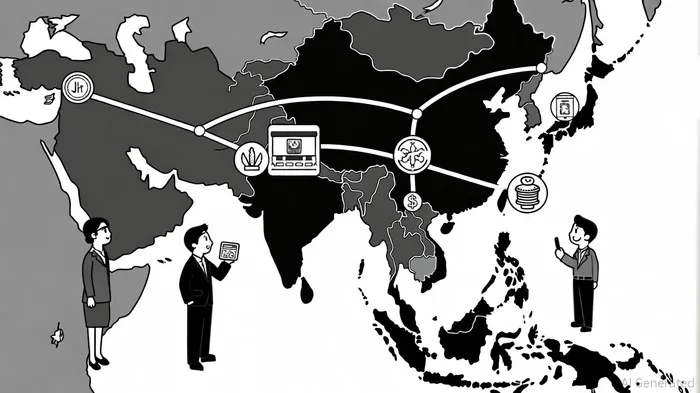
In the rapidly evolving landscape of Asia's wealth management sector, cross-border partnerships are emerging as a defining force. The collaboration between India's Yes Bank and Japan's Sumitomo Mitsui Banking Corporation (SMBC) exemplifies this trend, offering a compelling case study of how strategic alliances can unlock new investment opportunities and reshape regional financial ecosystems. With India's wealth management market projected to grow from $1 trillion to $2.3 trillion by 2029[1], the partnership between Yes Bank and SMBCSMBC-- is not just a business deal—it's a calculated move to capitalize on a demographic and economic shift that could redefine wealth management in Asia.
Strategic Synergies: A Win-Win for Yes Bank and SMBC
Yes Bank's partnership with SMBC is rooted in complementary strengths. SMBC, a global banking giant with a strong foothold in Asia-Pacific wealth management, acquired a 20% stake in Yes Bank for ₹13,482 crore ($1.58 billion) in 2025[2]. This investment provides Yes Bank with much-needed capital and credibility, while SMBC gains access to India's burgeoning affluent population. According to a report by Bloomberg, Yes Bank's CEO, Prashant Kumar, emphasized that SMBC's backing gives the bank the confidence to enter a competitive market dominated by rivals like ICICI and Kotak Mahindra[3].
For SMBC, the partnership aligns with its broader Asia-Pacific expansion strategy. The bank has already demonstrated its commitment to digital innovation, leveraging AI-powered platforms and blockchain solutions to enhance portfolio personalization and client engagement[4]. By integrating these technologies with Yes Bank's local market expertise, the collaboration aims to create a hybrid model that balances high-touch service with digital efficiency—a critical differentiator in a sector where trust and personalization remain paramount[5].
Market Growth and Competitive Positioning
India's wealth management sector is being driven by a surge in high-net-worth individuals (HNWIs). Knight Frank estimates that India has 85,700 individuals with a net worth exceeding $10 million, a figure expected to rise as equity markets and private equity investments continue to grow[6]. Yes Bank's entry into this space is timely, as it seeks to differentiate itself through a combination of SMBC's global expertise and its own recovery from the 2020 crisis. The bank has already shown signs of financial resilience, with total deposits reaching ₹2.85 lakh crore and gross NPAs declining to 1.6% by FY25[7].
The partnership also addresses a key challenge in India's wealth sector: the need for product diversification. While existing players like Kotak and Axis Bank manage $330 billion in assets, Yes Bank and SMBC aim to offer tailored solutions for both high-net-worth individuals and the mass affluent segment. As stated by Capco in its 2025 Asia-Pacific Wealth Management Trends report, hybrid operating models that blend digital tools with traditional client relationships are becoming the norm[8]. This approach is expected to give Yes Bank a competitive edge, particularly as it plans to add 400 new branches over the next five years[9].
Broader Implications for Asia's Wealth Sector
The Yes Bank-SMBC collaboration is part of a larger trend of cross-border financial partnerships reshaping Asia's wealth management landscape. Hong Kong, for instance, is projected to surpass Switzerland as the leading cross-border wealth hub by 2030, driven by inflows from mainland China and the rise of family offices[10]. Similarly, HSBC's strategic pivot to Asia underscores the region's growing importance, with the bank expanding its wealth operations in Singapore, India, and mainland China[11].
Technological innovation is another key driver. SMBC's acquisition of Wealthfront, an AI-driven wealth management platform, highlights the sector's shift toward automation and data-driven decision-making[12]. In India, Yes Bank's collaboration with SMBC could accelerate the adoption of AI and blockchain, enabling real-time investment research and personalized portfolio management. According to Deloitte, AI-driven copilots and automated portfolio management are expected to become standard features in the region's wealth management offerings by 2030[13].
Risks and Challenges
Despite the optimism, the partnership is not without risks. Yes Bank still faces structural challenges, including high operational costs and weak net interest margins[14]. Analysts caution that while SMBC's investment strengthens the bank's balance sheet, long-term profitability will depend on cost optimization and revenue diversification[15]. Additionally, regulatory hurdles and evolving client expectations—particularly among the next generation of wealth holders—pose ongoing challenges[16].
Conclusion
The Yes Bank-SMBC collaboration represents a bold step in the evolution of Asia's wealth management sector. By combining SMBC's global expertise with Yes Bank's local market knowledge, the partnership is poised to unlock significant growth opportunities in India's $1 trillion wealth market. As cross-border collaborations become increasingly strategic, the success of this alliance could set a precedent for future investments in Asia's dynamic financial landscape.







Comentarios
Aún no hay comentarios