
Inauguration of World's Most Climate-Efficient Zinc Smelter Marks Industrial Revolution
Generado por agente de IACyrus Cole
lunes, 17 de marzo de 2025, 3:39 am ET4 min de lectura
The world's most climate-efficient zinc smelter has been inaugurated in Odda, Norway, marking a significant milestone in the global push towards sustainable industrial practices. Boliden, the company behind this revolutionary facility, has committed to investments that will nearly double its zinc production capabilities, setting a new standard for environmental responsibility in the metals industry.
The origins of zinc production in Odda date back a century, closely linked to the region's hydropower developments. As the company ushers in a new phase, they have constructed essential infrastructure, including a roasting furnace, a new sulfuric acid plant, and a modern cellhouse. The expansion of both leaching and cleaning plants, along with improvements to the foundry, signifies an immense step forward for the region’s industrial landscape.
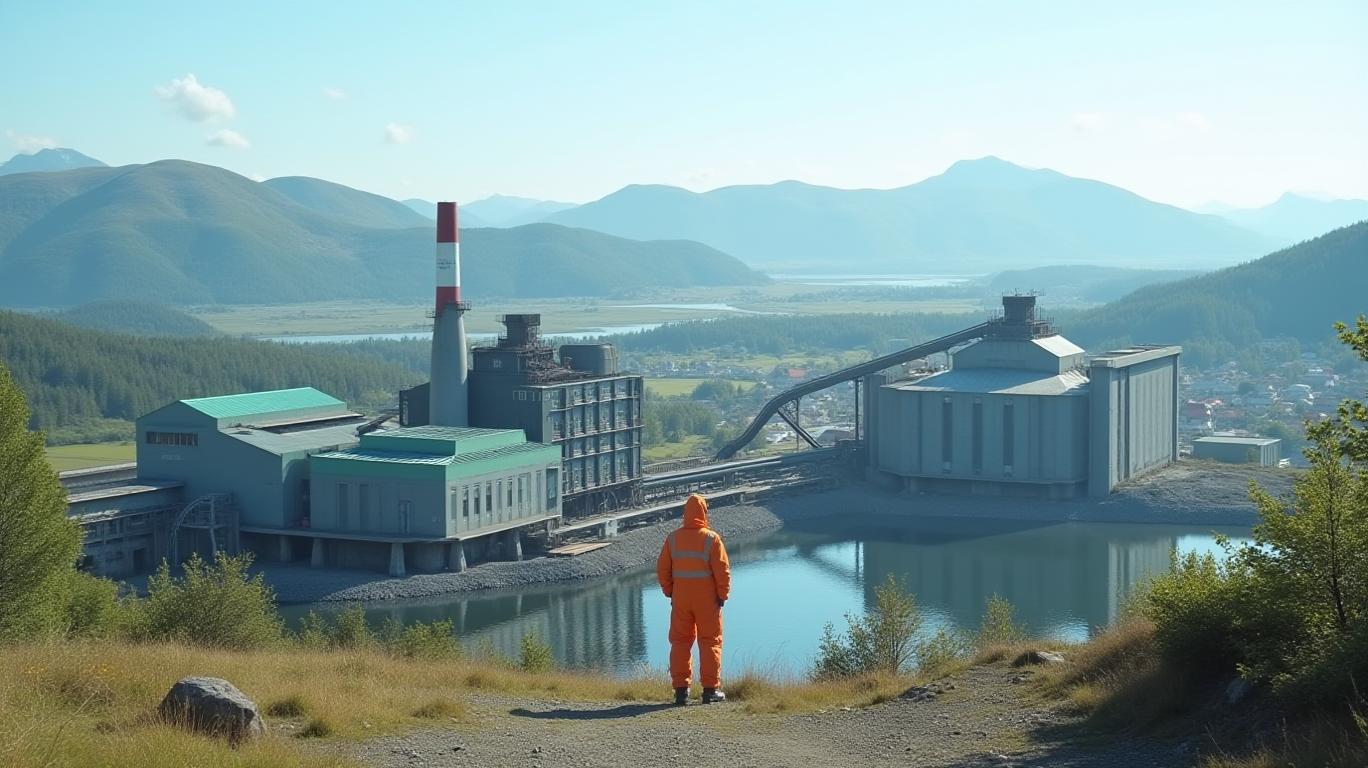
Mikael Staffas, Boliden’s President and CEO, emphasized the importance of this project, stating, “This is a historic day from several perspectives. We will almost double the production of the world's most climate-efficient zinc. This zinc will be primarily used as rust protection in various European applications, facilitating a responsible climate transition across our continent.” Such ambitious statements underline Boliden's commitment to sustainable practices while addressing the practical needs of modern industries.
With these advancements, the smelter’s production capacity is set to increase from 200 ktonnes to a remarkable 350 ktonnes annually. The efficiency improvements will enable the extraction of additional metals from raw materials, thus minimizing waste—a crucial aspect of sustainability in industrial operations. Boliden Odda is poised to become Europe’s second-largest and the world's most productive zinc smelter, producing an impressive 1,000 tonnes of cast zinc per full-time employee every year.
The environmental benefits of this project are substantial. The smelter's enhanced efficiency will reduce the carbon dioxide intensity by 15 percent from already a world-leading position. This reduction in carbon emissions is a significant step towards mitigating climate change and aligning with global sustainability goals. Furthermore, the smelter's contributions will enhance food production by providing zinc for agricultural use, aligning with global sustainability goals aimed at improving food security and agricultural productivity. The smelter's zinc will be primarily used as rust protection in various European applications, facilitating a responsible climate transition across the continent. This project serves as a beacon of what can be achieved with dedication and forward-thinking strategies, setting a high standard for industrial sustainability and environmental responsibility.
The technological advancements and innovations implemented in the new zinc smelter are pivotal to achieving its climate-efficient status. These include the construction of a new roasting furnace, a new sulfuric acid plant, and a modern cellhouse. Additionally, the leaching and cleaning plant, as well as the foundry, have been expanded and modernized. These upgrades have enabled the smelter to increase its production capacity from 200 ktonnes to 350 ktonnes annually, making it the world's most productive zinc smelter. The efficiency improvements have also allowed for the extraction of additional metals from raw materials, thus minimizing waste—a crucial aspect of sustainability in industrial operations.
In comparison to traditional smelting methods, the new smelter has significantly reduced its carbon dioxide intensity by 15 percent from an already world-leading position. This reduction is achieved through the use of new technology and increased digitization and automation, which enhance productivity and sustainability. The smelter's unique solution for waste handling has also been expanded, further contributing to its climate-efficient status.
The environmental impact of the production process in the new smelter has been analyzed using SimaPro 9.0 software, which compares the differences in direct, indirect, and overall environmental impacts between the "traditional smelting mode" and the "solid waste synergism mode." The results show that the environmental burden caused by all other processes is reduced by more than 20% and the energy consumption is reduced by 20.6–21.4% with the synergism mode. For the waste residue disposal process, the recovery rate of valuable components, such as Zn, Cd, and In, increased approximately 30% compared with the traditional mode, and the total environmental burden is reduced nearly onefold. In addition, the “concentrate + slag” smelting method has reduced zinc concentrate consumption per unit of zinc product by 26.7% and cut carbon emissions by 57.3%.
These technological advancements and innovations have not only improved the efficiency and productivity of the smelter but also reduced its environmental impact, making it a model for sustainable industrial operations.
The increased production capacity of the zinc smelter is set to have significant impacts on the global zinc market. Boliden's smelter will nearly double its production capacity from 200 ktonnes to 350 ktonnes annually, making it Europe's second-largest and the world's most productive zinc smelter. This expansion will not only increase the supply of zinc but also enhance the efficiency of the production process, reducing the carbon dioxide intensity by 15% from an already world-leading position. This means that the smelter will produce 1,000 tonnes of cast zinc per full-time employee annually, a remarkable increase in productivity.
The economic implications for Boliden are substantial. The company's investment in this project is one of Norway's largest industrial investments on the mainland, underscoring its commitment to sustainable and efficient zinc production. The increased production capacity will allow Boliden to meet the growing demand for zinc, particularly in the construction, automotive, and energy sectors. For instance, the construction sector, together with the automotive industry, is the largest user of zinc, and the energy sector is a growing consumer, especially for corrosion-resistant wind turbines. Additionally, zinc is essential in agricultureANSC--, helping to boost crop yields in zinc-deficient soils. Therefore, the smelter's contributions will enhance food production, aligning with global sustainability goals.
For the industry as a whole, the increased production capacity of Boliden's smelter could lead to a more competitive market. With more zinc available, prices could potentially stabilize or even decrease, benefiting industries that rely heavily on zinc. However, it could also put pressure on other zinc producers to increase their efficiency and production capacity to remain competitive. The expansion of Boliden's smelter sets a benchmark for other companies in the industry, encouraging them to adopt similar sustainable and efficient practices. This could lead to a broader shift towards more environmentally friendly and productive zinc production methods, benefiting the industry and the environment in the long run.
In conclusion, the inauguration of Boliden's climate-efficient zinc smelter in Odda marks a transformative step in both industrial development and environmental responsibility. The blend of innovative technology and strategic investments will not only fortify Norway’s industrial stature for the next century but also advance the broader European commitment towards sustainable infrastructure and production practices. For those in the industry, this project serves as a beacon of what can be achieved with dedication and forward-thinking strategies.



Divulgación editorial y transparencia de la IA: Ainvest News utiliza tecnología avanzada de Modelos de Lenguaje Largo (LLM) para sintetizar y analizar datos de mercado en tiempo real. Para garantizar los más altos estándares de integridad, cada artículo se somete a un riguroso proceso de verificación con participación humana.
Mientras la IA asiste en el procesamiento de datos y la redacción inicial, un miembro editorial profesional de Ainvest revisa, verifica y aprueba de forma independiente todo el contenido para garantizar su precisión y cumplimiento con los estándares editoriales de Ainvest Fintech Inc. Esta supervisión humana está diseñada para mitigar las alucinaciones de la IA y garantizar el contexto financiero.
Advertencia sobre inversiones: Este contenido se proporciona únicamente con fines informativos y no constituye asesoramiento profesional de inversión, legal o financiero. Los mercados conllevan riesgos inherentes. Se recomienda a los usuarios que realicen una investigación independiente o consulten a un asesor financiero certificado antes de tomar cualquier decisión. Ainvest Fintech Inc. se exime de toda responsabilidad por las acciones tomadas con base en esta información. ¿Encontró un error? Reportar un problema


SOBRE NOSOTROS
Nuestra historiaAutores de noticiasBase de conocimientosPolítica de privacidadTérmino de usoDescargo de responsabilidad de corretaje de tercerosTérminos de uso de AIMEDivulgaciones de riesgos de AInvest AICarrerasCONTÁCTENOS
Email: support@ainvest.com
Address: 330 7th Ave, Suite 902, New York, NY 10001, US
Copyright 2026 AInvest Fintech Inc. All rights reserved.


Comentarios
Aún no hay comentarios