
The Implications of S&P's USDT Downgrade for Crypto Market Stability and Investment Risk
The Fragile Foundation of USDT
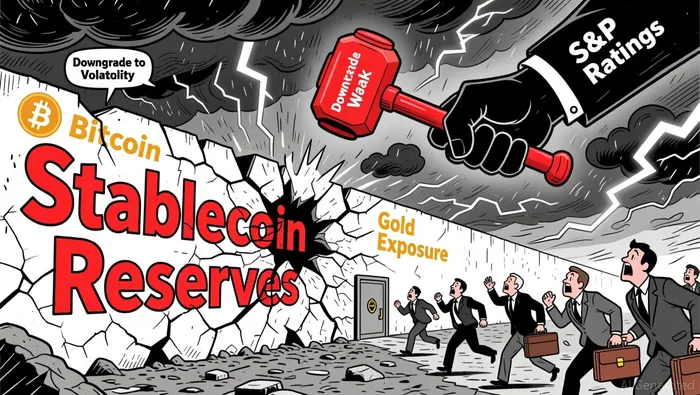 Tether's reserve composition has long been a source of controversy. As of September 2025, high-risk assets accounted for 24% of USDT's reserves, including over 82,000 Bitcoin ($5.5 billion) and 116 metric tonnes of gold. While TetherUSDT-- claims to maintain sufficient reserves to back its $184 billion in issued tokens according to the report, S&P highlighted persistent gaps in transparency, particularly regarding the creditworthiness of custodians and counterparties as research shows. This opacity becomes a liability in a bear market, where sudden asset devaluations-such as Bitcoin's 26% drop in late 2025-could trigger liquidity crunches.
The risks are compounded by the nature of Tether's collateral. Unlike traditional stablecoins backed by short-term Treasuries or cash, USDT's exposure to volatile assets like Bitcoin and gold introduces market, interest-rate, and foreign-exchange risks. During the October 2025 crypto crash, algorithmic stablecoins like USDeUSDe-- depegged dramatically, causing cascading liquidations. While USDT maintained its $1 peg, the broader market's collapse revealed how interconnected liquidity risks can destabilize even fiat-backed stablecoins.
Bear Market Amplification: Liquidity and Investor Behavior
The 2025 Bitcoin bear market has exposed structural weaknesses in crypto's liquidity infrastructure. As Bitcoin's price fell below $92,000, on-chain data showed a surge in stablecoin transaction volumes, with 30% of all crypto transactions now involving stablecoins. This reliance on stablecoins as a "safe haven" during downturns creates a paradox: when stablecoins themselves face credibility crises, as with S&P's downgrade, the entire system becomes vulnerable.
Investor behavior has shifted dramatically. ETF outflows from BlackRock's iShares Bitcoin Trust reached $903 million in a single day, while derivatives markets saw a 7.1% drop in open interest according to market data. Retail and institutional participants alike are deleveraging, but the lack of robust hedging mechanisms in DeFi exacerbates the problem. Platforms like AaveAAVE-- and MorphoMORPHO--, which allow users to borrow stablecoins against crypto collateral, face margin calls as collateral values plummet. Without regulatory safeguards like deposit insurance, these platforms are prone to cascading defaults.
Systemic Risks: From DeFi to TradFi
The interdependence between DeFi and TradFi has turned stablecoin risks into systemic threats. For example, the collapse of Silicon Valley Bank (SVB) in 2023 triggered a depegging of USDCUSDC--, forcing exchanges like Binance and Coinbase to pause redemptions. A similar scenario could unfold if USDT's credibility erodes further, especially as its reserves include commercial paper and corporate bonds-assets that could face fire sales during a liquidity crisis.
Moreover, the October 2025 crash revealed crypto's pro-cyclical liquidity dynamics. Thin order books and fragmented market structures led to sharp price drops, particularly for non-blue-chip tokens. If USDT's peg were to break, the resulting panic could accelerate outflows from Bitcoin ETFs and force central banks to intervene, as seen in the U.S. government's delayed release of key economic data during the crisis.
Regulatory Responses and the Path Forward
Regulators are scrambling to address these risks. The U.S. introduced the Genius Act in 2025 to impose guardrails on stablecoins, while the SEC's Project Crypto aims to modernize custody rules. Globally, the EU's MiCA framework and Dubai's VARA are pushing for stricter transparency and consumer protection. However, enforcement remains uneven, and the lack of a "lender of last resort" for DeFi platforms leaves critical gaps.
For investors, the downgrade serves as a wake-up call. While USDT's peg has held so far, the combination of undercollateralization, macroeconomic uncertainty, and regulatory fragmentation creates a high-risk environment. Diversifying stablecoin exposure, prioritizing transparent reserves, and hedging against liquidity shocks are now essential strategies.
Conclusion
S&P's downgrade of USDT is not just a ratings call-it's a signal of deeper vulnerabilities in the crypto ecosystem. As Bitcoin's bear market intensifies, the fragility of stablecoin reserves and the interconnectedness of DeFi and TradFi will test the resilience of the entire market. Investors must navigate this landscape with caution, recognizing that the next crisis could emerge not from Bitcoin's price alone, but from the very stablecoins designed to stabilize it.





Comentarios
Aún no hay comentarios