
Implications of Trump's Policy Shifts and Political Climate on Federal Reserve and Market Stability
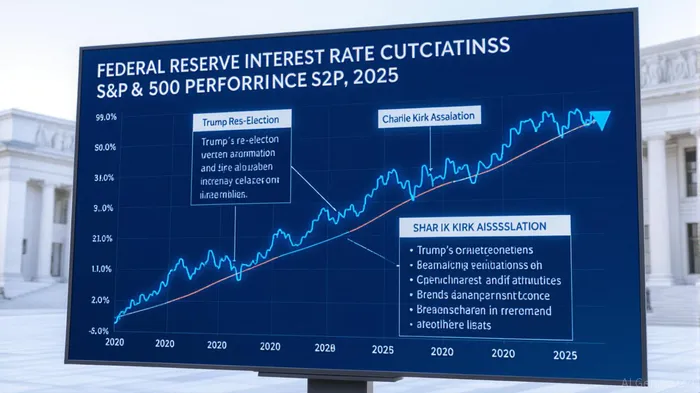
The re-election of Donald Trump has reignited debates over the Federal Reserve's independence and its ability to navigate a politically charged environment. With the U.S. economy showing signs of slowdown—most notably a 911,000 downward revision in 12-month job growth through March 2025[3]—speculation about a potential “Big Cut” by the Fed has intensified. Trump's public criticism of the central bank and his advocacy for aggressive rate reductions to stimulate growth[1] have raised concerns about how political pressures might intersect with monetary policy. This analysis explores the implications of Trump's policy agenda, heightened political polarization, and the Fed's resolve to maintain independence, while assessing risks to inflation and asset valuations.
Trump's Policy Proposals and the Fed's Dilemma
Trump has consistently criticized the Federal Reserve for maintaining low interest rates, arguing they hinder job creation and economic expansion[2]. His rhetoric suggests a preference for rapid rate cuts to spur borrowing and investment, particularly in sectors like manufacturing and energy. However, the Fed's dual mandate—maximum employment and price stability—requires a nuanced approach. While accommodative policy could boost growth, it risks reigniting inflation if the labor market rebounds too quickly.
The recent jobs data revision[3] has already shifted market expectations, with investors pricing in a 75-basis-point cut at the next FOMC meeting. Yet, Fed officials have reiterated their commitment to data-driven decisions[4], emphasizing that policy adjustments will depend on incoming PPI and CPI readings. This tension between political pressure and institutional independence underscores the Fed's challenge: balancing Trump's demands with its statutory obligations.
Political Polarization and Market Volatility
The assassination of conservative activist Charlie Kirk in early 2025 has exacerbated political divisions, with Trump attributing the incident to the “radical left” and calling for stricter immigration enforcement[3]. Such rhetoric has fueled market uncertainty, as investors grapple with the implications of prolonged polarization. Analysts like David Rothkopf argue that Trump's leadership has left him with “precisely zero wins,” further eroding confidence in his administration's ability to manage economic and geopolitical risks[3].
This environment has led to increased volatility in equity and bond markets. For instance, the S&P 500 and Nasdaq have surged to record highs amid expectations of Fed easing[3], but these gains are fragile. A sudden shift in political dynamics—such as a backlash against Trump's hardline policies or a surprise inflation report—could trigger sharp corrections.
Fed Independence and Long-Term Stability
Despite political pressures, the Federal Reserve has reaffirmed its commitment to maintaining policy independence[4]. FOMC minutes from 2023–2025 highlight a consistent focus on economic fundamentals rather than short-term political agendas[4]. This independence is critical for preserving credibility, as premature rate cuts in response to Trump's demands could undermine the Fed's ability to control inflation if the economy overheats.
However, the Fed's hands may be tied if Trump follows through on his threat to appoint ideologically aligned officials to key positions. Such appointments could erode public trust in the Fed's impartiality, potentially leading to higher long-term borrowing costs as investors demand a risk premium.
Strategic Implications for Investors
Given the uncertainty, investors should adopt a defensive posture. Portfolios should prioritize diversification across asset classes, with a focus on inflation-protected securities (TIPS) and equities in sectors poised to benefit from rate cuts, such as technology and consumer discretionary. Conversely, defensive sectors like utilities and healthcare may offer stability amid political turbulence.
Hedging against currency and interest rate risks is also advisable. The U.S. dollar's strength could wane if Trump's expansive tariffs on Russia and other trade partners trigger retaliatory measures[4], while bond yields may remain volatile as inflation expectations fluctuate.
Conclusion
Trump's calls for a “Big Cut” and the broader political polarization pose significant challenges for the Federal Reserve. While the Fed's independence remains a cornerstone of its credibility, the interplay between political pressures and monetary policy will likely amplify market volatility in the near term. Investors must remain agile, balancing growth opportunities with risk mitigation strategies to navigate this complex landscape.







Comentarios
Aún no hay comentarios