
Implications of NIH Leadership Changes on Biotech and Complementary Medicine Innovation
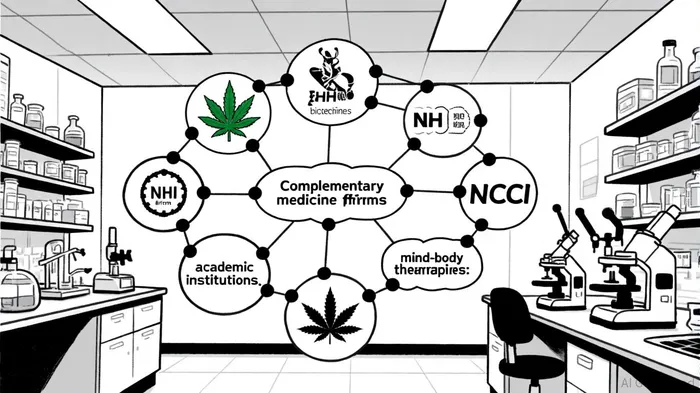
The National Institutes of Health (NIH) has long been a cornerstone of biomedical innovation, but shifts in leadership—particularly at the National Center for Complementary and Integrative Health (NCCIH)—have introduced new dynamics for investors in alternative and integrative health sectors. David Shurtleff, Ph.D., who served as acting director of NCCIH from October 2017 to November 2018, left a lasting imprint on the center's research priorities, shaping the trajectory of complementary medicine innovation. His interim leadership, informed by decades of experience in neuroscience and addiction research at the National Institute on Drug Abuse (NIDA), emphasized rigorous scientific inquiry into integrative health practices, pain management, and the therapeutic potential of cannabinoids. For investors, understanding these strategic shifts is critical to evaluating emerging opportunities in a sector poised for growth.
Strategic Priorities Under Shurtleff's Leadership
During his tenure, Shurtleff prioritized three key areas: pain management, cannabinoid research, and whole-person health integration. These priorities aligned with NCCIH's broader mission to establish evidence-based frameworks for complementary therapies. For instance, NCCIH's 2021–2025 strategic plan, which Shurtleff helped shape, explicitly highlighted the need to advance “fundamental science and methods development” for integrative approaches, including studies on the biological mechanisms of mind-body practices and the role of natural products in disease prevention [1].
A notable example of Shurtleff's influence is the center's expanded focus on cannabinoids. Under his leadership, NCCIH began funding studies on minor cannabinoids and terpenes, recognizing their potential in pain management and mental health [2]. This initiative gained momentum as federal regulations on cannabis research evolved, culminating in the Medical Marijuana and Cannabidiol Research Expansion Act (MMCREA) of 2018, which removed barriers to studying cannabis derivatives [3]. By 2025, the global cannabis pharmaceuticals market—valued at $3.4 billion in 2023—was projected to grow at a 62.5% CAGR, reaching $102 billion by 2030 [4].
Biotech Partnerships and Grant-Driven Innovation
Shurtleff's leadership also fostered high-impact collaborations between NCCIH and biotech firms. One prominent example is the $6 million NIH grant awarded to Achieve LifeACHV-- Sciences in 2019 for developing cytisinicline, a plant-based alkaloid for smoking cessation [5]. This partnership, initiated during Shurtleff's interim tenure, underscored NCCIH's commitment to translating complementary research into real-world applications. Similarly, NCCIH's funding of studies on cannabis compounds has spurred innovation in biosynthesis technologies, with companies like InMedINM-- Pharmaceuticals leveraging NIH-backed research to scale production of rare cannabinoids at lower costs [6].
The center's emphasis on pragmatic clinical trials—via initiatives like the NIH Pragmatic Trials Collaboratory—has further enhanced the efficiency of drug development. By embedding trials into routine healthcare settings, Shurtleff's initiatives reduced the time and cost of bringing integrative therapies to market, a critical factor for biotech startups targeting niche therapeutic areas like chronic pain or opioid alternatives [7].
Market Potential and Investment Trends
The complementary medicine sector's growth is not just theoretical. In 2025, venture capital (VC) funding for biotech remained resilient, with megafunds targeting platform technologies such as machine learning-enabled drug discovery and cell therapies [8]. For instance, Odyssey Therapeutics raised $213 million to advance autoimmune programs, while NRG Therapeutics secured $67 million for neurodegenerative disease research. These trends align with NCCIH's focus on translational science, suggesting that startups with NIH-backed research are well-positioned to attract capital.
Cannabinoid-focused biotechs, in particular, have seen surging interest. Companies like Zynerba Pharmaceuticals and GW Pharmaceuticals are developing transdermal and oral cannabinoid formulations for epilepsy, neuropathic pain, and rare diseases [9]. The reclassification of cannabis to Schedule III in 2023 further accelerated R&D, with investors betting on therapies targeting orphan diseases and novel delivery systems (e.g., chewing gum, eye drops) [10].
Risks and Considerations
While the outlook is optimistic, investors must navigate regulatory and scientific risks. The evidence base for many complementary therapies remains nascent, and not all NIH-funded research will yield commercially viable products. Additionally, the political climate around cannabis policy could shift, affecting long-term market stability. However, Shurtleff's emphasis on rigorous methodologies—such as randomized controlled trials and implementation science—has strengthened the credibility of complementary medicine, mitigating some of these risks [11].
Conclusion
David Shurtleff's interim leadership at NCCIH catalyzed a strategic pivot toward evidence-based complementary medicine, with far-reaching implications for biotech innovation. By prioritizing pain management, cannabinoids, and pragmatic research frameworks, he laid the groundwork for a sector now attracting significant VC and public market attention. For investors, the key takeaway is clear: NIH-backed research in integrative health is not a fringe pursuit but a mainstream driver of therapeutic and financial returns. As the cannabis pharmaceuticals market surges and new delivery systems emerge, startups with strong NIH ties—and a focus on scientific rigor—are likely to dominate the next wave of biotech growth.







Comentarios
Aún no hay comentarios