
The Implications of a Major Investment Strategy Shifting Away from Bitcoin and Prioritizing Dividend-Paying Assets
The maturing crypto market has sparked a notable shift in investment strategies, with many investors reevaluating their exposure to BitcoinBTC-- and reallocating capital toward dividend-paying assets. This recalibration reflects a broader reassessment of risk-return profiles in an environment where regulatory clarity, macroeconomic dynamics, and evolving market correlations are reshaping asset allocation.
Bitcoin's Risk-Return Profile: High Returns, High Volatility
Bitcoin's performance in 2024–2025 has been nothing short of extraordinary. According to Forbes, Bitcoin surged by 114% in 2024 alone, outperforming traditional assets like the S&P 500 and gold. Over the past decade, its annualized return of 86.31% dwarfs the 0.23% return of the U.S. Dollar Index (^DXY), as shown by PortfoliosLab. However, this comes at the cost of extreme volatility: Grayscale's research highlights Bitcoin's annualized volatility of 71.5% in 2024-compared to 20.5% for the Nasdaq 100-underscoring its double-edged nature.
ARK Invest's analysis reports a Sharpe Ratio of 1.7 as of September 2025, suggesting strong risk-adjusted returns, but CME Group notes that its correlation with equities has risen to 0.86, reducing its diversification benefits.
Dividend Stocks: Stability and Predictability
Dividend-paying assets, by contrast, offer a more predictable income stream and lower volatility. The S&P 500, for instance, has historically delivered average annual volatility of 10–20%, according to Gate's blog, with a Sharpe Ratio of 0.95 over the past decade, per UsetheBitcoin. In Q3 2025, dividend stocks like CVS Health and Franklin Resources achieved year-to-date gains of over 40%, supported by strong earnings and strategic cost-cutting, as shown in Forbes' list. While their Sortino Ratios (1.38 for a dividend portfolio vs. 1.44 for the broader market) appear slightly weaker on downside adjustment, PortfoliosLab's data provide the comparative figures; their resilience during macroeconomic uncertainty-such as the Federal Reserve's rate cuts-has been highlighted in LPL's Q3 recap.
Regulatory and Macroeconomic Catalysts
The 2025 regulatory landscape has been a game-changer. Caldwell Law summarizes the GENIUS Act and CLARITY Act, which provide a framework for stablecoins and clarify SEC–CFTC jurisdiction. These developments have spurred institutional adoption, with Bitcoin ETFs attracting $250 billion in assets under management, according to ICR's outlook. However, macroeconomic factors like inflation and interest rates have tilted the scales toward dividend stocks: Investing.com notes that as the Federal Reserve slows rate cuts, dividend yields (e.g., 3%+ for S&P 500 constituents) offer a hedge against inflation.
Strategic Implications for Investors
The shift from Bitcoin to dividend assets underscores a maturing market where investors prioritize stability over speculative gains. Forbes reported that a 5% Bitcoin allocation in a traditional 60/40 portfolio boosted the Sharpe Ratio from 0.77 to 0.96, but this comes with amplified volatility. For long-term investors, a balanced approach-small Bitcoin allocations for growth and dividend stocks for income-may optimize risk-return trade-offs.
Conclusion
As the crypto market evolves, Bitcoin's role as a high-risk, high-reward asset remains, but its dominance is being challenged by the reliability of dividend-paying equities. Regulatory clarity and macroeconomic trends will continue to shape this dynamic, urging investors to tailor strategies to their risk tolerance and time horizon. In a world where volatility is inevitable, the key lies in diversification and disciplined asset allocation.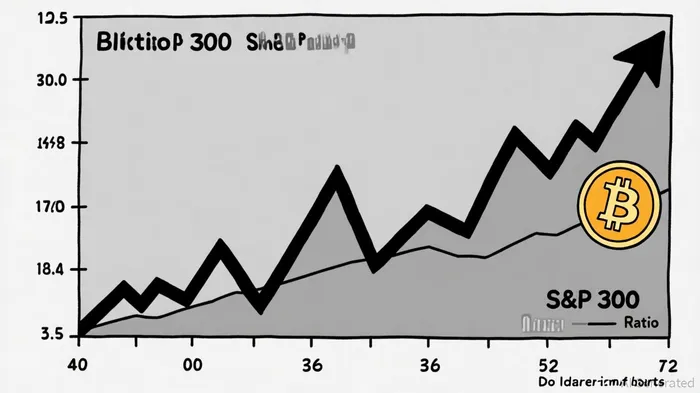






Comentarios
Aún no hay comentarios