
The Implications of Kevin Hassett as Potential Fed Chair for Currency and Fixed Income Markets
Treasury Yields: A Dovish Tailwind or a Policy Quagmire?
Market participants are already pricing in a high probability of further rate cuts under a Hassett-led Fed. As of late 2025, the 10-year U.S. Treasury yield has fallen to 4.002%, reflecting growing consensus for a December 2025 rate cut. This dovish outlook is reinforced by Hassett's public endorsement of the Fed's September 2025 quarter-point rate reduction, which he labeled a "prudent call". If Hassett's influence expands, Treasury yields could face sustained downward pressure as investors anticipate a more aggressive easing cycle in 2026.
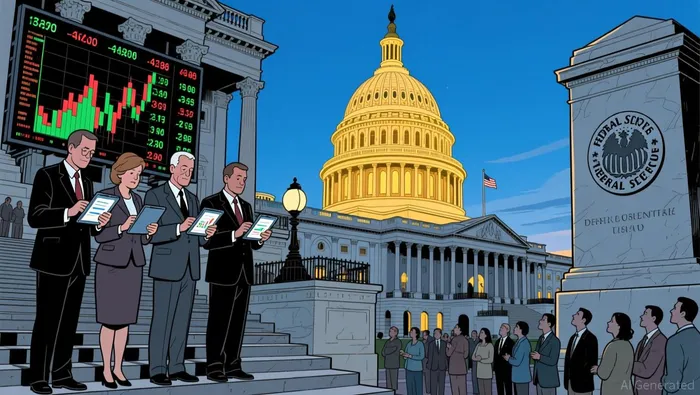
However, the Fed's balance sheet adjustments complicate this narrative. The central bank's decision to halt the reduction of its $6.3 trillion balance sheet in December 2025 aims to stabilize liquidity and support Treasury markets. While this move could cushion yields from volatility, it also raises questions about the Fed's ability to manage inflation risks amid prolonged accommodative policy. Historically, dovish Fed chairs like Jerome Powell have seen Treasury yields decline sharply during rate-cut cycles, as seen in 2023 when Powell's signals led to a 30-basis-point drop in 2-year yields. A similar trajectory under Hassett could benefit long-duration assets but may exacerbate inflationary pressures if economic data diverges from expectations.
The U.S. Dollar: A Weaker Greenback in the Crosshairs
A dovish Fed Chair often translates to a weaker U.S. dollar, and Hassett's potential appointment has already sparked such expectations. The dollar index, which measures the greenback's strength against major currencies, has shown resilience in November 2025 but remains weaker than its 2025 peak. Investors are factoring in a 72% probability of a December rate cut, which could further erode the dollar's appeal.
Historical case studies underscore this dynamic. For instance, Powell's dovish tilt in 2025 led to a steeper yield curve and a weaker dollar as short-term yields fell more sharply than long-term yields. A Hassett-led Fed, with its emphasis on lower rates to stimulate the housing market and reduce debt servicing costs has already been highlighted, could amplify this trend. However, the dollar's performance will also hinge on global growth differentials. If the U.S. economy outperforms its peers-a scenario supported by Trump's pro-business agenda-the dollar may find temporary refuge despite dovish policy according to market analysis.
Risks and Opportunities: Navigating the Dovish Dilemma
The primary risk of a Hassett-led Fed lies in its perceived alignment with Trump's economic priorities, which could undermine the Fed's independence. Critics argue that Hassett's advocacy for rate cuts to boost pre-election growth and manage the $37 trillion debt burden introduces political overtones to monetary policy. This could erode market confidence in the Fed's inflation-fighting credibility, potentially triggering a surge in Treasury yields if inflation expectations rise.
Conversely, the opportunities are significant. A dovish Fed could spur risk-on sentiment, supporting equities and other growth assets while making U.S. debt more attractive to foreign buyers. Former Chief U.S. Economist James E. Thorne predicts that Hassett's tenure would see the Fed stop shrinking its balance sheet and adopt a more neutral rate stance, which could stabilize liquidity and reduce volatility in money markets as noted in FOMC minutes. For bond investors, this environment may favor short-dated Treasuries, as seen in 2024 when dovish signals led to a shift in yield curve strategies according to market reports.
Conclusion: A Dovish Tightrope
Kevin Hassett's potential ascension to the Fed Chair presents a dual-edged sword for Treasury yields and the U.S. dollar. While his dovish stance could drive rate cuts and weaken the dollar, the Fed's committee structure and global economic conditions will ultimately shape outcomes. Investors must remain vigilant to the interplay between policy independence, inflation dynamics, and growth differentials. As the December 2025 rate decision looms, the market's pricing of a 72% chance of a cut underscores the urgency of hedging against both dovish tailwinds and the risks of policy politicization.







Comentarios
Aún no hay comentarios