
Implications of the GENIUS Act for U.S. Treasury Markets and Investment Strategies
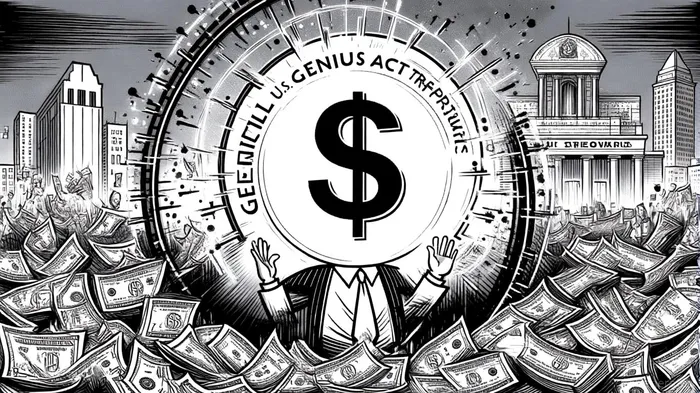
The GENIUS Act of 2025 has redefined the intersection of stablecoins and U.S. Treasury markets, creating a regulatory framework that institutionalizes stablecoin reserves while reshaping demand dynamics for sovereign debt. By mandating that payment stablecoins be fully backed by U.S. dollars, Treasury securities, or other liquid assets, the Act has effectively turned stablecoin issuance into a direct channel for Treasury demand[1]. This shift is not merely regulatory—it is a structural transformation of the financial system, with profound implications for investors, policymakers, and the global dollar ecosystem.
Market Dynamics: A New Flywheel for Treasury Demand
The Act's reserve requirements have created a “Treasury bill flywheel” effect. Stablecoin issuers must hold short-term Treasuries (maturities under 90 days) to back their tokens, ensuring a steady, institutional-grade demand for these securities[2]. According to projections, stablecoin adoption could expand from $250 billion to $2 trillion by 2028, rivaling or surpassing foreign holdings like China's[3]. This surge in demand could lower short-term Treasury yields, reducing the U.S. government's borrowing costs—a boon for fiscal policy. However, the same mechanism introduces asymmetry: during periods of financial stress, stablecoin outflows could amplify yield spikes, creating volatility in the Treasury market[4].
The yield curve is also at risk of steepening. As stablecoin adoption grows, the Treasury may issue more short-term debt to meet reserve requirements, crowding out non-bank financial institutions that rely on these safe assets. Bank of AmericaBAC-- analysts warn that this could widen liquidity premiums and reshape the yield curve's slope[5]. For investors, this means short-term Treasuries may become less attractive relative to longer-dated instruments, depending on macroeconomic conditions.
Strategic Entry Points for Investors
The GENIUS Act's regulatory clarity has created clear winners and losers in the stablecoin ecosystem. Onshore issuers like CircleCRCL-- (USDC) and PayPalPYPL-- (PYUSD), already compliant with reserve and attestation requirements, are positioned to dominate the market[6]. Investors should consider long positions in these entities, as well as in on-chain Treasury and repo protocols that benefit from increased collateral demand[7].
For Treasury markets, the Act's emphasis on transparency and consumer protection may boost institutional confidence in stablecoins as a settlement medium. This opens opportunities for investors to allocate to short-term Treasuries, particularly as the Federal Reserve's oversight of systemically important issuers (those with over $10 billion in stablecoin issuance) adds a layer of stability[8]. However, investors must remain cautious about transition risks: state-qualified issuers exceeding the $10 billion threshold must transition to federal oversight within 360 days, creating potential regulatory friction[9].
Risk Management and Timing Considerations
The Act's dual-track regulatory framework—allowing smaller issuers to opt for state supervision—introduces complexity. While this balances innovation with systemic risk mitigation, it also creates a patchwork of compliance standards. Investors should prioritize issuers with federal oversight, as these entities are less exposed to regulatory arbitrage and rehypothecation risks[10].
Timing is critical. The Treasury's Advance Notice of Proposed Rulemaking (ANPRM) seeks public input on implementation details, including measures to detect illicit finance risks[11]. Investors should monitor these developments closely, as final regulations could alter demand dynamics. For example, if the Treasury tightens reserve requirements or expands the definition of “liquid assets,” it could shift capital flows toward specific Treasury maturities.
Conclusion: A New Era for Dollar Hegemony
The GENIUS Act is more than a regulatory fix—it is a strategic move to cement the U.S. dollar's dominance in the digital age. By institutionalizing stablecoin reserves and aligning them with Treasury markets, the Act creates a self-reinforcing cycle of demand that strengthens the dollar's role in global finance[12]. For investors, this means opportunities in onshore stablecoin ecosystems, short-term Treasuries, and protocols that facilitate collateral management. However, the risks of yield volatility and asymmetric outflows cannot be ignored.
As the market adjusts to this new paradigm, the key to success lies in balancing regulatory compliance with strategic foresight. The GENIUS Act has set the stage for a multi-trillion-dollar shift in liquidity—those who act early and adapt quickly will reap the rewards.





Comentarios
Aún no hay comentarios