
Implications of the Genius Act on U.S. Treasury Markets: Assessing Liquidity Risks and Opportunities in Sovereign Debt
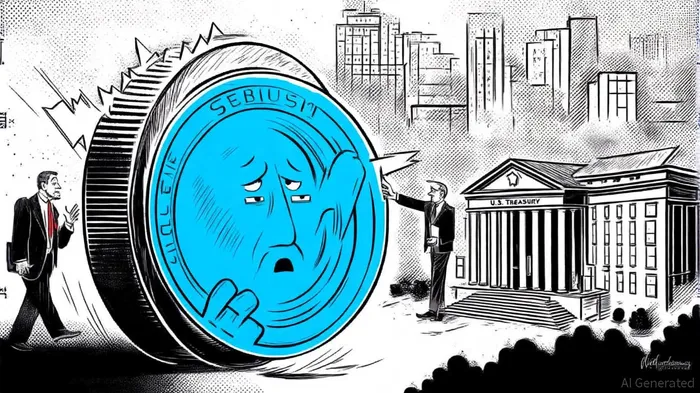
The Genius Act of 2025 has fundamentally reshaped the U.S. Treasury market by anchoring stablecoin reserves to short-term sovereign debt. This regulatory framework, which mandates that payment stablecoins be fully backed by high-quality liquid assets like U.S. Treasury bills, has created a dual-edged sword: a surge in demand for Treasuries and a heightened risk of systemic fragility. For investors and policymakers, understanding this balance is critical to navigating the evolving landscape of sovereign debt.
Opportunities: A New Pillar of Treasury Demand
The Genius Act has positioned stablecoins as a significant buyer of U.S. Treasury securities. By requiring 100% reserve backing, the Act has effectively turned stablecoin issuers into institutional investors with a voracious appetite for short-term Treasuries. According to a report by UBSUBS--, this demand could allow the U.S. Treasury to delay increasing interest-bearing debt and repurchase less liquid bonds, offering flexibility in managing its issuance strategy [1].
The scale of this demand is staggering. As of June 2025, stablecoin reserves held over $250 billion, with 80% allocated to Treasuries—equating to $200 billion in holdings [5]. Projections suggest this could balloon to $2 trillion by 2028, translating to $1.2–$1.6 trillion in additional Treasury demand [4]. Such growth could compress short-term yields, potentially lowering the U.S. government's borrowing costs. For example, inflows into stablecoins have historically reduced three-month Treasury yields by 2–2.5 basis points within 10 days [6], a trend that could persist as the market matures.
Moreover, the Act's emphasis on transparency—such as daily reconciliation and CPA attestation—aims to bolster market confidence. This could attract non-traditional investors, further deepening Treasury market liquidity. As stated by the New York Federal Reserve, bid-ask spreads and order book depth have improved since mid-2023, returning to pre-2020 levels [7].
Risks: Fragility in the Face of Stress
However, the Genius Act's design introduces new vulnerabilities. The U.S. Treasury market already faces liquidity challenges, particularly during tax days and quarter-ends, when top-of-book depth for 4-week bills averages less than $25 million [1]. A redemption run on a major stablecoin—such as TetherUSDT-- or Circle—could force large-scale liquidation of Treasuries precisely when liquidity is constrained, triggering a fire sale.
The Bank for International Settlements (BIS) has warned that stablecoin outflows could raise Treasury yields by three times the amount that inflows lower them [2]. This asymmetry creates a "liquidity trap": while inflows reduce yields, outflows could destabilize markets. For instance, a $200 billion redemption event might inject volatility into yields, mirroring the 2019 repo-rate spike or the 2020 liquidity crunch [1].
Compounding these risks is the lack of mandatory liquidity buffers for stablecoin reserves. Unlike banks, which hold capital cushions, stablecoin issuers are exempt from SEC and CFTC regulations, creating oversight gaps [1]. This regulatory arbitrage could amplify systemic risks during financial stress, as seen in the 2008 crisis when non-bank entities contributed to market breakdowns.
Monetary Policy and the Fed's Dilemma
The Genius Act also complicates the Federal Reserve's ability to manage monetary policy. The Fed's tools—such as reverse repo operations and interest on bank reserves—are designed to buffer liquidity, but they may struggle to counteract the asymmetric influence of stablecoin flows [3]. For example, if stablecoin demand drives down short-term yields, the Fed's ability to raise rates to combat inflation could be undermined, echoing the "Greenspan Conundrum" of the early 2000s [6].
Additionally, the displacement of bank deposits by stablecoins poses indirect risks. As noted by the American Bankers Association, a 1 percent reduction in bank lending could offset the benefits of lower Treasury yields [3]. This highlights a trade-off: while stablecoins may reduce government borrowing costs, they could also constrain credit availability for households and small businesses.
The Path Forward: Balancing Innovation and Stability
The Genius Act's success hinges on its ability to reconcile innovation with systemic resilience. While the Act mandates operational safeguards—such as full fund segregation and daily reconciliation—it has not fully addressed the interconnectedness between stablecoin reserves and Treasury market fragility [1]. To mitigate risks, regulators must:
1. Enhance Oversight Coordination: Close gaps between stablecoin regulators and Treasury market supervisors to prevent destabilizing feedback loops.
2. Stress-Test Reserves: Require liquidity buffers for stablecoin reserves, akin to bank capital requirements.
3. Monitor Yield Volatility: Closely track asymmetric yield movements to preempt fire-sale risks.
For investors, the Genius Act presents both opportunities and cautionary signals. The surge in Treasury demand could offer attractive yields, but the potential for liquidity shocks necessitates hedging strategies. Diversifying across maturities and asset classes—while maintaining exposure to high-quality Treasuries—may help navigate this complex environment.
Conclusion
The Genius Act has redefined the U.S. Treasury market, transforming stablecoins into a pillar of sovereign debt demand. While this innovation offers lower borrowing costs and enhanced liquidity, it also introduces systemic risks that demand vigilance. For investors, the key lies in balancing exposure to these opportunities with strategies to mitigate the fragility of a market now deeply intertwined with digital assets.






Comentarios
Aún no hay comentarios