
The Implications of Easing Inflation for Equity Markets and Growth Stocks
A Fed Pivot and the Reawakening of Cyclical Sectors
The September PCE data has recalibrated expectations for the Federal Reserve's December meeting. With core inflation now at 2.8%, the Fed's preferred gauge is edging closer to its 2.0% target, reinforcing the case for a 25-basis-point rate cut. This pivot has already triggered a rotation in risk appetite, with defensive sectors like utilities and consumer staples-long favored during periods of economic uncertainty-giving way to cyclical plays. Financials, for instance, have emerged as a standout, with the XLF ETF's strong forward PEG ratio and earnings projections making it a compelling bet. Schwab's December 2025 outlook upgraded Health Care and Industrials to Outperform, citing their potential to leverage AI-driven productivity gains, while downgrading Real Estate and Utilities to Underperform.
The energy of this shift is palpable. The iShares Core S&P 500 ETF (IVV) attracted a record $18.48 billion in September 2025, as investors flocked to broad equity exposure. Meanwhile, European investors added €6.23 billion to U.S. equity funds, signaling a global reallocation toward markets where growth is expected to outpace inflation. Cyclical sectors like Consumer Discretionary and Financials are now the beneficiaries of this capital inflow. Disney and Choice Hotels, for example, are being positioned as plays on pent-up demand for travel and leisure spending according to market analysis, while regional banks are gaining traction as lower rates could spur loan growth and capital market activity according to market analysis.
Growth Stocks and the AI-Driven Momentum Play
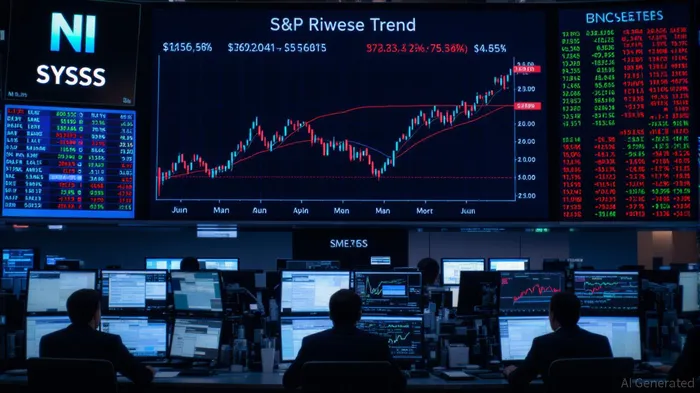
The Technology sector, long the market's bellwether, continues to lead the charge. Mega-cap stocks like Nvidia and Microsoft are riding a wave of AI-driven earnings surprises, with their valuations supported by the Fed's rate-cut narrative according to market analysis. Lower discount rates, a direct consequence of accommodative monetary policy, have made high-growth assets more attractive. This is particularly evident in the Q3 2025 factor performance analysis, which highlights the outperformance of momentum and volatile stocks in AI-driven sectors. The sector's strength is not just speculative-it's rooted in fundamentals. As the FOMC's December 2025 projections indicate, core PCE inflation is expected to fall to 2.0% by 2028 according to central bank data, creating a long-term tailwind for growth stocks.
However, the real story lies in the interplay between inflation and risk appetite. Bond funds, for instance, saw €7.86 billion in inflows in September 2025 according to central bank data, but longer-duration bonds faced redemptions as investors hedged against yield volatility. This duality underscores a broader trend: while fixed income remains a safe haven, equities-particularly those tied to economic cycles-are capturing the lion's share of capital. Commodities like gold and copper also saw inflows according to market analysis, but their gains were driven by geopolitical uncertainties rather than cyclical optimism.
Where to Position Capital in a Post-PCE World
The September PCE report has crystallized a clear path for investors. Cyclical sectors, especially Financials and Consumer Discretionary, are now in the spotlight. Schwab's upgrade of Health Care and Industrials according to sector outlook suggests that AI adoption and productivity gains will be key drivers of sector performance. For growth investors, the Technology sector remains a core holding, but the real alpha will come from smaller, AI-native companies that can scale in a lower-rate environment.
Meanwhile, the Fed's December meeting on the 10th according to central bank analysis will be a pivotal moment. If the central bank confirms its rate-cutting intentions, we can expect a further acceleration in capital flows into cyclical sectors. Defensive plays like Utilities and Real Estate, while still relevant, are likely to underperform in a growth-centric environment. The message is clear: investors must reallocate toward sectors that thrive in a low-inflation, low-rate world.
Conclusion
The September 2025 PCE report is more than a data point-it's a catalyst for strategic reallocation. As inflation eases and the Fed signals a pivot, cyclical sectors and growth stocks are positioned to outperform. The S&P 500's rally is not a fluke; it's a reflection of shifting macroeconomic fundamentals. For investors, the key is to align portfolios with the new normal: a world where lower rates fuel economic activity, and innovation drives returns.





Comentarios
Aún no hay comentarios