
The Implications of Bithumb's Klaydice (DICE) Delisting and the Broader Risks of Illiquid Crypto Tokens: A 2025 Guide to Risk Mitigation and Due Diligence
In late 2025, Bithumb, South Korea's leading cryptocurrency exchange, issued an "investment warning" for Klaydice (DICE), signaling a critical juncture for investors and regulators alike. This move, while not an immediate delisting, underscored systemic risks in the crypto market: projects failing to meet transparency standards and exchanges stepping up scrutiny to protect retail investors. The DICE case is emblematic of a broader trend where illiquid tokens-often lacking real-world utility or governance-become focal points for volatility, liquidity crises, and regulatory intervention. For investors, the lesson is clear: due diligence and risk mitigation strategies must evolve alongside the market's growing complexity.
Bithumb's DICE Warning: A Case Study in Project Accountability
Bithumb's decision to flag DICE was rooted in the project's failure to disclose critical business updates, including developments that directly impacted its valuation according to reports. The exchange's review revealed "numerous shortcomings" in Klaydice's operational transparency, eroding trust among traders and institutional stakeholders as per analysis. While Bithumb did not specify all issues, the warning served as a red flag, urging investors to reassess their exposure to tokens with opaque fundamentals.
This action aligns with a broader shift in exchange policies. Platforms like Bithumb are increasingly prioritizing projects with verifiable utility, active development, and compliance with disclosure norms according to industry trends. For DICE holders, the warning signaled potential trading restrictions or delisting if the project failed to address concerns-a scenario that could trigger sharp price declines and liquidity crunches.
The Broader Risks of Illiquid Tokens: Lessons from 2023–2025
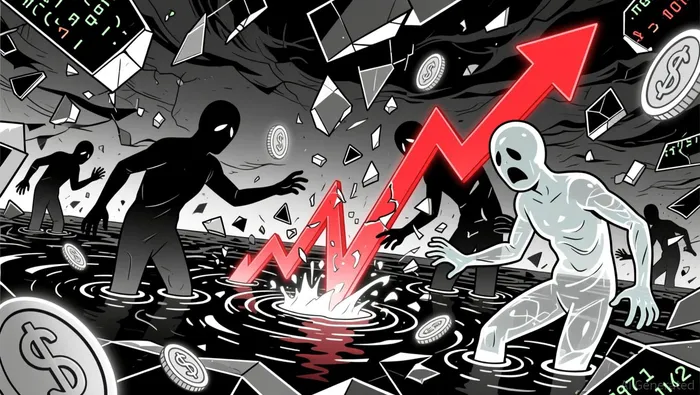
The DICE sagaSAGA-- is not an isolated incident. Between 2023 and 2025, the crypto market witnessed multiple liquidity crises, exposing vulnerabilities in illiquid tokens. For instance, in October 2025, a market-wide sell-off saw tokens with low trading volumes plummet by over 70% in three weeks, driven by regulatory uncertainty. Similarly, a November 2025 crash-triggered by the Federal Reserve's hawkish policy-resulted in $400 million in liquidated long positions within 24 hours, as investors fled to liquid assets like BitcoinBTC-- according to research.
These events highlight the pro-cyclical nature of crypto liquidity: it thrives during optimism but vanishes rapidly during downturns. Illiquid tokens, often traded on fragmented exchanges, face exacerbated price slippage and volatility. For example, during the 2025 crash, tokens like ATOMATOM-- dropped to $0.01 amid forced selling, revealing the fragility of leveraged structures in markets lacking deep institutional support.
Risk Mitigation Strategies: Navigating a Fragmented Market
To mitigate these risks, investors must adopt a multifaceted approach to due diligence and liquidity management. Key strategies include:
Tokenomics and Smart Contract Audits: Projects with excessive token concentration among insiders or unverified smart contracts pose significant risks. Tools like CertiK and OpenZeppelin provide audit frameworks, while platforms like Token Sniffer detect honeypots and rug pulls according to industry experts.
Cross-Chain Liquidity Aggregation: Protocols such as Stargate FinanceSTG-- and SynapseSYN-- Protocol enable instant, low-cost transfers across 40+ blockchains, reducing slippage and fragmentation according to analysis. These tools are critical for managing exposure to tokens with dispersed trading venues.
Real-Time Monitoring and AI-Driven Risk Controls: Advanced platforms integrate AI modules to enforce dynamic stop-loss protections, preventing cascading liquidations during market stress according to technical research. For example, the "Trading Sentinel" architecture combines AMM liquidity pools with order book markets to stabilize multi-chain trading.
Regulatory and On-Chain Analysis: Investors should prioritize projects aligned with KYC/AML standards and monitor on-chain metrics like active addresses and NVT ratios to gauge long-term viability according to institutional analysis.
Conclusion: The Imperative of Proactive Due Diligence
Bithumb's DICE warning and the 2025 liquidity crises underscore a fundamental truth: the crypto market's volatility demands rigorous due diligence. Investors must move beyond price charts and scrutinize tokenomics, governance, and liquidity infrastructure. As exchanges like Bithumb enforce stricter listing standards, the survival of projects with weak fundamentals will hinge on their ability to adapt-or face delisting. For now, the path forward lies in leveraging technology and institutional-grade tools to navigate a market where liquidity is both a blessing and a curse.






Comentarios
Aún no hay comentarios