
The Implications of a Bank of Canada Rate Cut in October for Canadian Fixed Income Markets
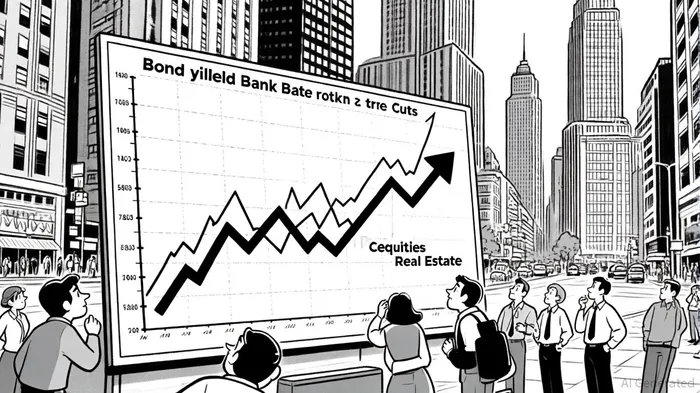
The prospect of a Bank of Canada rate cut in October 2025 has sparked renewed debate about its implications for Canadian fixed income markets. While direct policy signals or analyst forecasts remain elusive, historical patterns and investor behavior provide a framework for understanding potential outcomes. A rate cut, typically aimed at stimulating economic growth or countering inflationary pressures, would likely trigger a cascade of strategic reallocations across asset classes.
Strategic Asset Reallocation: From Bonds to Alternatives
When central banks lower interest rates, fixed-income instruments face immediate headwinds. Lower rates reduce the attractiveness of new bond issuances, as yields decline, eroding returns for existing holders. This dynamic often prompts investors to pivot toward alternatives such as equities, real estate, or commodities, which offer higher growth potential in a low-yield environment[1]. For instance, during past rate-cut cycles, Canadian investors have historically favored equities in sectors like technology and healthcare, which tend to outperform in accommodative monetary climates.
The shift also extends to longer-duration bonds, as investors seek to lock in higher yields despite increased interest rate risk. This behavior can flatten the yield curve, narrowing the spread between short-term and long-term yields. A flatter curve signals market expectations of prolonged low-rate environments, which may dampen returns for traditional bond portfolios unless actively managed[1].
Bond Market Positioning: Navigating Duration and Credit Risk
For fixed income investors, a rate cut necessitates a recalibration of portfolio duration. Short-term bonds, less sensitive to rate fluctuations, may become more attractive in the near term. However, those willing to accept higher risk might extend duration to capture premium yields, particularly in corporate or high-yield sectors. Credit spreads—differences in yields between government and corporate bonds—often widen during rate cuts as investors demand compensation for increased default risks in a potentially inflationary environment[1].
Strategic positioning also hinges on macroeconomic context. If the Bank of Canada's rate cut is driven by weak growth rather than inflation, investors may prioritize income-generating assets like infrastructure or dividend-paying equities. Conversely, if the cut is part of a broader effort to combat inflation, real assets such as commodities or real estate investment trusts (REITs) could gain traction[1].
The Role of Market Expectations
Even before a rate cut is implemented, market expectations can drive yield movements. Anticipation of accommodative policy often leads to a preemptive rise in bond prices (and fall in yields), as investors front-run the central bank's actions. This phenomenon underscores the importance of timing and liquidity in fixed income strategies. Investors who misjudge the timing of rate cuts risk being caught in a yield compression cycle, where returns are squeezed by both falling rates and rising asset prices[1].
Conclusion: Balancing Caution and Opportunity
A Bank of Canada rate cut in October 2025 would likely act as a catalyst for asset reallocation, reshaping fixed income markets through yield compression and duration shifts. While the absence of granular policy signals or historical case studies complicates precise predictions, the broader behavioral patterns of investors remain instructive. For fixed income portfolios, the key lies in balancing defensive positioning—such as short-duration bonds—with tactical exposure to higher-yield alternatives. In an era of evolving monetary policy, adaptability will remain the cornerstone of resilient investment strategies.







Comentarios
Aún no hay comentarios