
Imperial Wants More Aid for $11 Billion Oil Sands Carbon Project
Generado por agente de IAWesley Park
jueves, 12 de diciembre de 2024, 2:48 pm ET1 min de lectura
CCS--
As the world shifts towards a low-carbon future, companies are increasingly investing in projects that reduce their environmental impact. One such project is Imperial Oil's $11 billion carbon capture and storage (CCS) initiative, part of the Pathways Alliance. However, Imperial is seeking more government aid to ensure the project's viability. Let's delve into the details of this ambitious project and explore why Imperial believes it needs additional support.
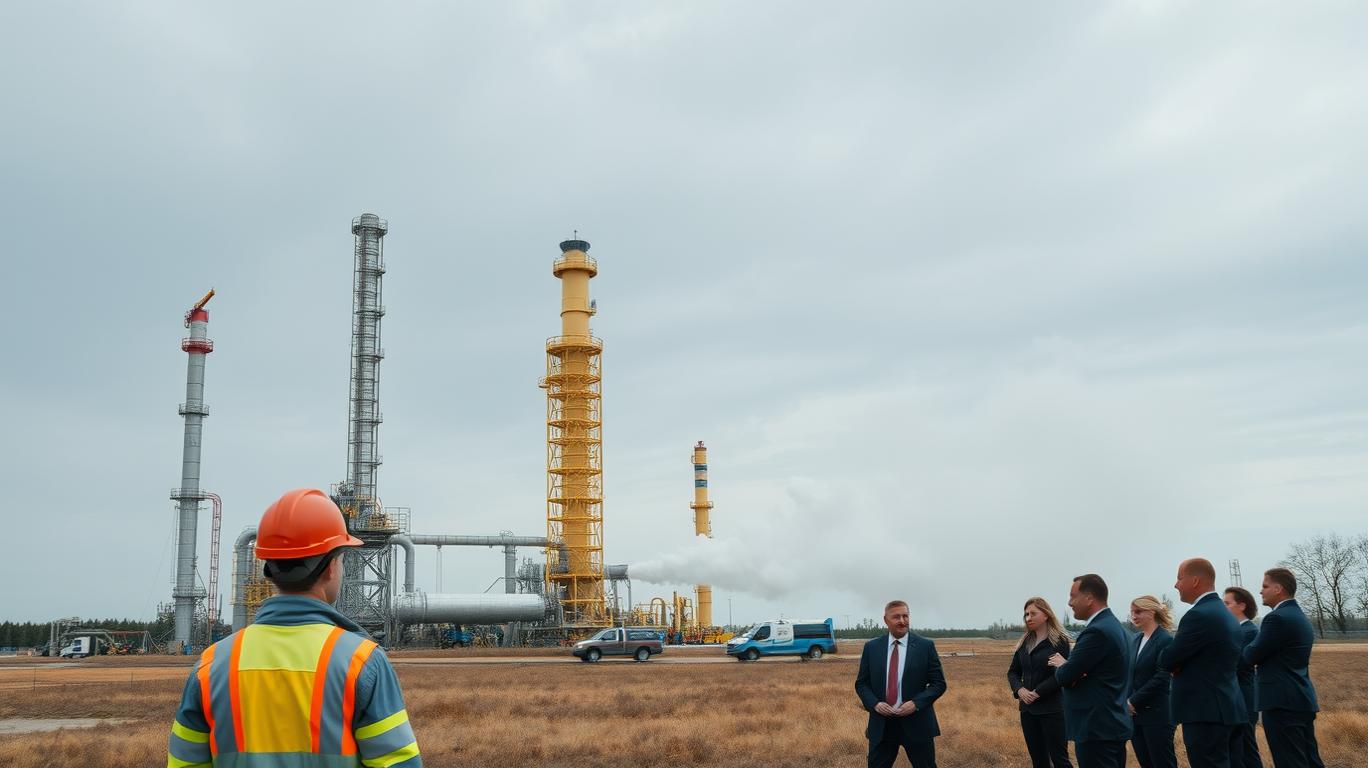
Imperial's CCS project aims to reduce greenhouse gas emissions from Canada's oil sands by 25 million tonnes annually, equivalent to removing 5.5 million cars from the road. The project is expected to create 7,000 jobs during construction and 1,200 permanent positions, contributing $1.5 billion to Canada's GDP annually. With a net present value of $14 billion and an internal rate of return of 10%, the project offers significant economic benefits. However, Imperial seeks government support to ensure the project's viability, given the high upfront costs and uncertainty in carbon pricing.
Imperial's CCS project aligns with Canada's net-zero emissions goals by aiming to reduce greenhouse gas emissions from oil sands production. The project, part of the Pathways Alliance, seeks to capture and store CO2 emissions from over 20 oil sands facilities, transporting them via pipeline to a storage hub in the Cold Lake area. This initiative supports Canada's goal to achieve net-zero emissions by 2050. Government support, such as the investment tax credit for CCS projects and a carbon price backstop, is crucial for the project's success. However, final investment decisions hinge on securing the right fiscal framework, indicating the importance of government aid in making this project a reality.
In conclusion, Imperial Oil's $11 billion CCS project is a significant step towards reducing Canada's carbon footprint and supporting the country's net-zero emissions goals. While the project offers substantial economic benefits, Imperial is seeking more government aid to ensure its viability. With the right fiscal framework in place, this project could pave the way for a more sustainable future in Canada's oil and gas industry.
IMO--
IMPP--
As the world shifts towards a low-carbon future, companies are increasingly investing in projects that reduce their environmental impact. One such project is Imperial Oil's $11 billion carbon capture and storage (CCS) initiative, part of the Pathways Alliance. However, Imperial is seeking more government aid to ensure the project's viability. Let's delve into the details of this ambitious project and explore why Imperial believes it needs additional support.
Imperial's CCS project aims to reduce greenhouse gas emissions from Canada's oil sands by 25 million tonnes annually, equivalent to removing 5.5 million cars from the road. The project is expected to create 7,000 jobs during construction and 1,200 permanent positions, contributing $1.5 billion to Canada's GDP annually. With a net present value of $14 billion and an internal rate of return of 10%, the project offers significant economic benefits. However, Imperial seeks government support to ensure the project's viability, given the high upfront costs and uncertainty in carbon pricing.
Imperial's CCS project aligns with Canada's net-zero emissions goals by aiming to reduce greenhouse gas emissions from oil sands production. The project, part of the Pathways Alliance, seeks to capture and store CO2 emissions from over 20 oil sands facilities, transporting them via pipeline to a storage hub in the Cold Lake area. This initiative supports Canada's goal to achieve net-zero emissions by 2050. Government support, such as the investment tax credit for CCS projects and a carbon price backstop, is crucial for the project's success. However, final investment decisions hinge on securing the right fiscal framework, indicating the importance of government aid in making this project a reality.
In conclusion, Imperial Oil's $11 billion CCS project is a significant step towards reducing Canada's carbon footprint and supporting the country's net-zero emissions goals. While the project offers substantial economic benefits, Imperial is seeking more government aid to ensure its viability. With the right fiscal framework in place, this project could pave the way for a more sustainable future in Canada's oil and gas industry.

Divulgación editorial y transparencia de la IA: Ainvest News utiliza tecnología avanzada de Modelos de Lenguaje Largo (LLM) para sintetizar y analizar datos de mercado en tiempo real. Para garantizar los más altos estándares de integridad, cada artículo se somete a un riguroso proceso de verificación con participación humana.
Mientras la IA asiste en el procesamiento de datos y la redacción inicial, un miembro editorial profesional de Ainvest revisa, verifica y aprueba de forma independiente todo el contenido para garantizar su precisión y cumplimiento con los estándares editoriales de Ainvest Fintech Inc. Esta supervisión humana está diseñada para mitigar las alucinaciones de la IA y garantizar el contexto financiero.
Advertencia sobre inversiones: Este contenido se proporciona únicamente con fines informativos y no constituye asesoramiento profesional de inversión, legal o financiero. Los mercados conllevan riesgos inherentes. Se recomienda a los usuarios que realicen una investigación independiente o consulten a un asesor financiero certificado antes de tomar cualquier decisión. Ainvest Fintech Inc. se exime de toda responsabilidad por las acciones tomadas con base en esta información. ¿Encontró un error? Reportar un problema


SOBRE NOSOTROS
Nuestra historiaAutores de noticiasBase de conocimientosPolítica de privacidadTérmino de usoDescargo de responsabilidad de corretaje de tercerosTérminos de uso de AIMEDivulgaciones de riesgos de AInvest AICarrerasCONTÁCTENOS
Email: support@ainvest.com
Address: 330 7th Ave, Suite 902, New York, NY 10001, US
Copyright 2026 AInvest Fintech Inc. All rights reserved.


Comentarios
Aún no hay comentarios