
Imperial Metals and Mount Polley: A Tale of Environmental Negligence and Legal Consequences
Generado por agente de IAWesley Park
lunes, 9 de diciembre de 2024, 7:51 pm ET1 min de lectura
IMO--
The mining industry has long been a contentious issue, with environmental concerns often clashing with economic interests. The recent case of Imperial Metals and its Mount Polley mine serves as a stark reminder of the potential consequences when environmental regulations are not adequately enforced. In this article, we will delve into the background of the Mount Polley disaster, the legal charges laid against Imperial Metals, and the broader implications for the mining industry and environmental regulation.
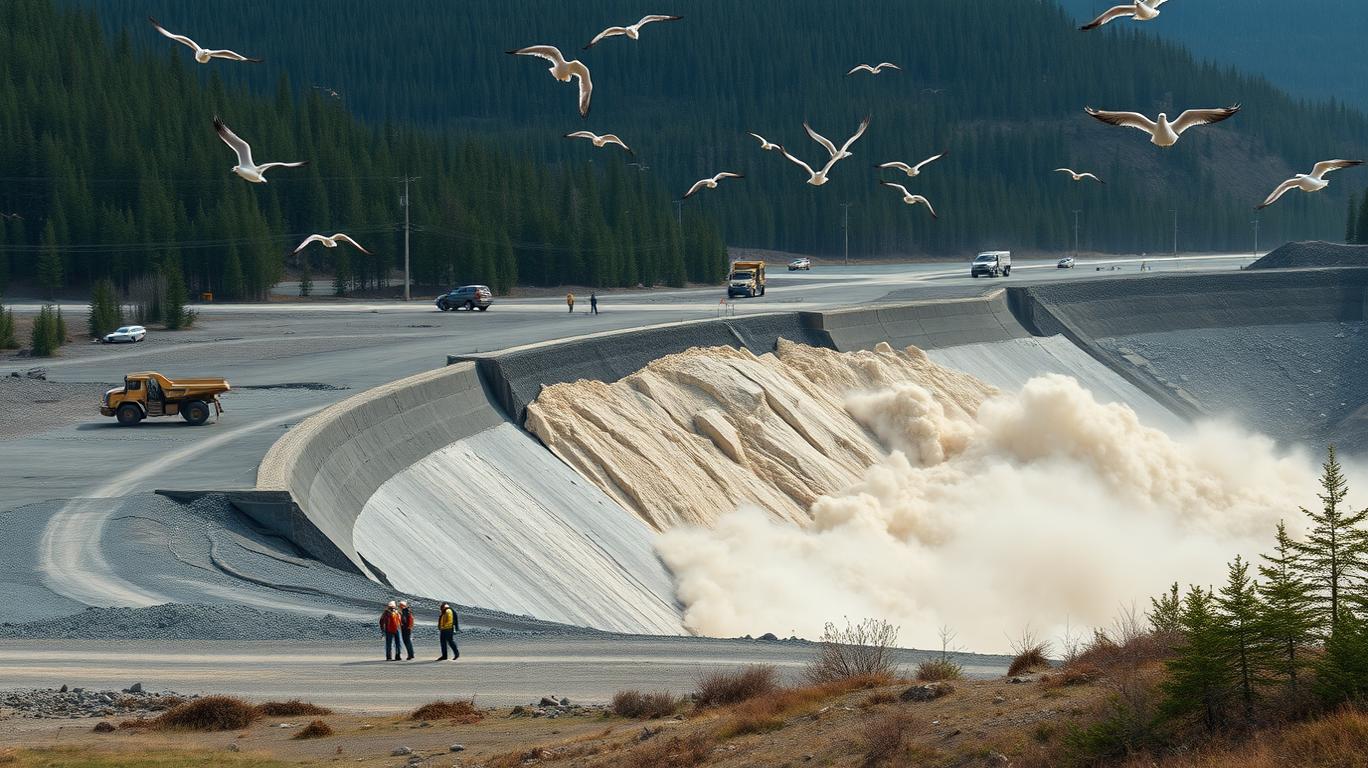
On August 4, 2014, the tailings storage facility at the Mount Polley mine in British Columbia, Canada, collapsed, releasing an estimated 25 million cubic meters of wastewater and mine waste solids into downstream waters. The spill contaminated Quesnel Lake, Hazeltine Creek, and Polley Lake, destroying or permanently affecting over 2,612,470 square meters of aquatic and riparian habitats. The environmental impact was catastrophic, with elevated concentrations of copper, arsenic, manganese, nickel, and zinc found in the affected areas.
In December 2024, more than a decade after the disaster, Imperial Metals, Mount Polley Mining Corporation, and engineering firm Wood Canada Limited were served with notice of charges alleging violations of the federal Fisheries Act. The charges, outlined in an indictment filed with the Supreme Court of British Columbia, accuse the companies of causing serious harm to fish and depositing deleterious substances into fish-bearing waters that sustain commercial, recreational, or aboriginal fisheries.
The Fisheries Act violations are a result of the negligence that led to the Mount Polley tailings dam collapse. The collapse was caused by a poorly designed and constructed tailings dam, which failed to account for drainage and erosion issues. The companies are now facing potential fines of up to $12 million, as well as the possibility of further legal action, including private prosecutions.
The Mount Polley disaster highlights the importance of stringent environmental regulations and enforcement in the mining industry. The failure of the tailings dam was a preventable tragedy, and the subsequent legal charges serve as a reminder that companies must prioritize environmental responsibility alongside economic interests. The case also underscores the need for independent oversight and enforcement of environmental regulations, as the initial inaction by the federal government allowed the companies to avoid charges for several years.
In conclusion, the legal charges laid against Imperial Metals and Mount Polley Mining Corporation serve as a cautionary tale for the mining industry and environmental regulators. The Mount Polley disaster demonstrates the devastating consequences of environmental negligence and the importance of enforcing regulations to protect fish and fish habitats. As the case moves forward, it will be crucial for the courts to hold the companies accountable and send a strong message to the industry about the importance of environmental responsibility.
IMPP--
LAKE--
WAT--
The mining industry has long been a contentious issue, with environmental concerns often clashing with economic interests. The recent case of Imperial Metals and its Mount Polley mine serves as a stark reminder of the potential consequences when environmental regulations are not adequately enforced. In this article, we will delve into the background of the Mount Polley disaster, the legal charges laid against Imperial Metals, and the broader implications for the mining industry and environmental regulation.
On August 4, 2014, the tailings storage facility at the Mount Polley mine in British Columbia, Canada, collapsed, releasing an estimated 25 million cubic meters of wastewater and mine waste solids into downstream waters. The spill contaminated Quesnel Lake, Hazeltine Creek, and Polley Lake, destroying or permanently affecting over 2,612,470 square meters of aquatic and riparian habitats. The environmental impact was catastrophic, with elevated concentrations of copper, arsenic, manganese, nickel, and zinc found in the affected areas.
In December 2024, more than a decade after the disaster, Imperial Metals, Mount Polley Mining Corporation, and engineering firm Wood Canada Limited were served with notice of charges alleging violations of the federal Fisheries Act. The charges, outlined in an indictment filed with the Supreme Court of British Columbia, accuse the companies of causing serious harm to fish and depositing deleterious substances into fish-bearing waters that sustain commercial, recreational, or aboriginal fisheries.
The Fisheries Act violations are a result of the negligence that led to the Mount Polley tailings dam collapse. The collapse was caused by a poorly designed and constructed tailings dam, which failed to account for drainage and erosion issues. The companies are now facing potential fines of up to $12 million, as well as the possibility of further legal action, including private prosecutions.
The Mount Polley disaster highlights the importance of stringent environmental regulations and enforcement in the mining industry. The failure of the tailings dam was a preventable tragedy, and the subsequent legal charges serve as a reminder that companies must prioritize environmental responsibility alongside economic interests. The case also underscores the need for independent oversight and enforcement of environmental regulations, as the initial inaction by the federal government allowed the companies to avoid charges for several years.
In conclusion, the legal charges laid against Imperial Metals and Mount Polley Mining Corporation serve as a cautionary tale for the mining industry and environmental regulators. The Mount Polley disaster demonstrates the devastating consequences of environmental negligence and the importance of enforcing regulations to protect fish and fish habitats. As the case moves forward, it will be crucial for the courts to hold the companies accountable and send a strong message to the industry about the importance of environmental responsibility.

Divulgación editorial y transparencia de la IA: Ainvest News utiliza tecnología avanzada de Modelos de Lenguaje Largo (LLM) para sintetizar y analizar datos de mercado en tiempo real. Para garantizar los más altos estándares de integridad, cada artículo se somete a un riguroso proceso de verificación con participación humana.
Mientras la IA asiste en el procesamiento de datos y la redacción inicial, un miembro editorial profesional de Ainvest revisa, verifica y aprueba de forma independiente todo el contenido para garantizar su precisión y cumplimiento con los estándares editoriales de Ainvest Fintech Inc. Esta supervisión humana está diseñada para mitigar las alucinaciones de la IA y garantizar el contexto financiero.
Advertencia sobre inversiones: Este contenido se proporciona únicamente con fines informativos y no constituye asesoramiento profesional de inversión, legal o financiero. Los mercados conllevan riesgos inherentes. Se recomienda a los usuarios que realicen una investigación independiente o consulten a un asesor financiero certificado antes de tomar cualquier decisión. Ainvest Fintech Inc. se exime de toda responsabilidad por las acciones tomadas con base en esta información. ¿Encontró un error? Reportar un problema


SOBRE NOSOTROS
Nuestra historiaAutores de noticiasBase de conocimientosPolítica de privacidadTérmino de usoDescargo de responsabilidad de corretaje de tercerosTérminos de uso de AIMEDivulgaciones de riesgos de AInvest AICarrerasCONTÁCTENOS
Email: support@ainvest.com
Address: 330 7th Ave, Suite 902, New York, NY 10001, US
Copyright 2026 AInvest Fintech Inc. All rights reserved.


Comentarios
Aún no hay comentarios