
The Impact of Trump's Policies on Corporate Legal and Compliance Consulting Firms: Assessing Long-Term Value Shifts
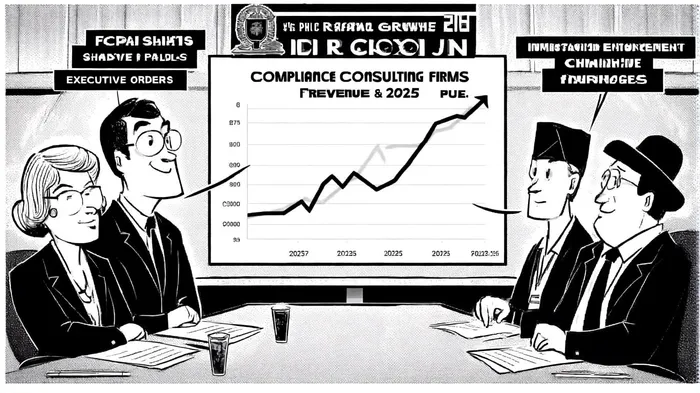
The Trump administration's 2024–2025 policy agenda has catalyzed profound shifts in the corporate legal and compliance consulting sector, reshaping enforcement priorities, financial performance, and structural dynamics. As companies navigate a regulatory landscape marked by deregulation, national security focus, and evolving compliance demands, the long-term value of professional services firms is being recalibrated. This analysis examines the interplay between Trump-era policies and the sector's transformation, drawing on recent data and expert insights.
Enforcement Priorities: A Shift in Focus and Risk Profiles
The Trump administration's recalibration of enforcement priorities has directly influenced the demand for compliance consulting services. The February 2025 executive order pausing the Foreign Corrupt Practices Act (FCPA) for six months redirected resources toward investigations of foreign bribery linked to transnational criminal operations, such as Latin American drug cartels[1]. This shift has compelled firms to reorient compliance programs, balancing reduced FCPA scrutiny with heightened risks under U.S. sanctions and the Anti-Terrorism Act[1].
Simultaneously, the administration's designation of cartels as “foreign terrorist organizations” has expanded legal liabilities for companies operating in high-risk regions, particularly in Latin America[1]. Compliance consulting firms now face increased demand for tailored risk assessments and sanctions compliance frameworks, as businesses seek to avoid civil and criminal exposure.
Deregulation in energy and environmental sectors has also created a paradoxical dynamic: while reduced federal oversight lowers compliance costs for some firms, it has spurred state-level regulatory activity, particularly in climate and ESG domains[3]. This fragmentation necessitates more nuanced compliance strategies, favoring firms with expertise in cross-jurisdictional regulatory navigation.
Financial Performance: Growth Amid Polarization
The financial performance of legal/compliance consulting firms under Trump policies reveals a mixed but resilient landscape. Law firms specializing in regulatory and policy advisory services reported double-digit revenue growth in 2025, driven by heightened demand for import/export compliance, antitrust guidance, and DEI restructuring[1]. Firms like Hogan Lovells and Baker Botts saw revenue increases of 9% to 31.6%, with profit per equity partner rising substantially[1].
However, market polarization is evident. Midsize and Second Hundred firms outperformed Am Law 100 counterparts in Q2 2025, as the latter grappled with declining corporate practice demand[2]. This divergence reflects broader industry trends, with firms either capitalizing on niche compliance needs (e.g., immigration audits, AI governance) or struggling to adapt to deregulatory headwinds[2].
The administration's trade policies, including proposed 25% tariffs on imports, have further complicated financial outlooks. While these measures aim to bolster domestic manufacturing, they risk inflationary pressures and operational cost increases for firms reliant on global supply chains[5].
Structural Changes: Technology, Consolidation, and Client Behavior
Structural shifts in the sector are driven by technological adoption, market consolidation, and evolving client expectations. The administration's emphasis on deregulation and market-driven AI development has accelerated the integration of AI tools in legal operations, with 30% of firms already using AI for compliance tasks and 54% planning to adopt such technologies within two years[3]. This trend is reshaping service offerings, with demand rising for AI governance frameworks and data privacy solutions[4].
Market consolidation is another key development. As regulatory uncertainty persists, clients are favoring firms with specialized expertise in high-risk areas such as anti-corruption, immigration compliance, and third-party risk management[4]. GartnerIT-- notes that 82% of compliance leaders have faced consequences from third-party risks, underscoring the need for robust vendor due diligence services[4].
Client behavior has also shifted in response to Trump-era policies. The termination of federal DEI programs and stricter requirements for federal contractors have prompted companies to seek strategic advisory services for workforce restructuring[6]. Additionally, heightened immigration enforcement—such as stricter I-9 audit protocols—has driven demand for compliance frameworks in industries like hospitality and agriculture[6].
Future Outlook: Navigating Uncertainty and Opportunity
The long-term value of corporate legal/compliance consulting firms will hinge on their ability to adapt to a regulatory environment characterized by volatility and sector-specific challenges. While the DOJ's anticipated focus on immigration and national security may reduce pressure on corporate fraud enforcement[4], firms must remain agile in addressing emerging risks, such as AI ethics and geopolitical tensions[6].
State and international regulatory activity will also play a critical role. As federal oversight wanes in areas like ESG and climate policy, firms with expertise in state-level compliance and global standards (e.g., EU GDPR) will gain a competitive edge[3].
Conclusion
Trump's policies have redefined the corporate legal and compliance consulting sector, creating both challenges and opportunities. While deregulation and enforcement reallocation have reduced compliance burdens in some areas, they have also introduced new risks and complexities. Firms that invest in technology, specialize in high-demand niches, and maintain flexibility in regulatory strategies are poised to capture long-term value. As the sector evolves, investors must monitor how firms navigate the interplay between federal deregulation, state-level enforcement, and global compliance demands.







Comentarios
Aún no hay comentarios