
The Impact of Trump's ICE Raids on Foreign Investment in U.S. Manufacturing: Assessing the Risks and Opportunities in Labor-Intensive Sectors Amid Rising Immigration Enforcement
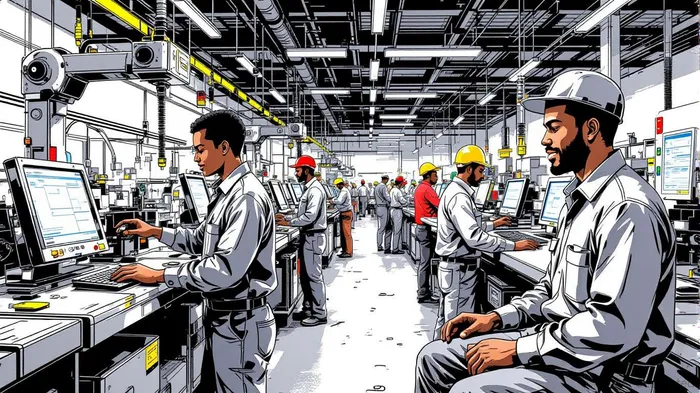
The intersection of immigration enforcement and foreign investment in U.S. manufacturing has become a critical focal point for investors, policymakers, and industry leaders. Under the Trump administration’s 2024–2025 policies, a dual dynamic has emerged: aggressive immigration enforcement measures, including ICE raids and stricter workplace compliance rules, have collided with a surge in foreign direct investment (FDI) driven by protectionist trade policies and tax incentives. This analysis explores how these forces are reshaping labor-intensive sectors like agriculture, construction, and manufacturing, and what this means for investors navigating a landscape of both opportunity and risk.
The Allure of Protectionist Policies: Attracting FDI Amid Tariffs
Trump’s America First agenda has incentivized multinational corporations to relocate or expand operations in the U.S., particularly in manufacturing. Tariffs on imports from China, Canada, and the EU—averaging 25% on key goods—have created a “reshoring premium” that offsets higher domestic production costs [4]. For instance, Taiwan Semiconductor Manufacturing Company (TSMC) pledged a $165 billion investment in U.S. semiconductor facilities, while SoftBank committed $100 billion to AI infrastructure, citing alignment with Trump’s trade policies [1]. These investments are further bolstered by extended TCJA tax cuts and deregulation, which reduce corporate costs and enhance profitability [3].
However, the economic calculus is not without caveats. According to the PennPENN-- Wharton Budget Model, Trump’s tariffs are projected to reduce U.S. GDP by 6% and wages by 5% over the long term, as global trade partners retaliate and domestic industries face higher input costs [4]. For investors, this duality—short-term gains from reshoring versus long-term macroeconomic headwinds—demands a nuanced assessment of sector-specific resilience.
Labor Shortages and Immigration Enforcement: A Growing Fracture
While FDI inflows have surged, Trump’s immigration enforcement policies are creating acute labor shortages in sectors reliant on immigrant labor. ICE raids, expanded workplace compliance audits, and the termination of humanitarian parole programs have destabilized labor markets in agriculture, construction, and healthcare. For example, California’s agricultural sector—where 63% of farmworkers are immigrants, including 24% undocumented—faces a $275 billion GDP loss due to staffing gaps [2]. Similarly, construction, which employs over 60% immigrants, is grappling with skill shortages exacerbated by stricter enforcement [1].
A 2025 National Association of Manufacturers survey found that 70% of manufacturers cite labor shortages as a primary barrier to growth [5]. This tension between protectionist trade policies and labor availability underscores a critical risk for investors: even as tariffs drive FDI, enforcement-driven labor shortages could undermine operational capacity and profitability.
Geopolitical and Market Risks: Tariffs, Retaliation, and Investor Uncertainty
Trump’s unilateral trade strategies have also triggered retaliatory measures from global partnersGLP--, complicating the investment landscape. The EU and China have imposed countervailing tariffs—up to 125% on U.S. goods—while supply chain disruptions threaten to inflate costs and erode investor confidence [2]. For labor-intensive sectors, these geopolitical tensions compound existing challenges, as companies reassess supply chain resilience and diversification strategies.
Moreover, the administration’s focus on deregulation and tax cuts may not fully offset the labor market frictions caused by immigration enforcement. A 2025 study by the Migration Policy Institute notes that 80% of unauthorized immigrants in the U.S. arrived before 2010, and their removal would disproportionately impact industries with limited automation potential [1]. This creates a paradox: sectors most attractive to FDI (e.g., advanced manufacturing) may be less vulnerable to labor shortages, while those critical to the U.S. economy (e.g., agriculture) face existential risks.
Opportunities in Resilience: Sectors to Watch
Investors seeking opportunities amid this volatility should prioritize sectors with dual advantages: access to FDI incentives and lower exposure to labor shortages. For example, semiconductor manufacturing—backed by TSMC’s $165 billion investment—benefits from both Trump’s tariffs and a relatively stable workforce [1]. Similarly, energy infrastructure projects, such as Venture Global’s $18 billion LNG investments, leverage deregulation and a less immigrant-dependent labor base [3].
Conversely, sectors like agriculture and hospitality remain high-risk. A 2025 AEI report warns that mass deportations could reduce California’s GDP by $278 billion, with cascading effects on food supply chains and inflation [2]. Investors here must weigh short-term gains against long-term systemic risks.
Conclusion: Balancing Act for Investors
The Trump-era landscape presents a complex interplay of incentives and constraints for foreign investment in U.S. manufacturing. While protectionist policies and tax cuts have spurred record FDI, immigration enforcement measures are creating labor market fissures that could undermine operational scalability. For investors, the key lies in sector-specific due diligence: identifying industries that align with both policy-driven incentives and labor market realities. As the administration’s 2025 agenda unfolds, the ability to navigate this duality will determine the success of investments in an increasingly polarized economic environment.
Source:
[1] List of Companies Pledging to Invest Billions in US Since [https://www.newsweek.com/business-trump-biden-investments-manufacturing-recession-2048775]
[2] Immigration Enforcement and the US Agricultural Sector in 2025 [https://www.aei.org/research-products/report/immigration-enforcement-and-the-us-agricultural-sector-in-2025/]
[3] Trump's policy impact on U.S. manufacturing [https://www.wipfli.com/insights/articles/mrd-trumps--policy-impact-on-us-manufacturing]
[4] The Economic Effects of President Trump's Tariffs [https://budgetmodel.wharton.upenn.edu/issues/2025/4/10/economic-effects-of-president-trumps-tariffs]
[5] Immigration Archives - NAM [https://nam.org/issue/immigration/]







Comentarios
Aún no hay comentarios