
The Impact of Trump's $7.6 Billion Energy Cuts on California's Grid Modernization and Investment Opportunities in Renewable Infrastructure
The Trump administration's 2017 energy budget cuts, which targeted grid modernization and renewable energy programs, have had a lasting ripple effect on California's energy landscape. While federal funding for initiatives like the Advanced Research Projects Agency–Energy (ARPA-E) and the Office of Energy Efficiency and Renewable Energy (EERE) faced severe reductions, according to a California Energy Commission report, California has emerged as a counterforce, leveraging state-level action, private investment, and strategic reshoring to advance its clean energy goals. This analysis explores how the state is navigating federal constraints, the resilience metrics of its grid modernization efforts, and the investment opportunities arising from this dynamic.
Federal Cuts and California's Response
President Trump's $7.6 billion energy budget cuts directly impacted California's grid modernization projects, including the cancellation of a $600 million federal grant for transmission line upgrades. The administration's broader shift toward fossil fuels and away from renewables created a vacuum that California has actively filled. Governor Gavin Newsom's August 2025 executive order prioritized clean energy projects to capture expiring federal tax credits, ensuring the state remains a leader in renewable deployment. This proactive approach has allowed California to add over 11,600 megawatts (MW) of clean energy since 2022, according to an Environment America roundup, even as federal support wanes.
Private investment has also played a pivotal role. Pacific Gas & Electric's (PG&E) virtual power plant (VPP) initiative, which aggregated 100,000 home batteries to deliver 535 MW of stored energy during peak demand, exemplifies how decentralized solutions can offset federal underinvestment, as reported by USA Solar Cell. Such projects not only avoid reliance on gas-fired peaker plants but also demonstrate the viability of customer-driven energy resilience.
Strategic Reshoring and Legislative Innovation
California's clean energy reshoring efforts have gained momentum through legislative and policy innovations. In 2023, the state passed SB 49, which opened highways to solar power projects by utilizing 4,800 acres of roadside land for solar installations. Similarly, AB 3 and AB 1373 focused on offshore wind infrastructure, addressing gaps in transmission and procurement to unlock the state's offshore wind potential. These measures reflect a strategic pivot toward localized, scalable solutions that bypass federal bottlenecks.
Governor Newsom's 2023 "Clean Energy Transition Plan" further underscores this approach, aiming to build 148,000 MW of new clean power by 2045, as outlined by the California Policy Center. The plan aligns with a $2 billion clean energy package in the 2022–23 budget, which prioritizes decarbonization in buildings, industry, and hydrogen development. By 2025, California's battery storage capacity had surged to over 15,000 MW-1,900% higher than in 2019-providing critical backup during peak demand and low renewable output periods.
Grid Resilience Metrics and Challenges
California's grid resilience has improved markedly since 2020. Over 20,000 MW of new clean energy supply and 13,000 MW of battery storage have been added, with the Strategic Reliability Reserve now offering 4,000 MW of backup resources, including demand response and VPPs. These advancements enabled the state to achieve 100% clean energy in the California ISO service area for 52 days in 2024. However, challenges persist. Natural gas still accounts for a significant portion of the state's energy mix, and extreme weather events-such as wildfires threatening transmission lines during heatwaves-remain a risk.
To address these issues, California has invested in forecasting tools, consumer engagement programs like Power Saver Rewards, and infrastructure upgrades such as underground power lines and microgrids. The California ISO estimates that $45.8–63.2 billion in transmission expansion will be needed by 2040 to meet rising demand from electrification and decarbonization efforts.
Investment Opportunities in Renewable Infrastructure
The interplay of federal cuts and California's resilience-driven policies has created fertile ground for investment in several sectors:
- Battery Storage and Grid-Enhancing Technologies: With storage capacity projected to grow further, companies specializing in lithium-ion batteries, flow batteries, and advanced inverters are well-positioned. Imperial Valley's lithium reserves could also attract mining and processing investments.
- Transmission and Distribution Upgrades: The need for $45.8–63.2 billion in high-voltage transmission expansion by 2040 presents opportunities for firms involved in grid modernization, smart grid technologies, and distributed energy resource management systems (DERMS).
- Offshore Wind and Hydrogen Development: Legislative support for offshore wind (via AB 3 and AB 1373) and the state's green hydrogen goals open avenues for developers, turbine manufacturers, and port infrastructure companies.
- Solar and Virtual Power Plants: PG&E's VPP success highlights the potential for scalable, community-driven energy solutions, incentivizing investment in residential and commercial battery systems.
Conclusion
While Trump's energy cuts disrupted federal support for grid modernization and renewables, California's strategic reshoring, legislative agility, and private-sector collaboration have turned these challenges into opportunities. The state's focus on resilience-through battery storage, decentralized energy systems, and offshore wind-positions it as a model for clean energy transitions. For investors, the path forward lies in sectors that align with California's 2045 carbon neutrality goals, particularly transmission infrastructure, storage technologies, and hydrogen. As the state continues to innovate, the intersection of policy and market forces will likely yield robust returns for those who bet on its clean energy future.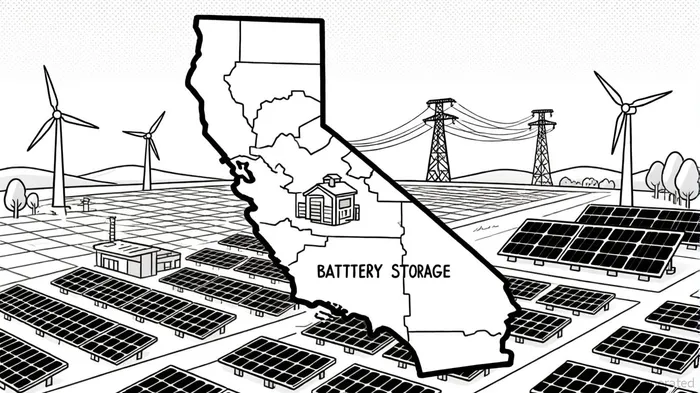







Comentarios
Aún no hay comentarios