
The Impact of Tricolor Holdings' Chapter 7 Bankruptcy on Regional Financial Institutions
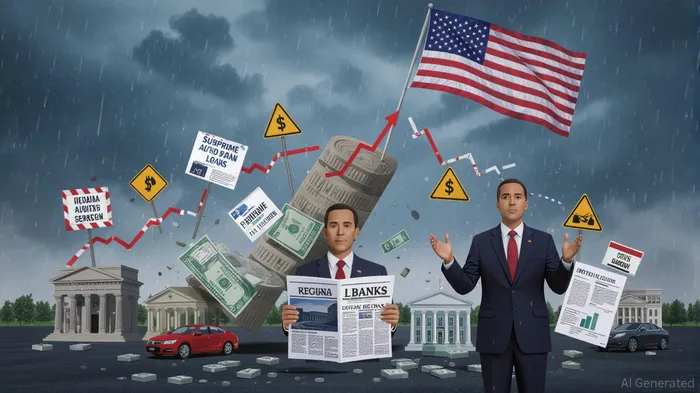
The recent Chapter 7 bankruptcy of Tricolor Holdings, a Texas-based subprime auto lender, has sent shockwaves through regional financial institutionsFISI--, exposing vulnerabilities in credit risk management and systemic stability. With over $1 billion in debt and 50,000 creditors, Tricolor's collapse has left major banks, including JPMorgan ChaseJPM--, Fifth ThirdFITB-- Bancorp, and BarclaysBCS--, grappling with potential losses tied to fraudulent practices and double-pledged collateral[1]. For smaller regional banks like RenasantRNST-- and Origin, the fallout is equally severe, as their direct loan exposures—$22.5 million and $30.1 million, respectively—have been placed on nonaccrual status[2]. This case underscores the fragility of subprime auto lending portfolios and raises urgent questions about the resilience of regional banking systems.
Credit Risk in Subprime Auto Lending: A Systemic Time Bomb
Tricolor's bankruptcy is not an isolated incident but a symptom of broader trends in the subprime auto lending sector. According to a report by the FDIC, underwriting standards have weakened significantly in recent years, with lenders extending longer amortization periods, reducing down payment requirements, and approving larger loan balances[3]. These practices have led to a surge in negative equity among borrowers, particularly for vehicles depreciating faster than loan terms can amortize. By January 2025, subprime auto delinquency rates had climbed to 6.56%, compared to just 0.39% for prime borrowers[4].
Regional banks, often positioned as safer alternatives to non-captive finance companies, have not been immune to these pressures. While small banks historically maintained conservative underwriting standards—serving borrowers with median credit scores of 730 in 2024—competitive pressures from subprime lenders have pushed some to relax criteria[5]. This shift has increased their exposure to high-risk borrowers, as evidenced by the FDIC's Q1 2025 Call Reports, which revealed a 35% cumulative rise in consumer loan charge-offs over three years[6]. The Tricolor case now serves as a stress test for these portfolios, exposing the risks of overleveraged borrowers and opaque collateral structures.
Systemic Vulnerabilities and Interconnected Risks
The interconnectedness of regional bank portfolios with subprime auto lending creates a cascade of risks. Tricolor's alleged fraudulent activities—such as double-pledging collateral—highlight weaknesses in due diligence processes[7]. Fifth Third's $200 million impairment charge, for instance, stems from loans that were allegedly misrepresented in asset-backed securities[8]. Such practices not only erode investor confidence but also threaten the stability of asset-backed bond markets, which have already seen value declines following Tricolor's collapse[9].
Moreover, the ripple effects extend beyond direct lenders. The sudden furlough of 80–90% of Tricolor's workforce and the closure of 65 retail locations have left thousands of borrowers in limbo, increasing the likelihood of widespread defaults[10]. For regional banks, this creates a feedback loop: borrower distress leads to higher delinquencies, which in turn amplify credit losses and capital erosion. The FDIC has long warned that such scenarios could trigger broader systemic risks, particularly if banks lack adequate capital buffers[11].
Regulatory Gaps and the Path Forward
The Tricolor debacle mirrors past corporate failures, such as Enron, which exposed critical gaps in regulatory oversight[12]. While the Sarbanes-Oxley Act of 2002 addressed accounting fraud, today's subprime auto lending crisis demands renewed scrutiny of collateral verification, loan origination practices, and risk concentration limits. The FDIC and other regulators must now evaluate whether current credit risk frameworks are sufficient to address the unique challenges of extended loan terms, electric vehicle collateral valuation, and the rise of non-captive lenders[13].
For investors, the key takeaway is clear: regional banks with significant subprime auto exposure require closer monitoring. Institutions like Renasant and Origin, which have already disclosed material losses, may face further capital strain as Tricolor's bankruptcy proceedings unfold. Meanwhile, the broader sector's reliance on high-risk lending—amid a backdrop of elevated interest rates and declining household savings—suggests that credit risk will remain a dominant theme in 2025[14].
Conclusion
Tricolor Holdings' bankruptcy is a wake-up call for regional financial institutions. It highlights the perils of lax underwriting, opaque collateral practices, and systemic overexposure to subprime lending. As regulators and market participants reassess risk management strategies, the focus must shift to strengthening credit frameworks, enhancing transparency, and ensuring adequate capital buffers. For investors, the path forward lies in scrutinizing banks' risk profiles and prioritizing institutions that balance growth with prudence—a lesson that Tricolor's collapse has etched in stark relief.





Comentarios
Aún no hay comentarios