
The Impact of Steady Chinese Monetary Policy on Equity Markets
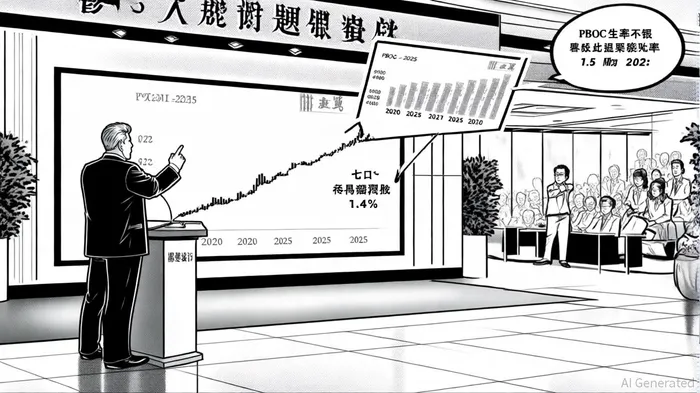
In 2025, China's monetary policy has undergone a significant shift, marking the first easing since 2010. The People's Bank of China (PBOC) has adopted an “appropriately loose” stance, characterized by a 50-basis point reduction in the reserve requirement ratio (RRR) and a seven-day reverse repo rate cut to 1.4%—the lowest in over a decade [1]. These measures aim to inject liquidity into the financial system, lower borrowing costs, and redirect capital toward strategic sectors such as green finance, digital innovation, and biotechnology. For equity investors, this policy pivot raises critical questions about its short-term and long-term implications, particularly for sector-specific equities like those in China's biotech industry.
Short-Term Impacts: Liquidity Injections and Sector-Specific Tailwinds
The immediate effects of the PBOC's easing measures are evident in the biotechnology sector. The RRR cuts, which injected approximately 1 trillion yuan into the banking system, have improved liquidity for financial institutionsFISI--, enabling them to extend credit to small and medium-sized enterprises (SMEs) and innovation-driven industries [3]. For biotech firms, this translates to reduced financing costs and enhanced access to capital, critical for R&D-intensive operations. According to a report by Silk Road Consulting, the PBOC's targeted support for sectors like auto finance and elderly care has also created a favorable environment for cross-sector collaboration, with biotech firms benefiting from synergies in healthcare innovation [2].
Chinese biotech equities have already shown signs of responsiveness. WuXi Biologics, a leading contract research organization, reported a 101.9% surge in net profit in the first half of 2025, driven by increased global deal-making and capital inflows [4]. Similarly, partnerships between Chinese firms and multinational pharmaceutical giants—such as GSKGSK-- and Hengrui, and PfizerPFE-- and 3SBio—have gained momentum, reflecting renewed confidence in China's clinical data and regulatory frameworks [4]. These developments suggest that the PBOC's liquidity measures are beginning to stimulate sector-specific growth, even as broader credit demand remains subdued [3].
Long-Term Structural Shifts: Innovation and Global Integration
Beyond immediate liquidity, China's monetary policy is part of a broader strategy to transition from traditional growth models to innovation-driven development. The 14th Five-Year Plan explicitly prioritizes biomanufacturing, with the government pledging to double down on investments after $4.17 billion in 2024 [5]. This aligns with the PBOC's emphasis on “new quality productive forces,” including green and digital finance, which are expected to reshape China's economic landscape over the next decade [2].
For biotech equities, this structural shift presents long-term opportunities. Chinese firms are increasingly developing proprietary therapies for global markets, particularly in oncology and metabolic diseases. As noted by PwC, one-third of in-licensed molecules acquired by U.S. pharma companies now originate from China, up from nearly zero in 2019 [6]. This trend underscores China's growing role in global biopharma innovation, supported by the PBOC's policy-driven liquidity and the government's push for technological self-reliance under the “Made in China 2025” initiative [6].
However, long-term success hinges on navigating geopolitical risks. The U.S. National Security Commission on Emerging Biotechnology (NSCEB) has raised concerns about dual-use technologies, while legislation like the BIOSECURE Act complicates cross-border collaborations [5]. Investors must weigh these uncertainties against China's domestic policy tailwinds, including the reopening of Hong Kong's IPO market and the potential for favorable drug pricing reforms [4].
Challenges and Risks: Credit Demand and Geopolitical Tensions
Despite the PBOC's aggressive easing, challenges persist. Credit demand in August 2025 remained below expectations, with analysts noting that liquidity injections may not automatically translate into robust lending activity [3]. Additionally, bank margins face compression due to the repo rate cuts, potentially limiting the sector's ability to sustain low-cost financing for biotech firms [2].
Geopolitical tensions further complicate the outlook. While U.S.-China trade frictions have eased slightly, the NSCEB's scrutiny of Chinese biotech assets and U.S. export controls on advanced manufacturing equipment could disrupt supply chains and R&D timelines [6]. Investors must also monitor the PBOC's balancing act between growth and currency stability, as excessive easing risks yuan depreciation and capital outflows [1].
Conclusion: A Strategic Investment Outlook
China's 2025 monetary policy represents a pivotal moment for equity markets, particularly in biotechnology. In the short term, liquidity injections and targeted sector support are likely to boost R&D spending and cross-border partnerships, as evidenced by WuXi Biologics' performance and the surge in licensing deals. Over the long term, the alignment of monetary easing with structural reforms—such as the 14th Five-Year Plan—positions Chinese biotech firms to compete globally, provided they navigate geopolitical and regulatory hurdles.
For investors, the key lies in differentiating between well-capitalized innovators and underperforming firms. Those with robust pipelines, global partnerships, and alignment with PBOC priorities are best positioned to capitalize on this policy-driven upswing. As the PBOC continues to refine its approach, the biotech sector's ability to adapt to both domestic and international dynamics will define its long-term trajectory.





Comentarios
Aún no hay comentarios