
Impact of State-Level Agricultural Policy Shifts on Small Farm Viability: Assessing Oregon's Paused Farm Stand Rule Changes and Their Implications for Rural Investment and Agricultural Equity
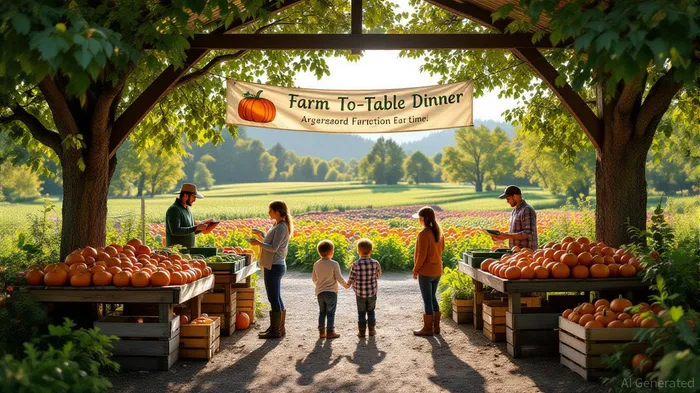
In 2025, Oregon's agricultural landscape is at a crossroads. The state's proposed farm stand rule changes, paused by Governor Tina Kotek amid fierce public backlash, have sparked a national conversation about the delicate balance between land use regulation, rural economic resilience, and agricultural equity. For investors and policymakers alike, the implications of this policy shift extend far beyond bureaucratic red tape—they represent a pivotal moment for small farms, rural communities, and the broader fight for equitable access to capital and resources.
The Economic Engine of Agritourism
Agritourism has long been a lifeline for small farms in Oregon, particularly in the Willamette Valley. According to a 2025 study by the Oregon Department of Agriculture, agritourism generates over $985 million annually in direct sales and supports nearly 11,000 jobs. For small farms, these activities—ranging from farm stands to educational tours and seasonal events—provide critical income diversification. In a state where 15% of family farms have disappeared since 1997, and corporate farms have grown by 33%, agritourism is not just a revenue stream; it is a survival strategy.
The proposed farm stand rules, however, threatened to disrupt this ecosystem. By introducing stricter permitting requirements for agritourism events (e.g., limiting concerts or farm-to-table dinners to 17 days per year) and complicating the sale of prepared foods, the rules risked creating a regulatory burden that disproportionately impacts small-scale operators. For instance, E.Z. Orchards in Salem, a family-run farm that relies on agritourism for 40% of its income, warned that the rules could force it to abandon seasonal revenue streams, effectively shrinking its operations to unsustainable levels.
Policy Uncertainty and Investment Risks
The pause in rulemaking has created a vacuum of clarity for investors. Rural economic development funds (REDFs), which have traditionally supported infrastructure projects like solar-powered cold storage and farm-to-market road improvements, now face uncertainty about how to allocate resources in a shifting regulatory environment. Similarly, agritech startups—many of which provide tools for compliance, event management, and supply chain optimization—are navigating a landscape where policy changes could render their solutions obsolete or irrelevant.
For example, FarmVest Analytics, a Portland-based agritech firm, recently pivoted its product suite to include compliance dashboards tailored to Oregon's proposed rules. Yet CEO Maria Lopez acknowledges the challenge: “Regulatory pauses like this one create a feedback loop of hesitation. Investors are reluctant to commit capital when they can't predict the rules of the game.” This hesitancy is compounded by the fact that small farms, which lack the financial buffers of larger operations, are more vulnerable to policy-driven disruptions.
Equity Gaps in Rural Investment
The paused rule changes also highlight systemic disparities in access to resources and funding. While the Oregon Agricultural Heritage Program (OAHP) has made strides in conserving working land—protecting 9 farms and 12,252 acres since its inception—it remains underfunded. The state legislature's recent $2 million allocation (far below the requested $17.3 million) underscores a broader challenge: rural investment often lags behind urban priorities.
For minority and first-generation farmers, these gaps are even more pronounced. A 2024 report by the Oregon Agricultural Trust (OAT) found that 80% of current farmers lack succession plans, and many minority-owned farms face additional barriers to accessing easement programs and technical assistance. The proposed farm stand rules, if implemented, could exacerbate these inequities by creating a regulatory maze that favors larger, well-resourced operations over small and diverse farms.
A Path Forward for Investors and Policymakers
The pause in rulemaking offers a critical opportunity to recalibrate. For investors, this means doubling down on sectors that support small farm resilience, such as agritech, sustainable infrastructure, and community-owned cooperatives. REDFs, for instance, have shown promise in mitigating regulatory risks by pooling resources for shared infrastructure—cold storage units, renewable energy systems, and logistics hubs—that benefit entire communities rather than individual farms.
Policymakers, meanwhile, must prioritize equity in future rulemaking. This includes expanding access to OAHP funding, streamlining permitting processes for agritourism, and ensuring that minority farmers are included in stakeholder discussions. The Oregon Department of Land Conservation and Development (DLCD) has already taken a step in this direction by committing to a more inclusive dialogue, but sustained action is needed to close the equity gaps that have long plagued rural America.
Conclusion
Oregon's paused farm stand rule changes are more than a regulatory hiccup—they are a microcosm of the broader challenges facing rural economies nationwide. For investors, the lesson is clear: supporting small farms requires not just capital, but a commitment to navigating the complex interplay of policy, equity, and market forces. As the state reengages with stakeholders, the global investment community will be watching closely. In a world where food security and rural resilience are increasingly intertwined, Oregon's decisions could set a precedent for how states balance regulation with the preservation of small-scale agriculture.







Comentarios
Aún no hay comentarios