
The Impact of Stablecoin Regulation on Digital Asset Markets
Regulatory Frameworks: A New Baseline for Stability
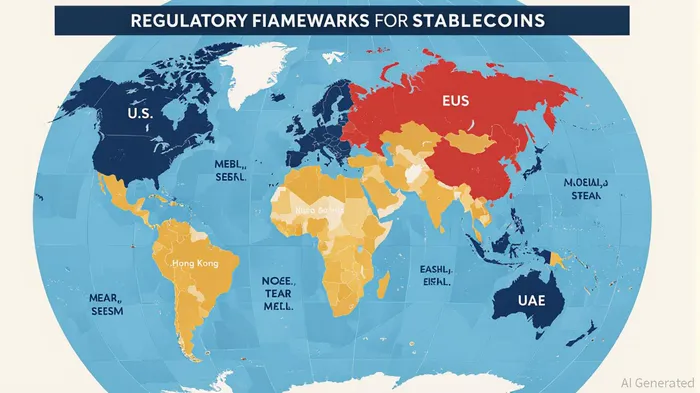
The GENIUS Act, enacted in the U.S., has set a global benchmark by mandating that stablecoin reserves be fully backed by high-quality liquid assets on a 1:1 basis. This move has not only quelled fears of insolvency but also elevated stablecoins to the status of "payment instruments", aligning them with traditional financial tools. Similarly, the EU's MiCA regulation has imposed stringent transparency requirements, pushing compliant stablecoins to the forefront of European markets. These frameworks are not just about risk mitigation-they're about creating a foundation for cross-border efficiency. As the IMF notes, stablecoins are now pivotal in streamlining global payments and reducing friction in capital flows.
However, the regulatory tide isn't uniform. While the U.S. restricts domestic offerings of foreign-issued stablecoins, jurisdictions like Hong Kong and the UAE are fast-tracking their own frameworks, creating a patchwork of compliance demands. For institutional investors, this means a dual challenge: adhering to local rules while leveraging cross-border opportunities.
Institutional Behavior: From Speculation to Strategic Allocation
The regulatory clarity of 2025 has transformed institutional participation in digital assets. No longer driven by retail hype, institutional investors now treat stablecoins as part of a macroeconomic toolkit. According to Chainalysis, these investors are increasingly allocating capital based on interest rate cycles, liquidity conditions, and geopolitical trends. For example, the rise of spot Bitcoin ETFs-enabled by stablecoin-backed infrastructure-has allowed institutions to hedge against inflation while maintaining liquidity.
Stablecoins themselves have evolved beyond mere trading pairs. They're now the backbone of on-chain settlements and tokenized asset ecosystems. Yet, this shift isn't without risks. Stablecoin issuers face pressure to balance reserve yields with regulatory compliance, particularly as interest rates fluctuate. For investors, this means scrutinizing the financial health of stablecoin providers and their exposure to counterparty risks-a critical factor in portfolio diversification.
Innovation Opportunities: Compliance as a Catalyst
The Basel Committee's recent reassessmentof prudential rules for crypto exposures, for instance, has eased banks' entry into digital asset markets. This has spurred growth in tokenized money market funds and commodities, offering investors new avenues for yield generation. In the U.S., the GENIUS Act's exclusion of stablecoins from securities classification has also opened the door for institutional-grade stablecoins to be used in treasury management and cross-border trade.
Yet, innovation requires agility. The EU's MiCA framework, while robust, still grapples with alignment to existing financial rules, creating friction for pan-European operations. Investors must stay ahead of these nuances, leveraging regulatory sandboxes in jurisdictions like Singapore or Dubai to test strategies before scaling.
Actionable Insights: Balancing Compliance and Growth
For investors seeking to thrive in this environment, three principles emerge:
Prioritize Compliance-Driven Liquidity: Allocate capital to stablecoins that meet the highest regulatory standards, such as those compliant with the GENIUS Act or MiCA. These assets are less prone to volatility and more likely to retain value during regulatory crackdowns.
Leverage Macro-Linked Strategies: Use stablecoins as a hedge against macroeconomic shifts. For example, pairing stablecoin-backed BitcoinBTC-- ETFs with interest rate-sensitive assets can create a diversified portfolio that thrives in both inflationary and deflationary cycles. According to ChainCatcher, this approach has proven effective in volatile markets.
Embrace Tokenization: Invest in platforms that tokenize real-world assets (RWAs) using stablecoin infrastructure. These innovations, supported by regulatory clarity, offer institutional-grade returns while mitigating the risks of pure crypto speculation.
Conclusion: A Regulated Future, A Strategic Present
The 2025 regulatory wave has done more than stabilize the stablecoin market-it's redefined the rules of engagement for institutional investors. While compliance demands are higher, so too are the opportunities for those who can navigate the new landscape. By treating stablecoins as both a compliance tool and an innovation catalyst, investors can build portfolios that are resilient, scalable, and aligned with the future of global finance.






Comentarios
Aún no hay comentarios