
The Impact of Ending Quarterly Earnings Reporting on Capital Allocation and Investor Behavior
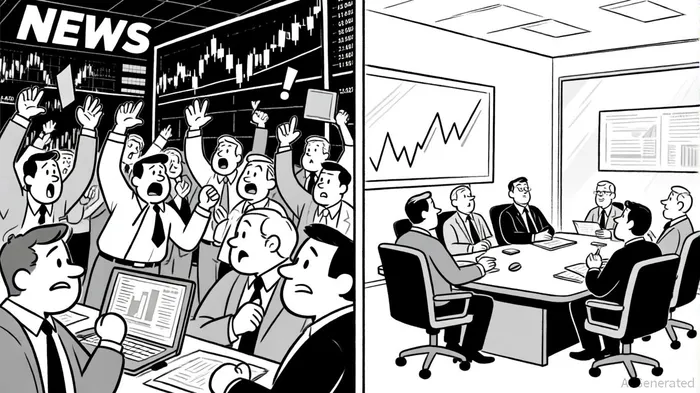
The quarterly earnings report has long been the heartbeat of Wall Street, a ritual that drives stock prices, shapes corporate strategy, and defines the rhythm of investor behavior. But what if that heartbeat were to slow? The debate over ending quarterly reporting has gained momentum, with proponents arguing it would free companies from the tyranny of short-termism and critics warning it could erode transparency. As we stand at this crossroads, it's time to re-examine how we measure corporate performance—and whether the metrics we rely on are still fit for purpose.
The Tyranny of the Quarterly Clock
Here's the deal: quarterly reporting has created a culture of myopia. Companies are incentivized to prioritize short-term results over long-term value creation, often at the expense of R&D, capital expenditures, and strategic investments. According to a 2024 study, the shift to quarterly reporting in the U.S. since 1970 has correlated with declining productivity, weaker sales growth, and reduced financial performance [2]. The pressure to meet expectations forces executives to cut costs, defer innovation, and even manipulate earnings forecasts—a practice that undermines trust and long-term competitiveness [4].
But let's not kid ourselves: quarterly reporting isn't just a corporate burden—it's a market driver. Investors use these reports to adjust portfolios, hedge risks, and capitalize on volatility. Data from accountinginsights.org shows that abnormal stock returns often spike around earnings announcements, particularly in high-volatility sectors [2].
The Case for a New Framework
Supporters of ending quarterly reporting argue that semi-annual disclosures would give companies breathing room to focus on long-term goals. As stated by , a nonprofit advocating for long-term corporate thinking, this shift could align U.S. practices with global peers like the UK and EU, where long-term planning is the norm [3]. Proponents also highlight reduced regulatory burdens and the potential for more strategic investments in AI, clean energy, and other transformative technologies [1].
However, the risks are real. Critics warn that less frequent reporting could deepen information asymmetry, fuel insider trading, and erode investor confidence [5]. Transparency isn't just a regulatory checkbox—it's the bedrock of trust in capital markets. Without quarterly data, investors might struggle to assess company performance in real time, driving up the cost of capital and creating blind spots for market accountability [5].
Rethinking Performance Metrics: Beyond Earnings
If quarterly reporting ends, we must replace it with smarter metrics. Enter the era of long-term value creation and . Academic research shows that companies prioritizing ESG factors—like reducing carbon footprints or improving labor practices—often see lower costs of capital and higher returns on invested capital (ROIC) [2]. For example, .
But ESG isn't a silver bullet. A dynamic Ohlson model analysis revealed that ESG policies can sometimes lower long-term market value due to substitution effects and higher discount rates [5]. This underscores the need for context-specific strategies. Similarly, are emerging as a game-changer. WayfairW--, for instance, used AI to refine its lost-sales metric, enabling more accurate demand forecasting and better inventory management [3]. These “smart KPIs” adapt to changing conditions, offering a more nuanced view of performance than static earnings numbers [3].
The Middle Ground: A Balanced Approach
The solution may lie in a middle ground. As proposed by FCLTGlobal, companies could retain quarterly reporting but eliminate earnings forecasts, shifting focus to long-term goals [1]. This approach would reduce the pressure to “beat the number” while maintaining transparency. Additionally, the modified retrospective approach—applying new accounting standards forward-looking without restating past reports—could ease the transition to alternative metrics [2].
Institutional investors, too, must adapt. While they rely on quarterly data for decision-making, they can leverage AI and alternative data (like digital marketing metrics) to fill gaps in real-time insights [1]. The key is to balance short-term accountability with long-term vision.
Conclusion: A New Era of Corporate Accountability
Ending quarterly reporting isn't a binary choice—it's a strategic rethinking of how we measure success. While the risks of reduced transparency are valid, the potential rewards—greater innovation, stronger ESG integration, and smarter KPIs—are too significant to ignore. The challenge lies in designing a framework that rewards long-term value creation without sacrificing investor trust.
As we move forward, companies and investors must embrace a new playbook: one that values sustainability over short-term gains, adaptability over rigidity, and context over convention. The future of capital markets depends on it.







Comentarios
Aún no hay comentarios