
The Impact of Municipal Infrastructure Grants on Real Estate and Tech Sector Development in Webster, NY
Infrastructure as a Catalyst for Real Estate Value
The $9.8 million FAST NY grant awarded in August 2025 has been a cornerstone of Webster's revitalization strategy. This funding targeted infrastructure upgrades at the XeroxXRX-- Wilson Campus and surrounding areas, including road construction, sewer system enhancements, and electrical master planning. The transformation of this 300-acre brownfield site into a one-million-square-foot industrial hub is already yielding measurable results. Residential property values in Webster rose by 10.1% year-over-year in November 2025, outpacing Monroe County's 2.1% growth in median home prices for the same period. Commercial real estate is also benefiting: the demolition of the 600 Ridge Road site-a former brownfield-has cleared the way for mixed-use development, further solidifying Webster's appeal to investors.
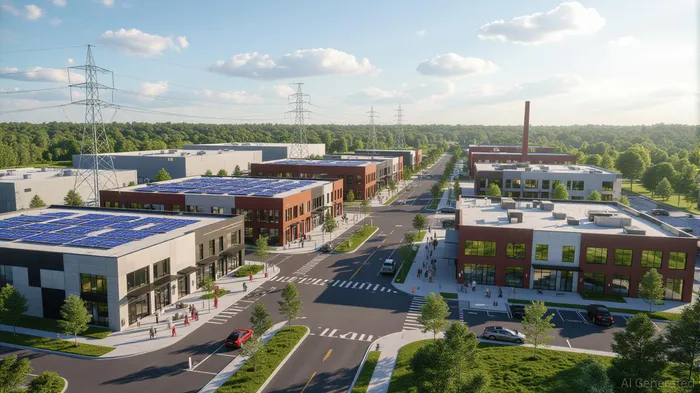 Public infrastructure projects are not only improving physical assets but also enhancing the town's connectivity. For instance, the $20 million COMIDA site upgrade at 1900 Tebor Road is modernizing electrical infrastructure to attract agribusiness and industrial machinery manufacturers. These improvements align with broader regional trends; Monroe County was named one of the hottest real estate markets in the U.S. in March 2025, driven by low inventory and strong buyer demand. While direct historical comparisons to regional industrial/commercial trends remain limited due to data gaps, Webster's targeted investments suggest a trajectory of outperformance.
Tech Sector Growth and Job Creation
The FAST NY program has also positioned Webster as a hub for advanced manufacturing and high-tech industries. The $9.8 million grant specifically allocated funds for projects supporting semiconductor supply chains, food and beverage manufacturing, and advanced industrial logistics. This focus has already borne fruit: the $650 million fairlife® dairy production facility, supported by the same initiative, is projected to create 250 new jobs.
Webster's alignment with national tech sector trends further strengthens its investment case. In 2025, the U.S. tech job market recorded 7 million postings, a 33% month-over-month increase, with tech unemployment at a historic low of 2.9%. The village's infrastructure upgrades-such as enhanced electrical systems and improved road networks-make it an attractive location for companies seeking to expand in high-growth industries like AI-driven manufacturing and clean energy.
Strategic Timing for Investors
The timing of infrastructure completions in Webster presents a unique window for investors. Most major projects, including the Xerox campus upgrades and 600 Ridge Road redevelopment, are slated for completion by 2026. This timeline suggests that property demand will likely surge in the near term, driven by businesses seeking to establish a presence in a newly optimized industrial ecosystem. For example, the Webster Economic Development Alliance has already reported interest from firms in the semiconductor and logistics sectors.
Moreover, Webster's proximity to Rochester and its access to major transportation corridors amplify its long-term potential. The village's focus on creating "walkable, sustainable communities" through mixed-use developments aligns with broader demographic shifts toward urbanized, amenity-rich environments-a trend that could further drive commercial real estate demand.
Conclusion
Webster, NY, exemplifies how municipal infrastructure grants can serve as a linchpin for economic revitalization. By leveraging over $30 million in public funding to upgrade brownfield sites, enhance connectivity, and attract high-tech industries, the village has created a self-reinforcing cycle of real estate appreciation and job growth. For investors, the combination of immediate infrastructure completions, a booming tech sector, and a strategic location near Rochester makes Webster a prime candidate for long-term gains in industrial and commercial land. As the town's projects reach full implementation, the window to secure assets before demand peaks is narrowing-making now a critical moment for strategic entry.





Comentarios
Aún no hay comentarios