
The Impact of Marijuana Rescheduling on Cannabis Stocks: Strategic Investment Opportunities Amid Policy Shifts
The rescheduling of marijuana from Schedule I to Schedule III under the Controlled Substances Act (CSA) marks a seismic shift in U.S. federal policy, with profound implications for the cannabis industry. As of December 18, 2025, President Trump's executive order directed the Department of Justice to expedite this reclassification, a move that could redefine the legal, financial, and operational landscape for cannabis businesses. For investors, this policy pivot presents both opportunities and challenges, demanding a nuanced understanding of how regulatory changes intersect with market dynamics.
Policy Shifts and Industry Implications
The removal of marijuana's Schedule I classification, which has persisted since 1970, acknowledges its medical utility while reducing perceived risks of abuse. This reclassification eliminates the burdensome Section 280E tax rule, which previously prohibited cannabis businesses from deducting operational expenses for federal tax purposes. According to a report by HHS, credible scientific evidence supports marijuana's efficacy in treating conditions such as chronic pain, anorexia, and chemotherapy-induced nausea. By removing this tax barrier, companies could see effective tax rates drop from over 70% to more conventional levels, significantly improving cash flow and profitability.
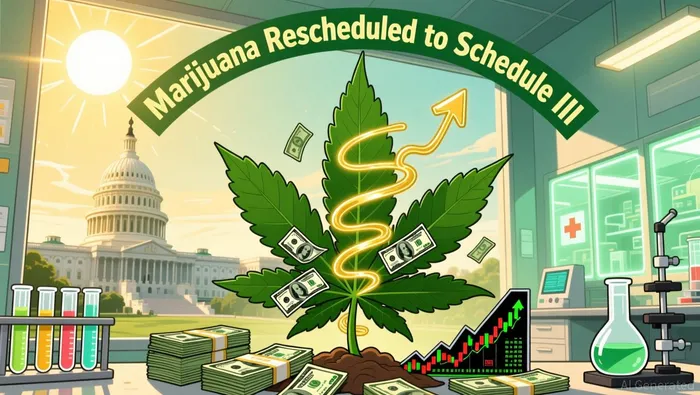 Additionally, rescheduling is expected to enhance access to financial services. Financial institutions, previously hesitant to engage with cannabis businesses due to federal restrictions, may now view the industry as less risky. This could unlock capital for expansion, research, and mergers and acquisitions (M&A). However, challenges remain: federal restrictions on interstate commerce and firearm ownership for cannabis users persist, and banking normalization will require further legislative action.
Strategic Investment Opportunities
The rescheduling has already triggered a surge in cannabis stock valuations, with companies like Tilray BrandsTLRY-- (TLRY) and Trulieve Cannabis rising by over 27% and 14%, respectively, in December 2025. According to market analysis, investors are now scrutinizing firms with strong financial health, R&D pipelines, and strategic partnerships to identify those best positioned to capitalize on the new regulatory environment.
Tilray Brands: A Medical Cannabis Leader
Tilray Brands has emerged as a standout, leveraging its global experience in regulated medical cannabis markets. The company recently formed Tilray Medical USA, Inc. to accelerate its U.S. expansion, offering over 200 medical cannabis products and serving more than 500,000 registered patients. This strategic move underscores its commitment to market growth. Its strategic partnerships, such as the collaboration with Italian pharmaceutical firm Molteni to broaden access to EU-GMP certified cannabis extracts, highlight its commitment to evidence-based research and healthcare integration. Tilray's CEO emphasized that the rescheduling aligns with scientific data, creating a foundation for clinical development and regulatory clarity.
Aurora Cannabis: Financial Strength and R&D Innovation
Aurora Cannabis reported a record net revenue of $88.2 million in Q3 2025, driven by a 37% year-over-year increase in its global medical cannabis business. The company's financial health is further bolstered by a debt-free cannabis business and $180 million in cash reserves. Aurora's R&D initiatives, including the launch of a proprietary high-THC cultivar (Black Jelly) in Poland and expanded licenses in Germany, highlight its focus on innovation and tailored medical solutions. These efforts position AuroraACB-- to capitalize on growing demand for precision cannabis therapies.
Village Farms International: Strategic Expansion and Compliance
Village Farms International, with a market capitalization of $470.16M as of December 2025, has prioritized disciplined global expansion. The appointment of Brian Stevenson as Global Chief Strategy Officer reflects its commitment to long-term value creation in regulated markets. While not as R&D-focused as TilrayTLRY-- or Aurora, Village Farms' strategic partnerships and operational efficiency make it a resilient player in a sector still navigating compliance complexities.
Challenges and Risks
Despite the optimism, investors must remain cautious. The rescheduling does not legalize recreational use or resolve federal banking restrictions, which could limit the sector's full potential. Additionally, the volatility observed in December 2025-marked by sharp selloffs-highlights the sector's sensitivity to regulatory and market sentiment shifts. Companies must also navigate heightened compliance demands, including pharma-grade standards and inventory controls. According to financial analysts, the path to full normalization remains uncertain.
Conclusion
The rescheduling of marijuana to Schedule III represents a transformative milestone, offering cannabis companies a pathway to financial normalization and expanded research opportunities. Firms like Tilray, Aurora, and Village Farms, with their strategic advantages in R&D, financial health, and regulatory compliance, are well-positioned to thrive in this evolving landscape. However, investors must balance the potential with ongoing challenges, ensuring their portfolios align with both regulatory progress and market realities.





Comentarios
Aún no hay comentarios