
The Impact of Government Shutdowns on the U.S. Aviation Industry and Investment Opportunities in Airline Recovery Plays
Government shutdowns have long served as a stress test for the U.S. aviation industry, exposing vulnerabilities in staffing, infrastructure, and fiscal preparedness. The 2019 shutdown—lasting 35 days—cost airlines an estimated $3 billion in economic activity, while the 2025 shutdown, which began on October 1, has already strained air traffic control systems and delayed critical modernization projects, according to an AP News report. For investors, these disruptions highlight both risks and opportunities, particularly in sectors poised to benefit from recovery, policy reforms, and infrastructure upgrades.
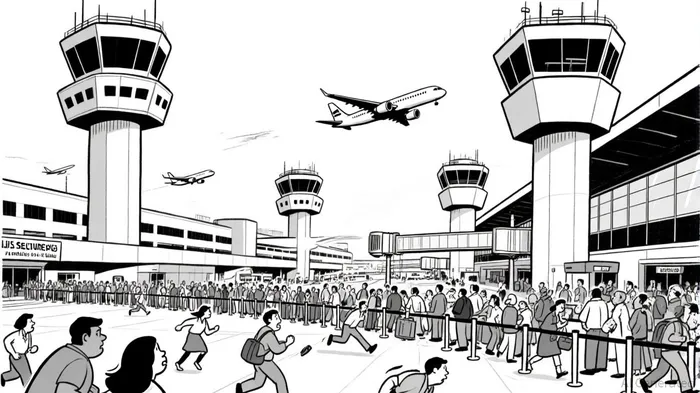
Historical Impacts and Systemic Vulnerabilities
The 2019 shutdown revealed a fragile aviation ecosystem. Air traffic controllers worked extended hours, TSA screeners faced absenteeism, and terminals like Miami International Airport temporarily closed due to staffing shortages, as reported by AP News. The Federal Aviation Administration (FAA) reported a pre-existing shortage of 3,000 air traffic controllers, a gap that has only widened during the 2025 shutdown, according to AviationSource. Meanwhile, the National Transportation Safety Board (NTSB) delayed accident investigations, and airlines absorbed contingency costs as flight cancellations and delays surged, as detailed by Simple Flying.
Financial losses during shutdowns are staggering. The aviation sector now faces weekly losses of approximately $1 billion, with ancillary industries like hotels and supply chains suffering collateral damage, a Medium analysis found. Delta Air LinesDAL-- (DAL) and United AirlinesUAL-- (UAL) have reported 5-10% increases in ground holds during the 2025 crisis, echoing the 2019 experience where DeltaDAL-- CEO Ed Bastian estimated a $25 million monthly revenue loss, CNBC reported.
Investment Opportunities in Recovery Plays
The pain points created by shutdowns have also illuminated investment opportunities in three key areas:
FAA Modernization Contractors
The FAA's $12.5 billion modernization initiative, paused during the 2025 shutdown, aims to replace aging radar systems with satellite-based technology. Contractors like Howmet Aerospace (HWM) and GE Vernova (GEV) stand to benefit as projects resume, according to AOPA. The recently introduced Aviation Funding Stability Act https://www.aopa.org/news-and-media/all-news/2025/september/25/bill-introduced-to-shield-faa-from-government-shutdowns seeks to shield the FAA from future shutdowns by allowing access to the Airport and Airway Trust Fund for up to 30 days. This policy shift could stabilize demand for infrastructure firms.TSA Technology Providers
Staffing shortages at the TSA have forced airlines to shoulder additional costs for managing security bottlenecks. Companies offering automated screening solutions, such as biometric scanners or AI-driven threat detection, are likely to see increased demand. The Global X U.S. Infrastructure Development ETF (PAVE), which returned 33.26% in 2019 despite the shutdown, includes firms aligned with TSA modernization efforts, as shown by PAVE performance.Resilient Airlines and ETFs
Major carriers like Delta, United, and American AirlinesAAL-- have demonstrated operational resilience. During the 2019 recovery period, Delta reported a 14% earnings increase in Q3 2025, driven by premium revenue growth and corporate travel demand, according to Delta's Q3 2025 earnings call. United outperformed Delta in stock returns, gaining 44% over 12 months compared to Delta's 9%, data from AlphaSpread show. For diversified exposure, the U.S. Global Jets ETF (JETS) and Themes Airlines ETF (AIRL) offer access to airlines and jet-related stocks, while the iShares U.S. Aerospace & Defense ETF (ITA) capitalizes on defense contractor rebounds post-shutdown, as noted in a Nasdaq article.
Risk Assessment and Sector Resilience
While the aviation sector is vulnerable to short-term disruptions, its long-term resilience hinges on policy reforms and infrastructure investments. The 2025 shutdown has accelerated calls for bipartisan action, with advocacy groups urging Congress to fund FAA and TSA operations during shutdowns, a NATCA statement said. Investors should monitor the Aviation Funding Stability Act and similar measures, which could mitigate future risks.
However, risks remain. A prolonged shutdown could erode workforce morale, delay safety certifications, and deepen financial losses. For example, the 2019 shutdown caused a 1.6% drop in Delta's stock price after revenue warnings, Fortune reported. Diversification into ETFs like PAVE or ITA may offer a buffer against airline-specific volatility.
Conclusion
The U.S. aviation industry's recovery from government shutdowns depends on a combination of fiscal discipline, technological upgrades, and policy innovation. For investors, the path forward lies in supporting companies and funds that address systemic weaknesses—whether through modernizing air traffic control, enhancing TSA efficiency, or backing airlines with strong operational adaptability. As the sector navigates the 2025 crisis, strategic investments in infrastructure and policy-driven recovery plays will be critical to restoring stability and profitability.







Comentarios
Aún no hay comentarios