
The Impact of U.S. Government Shutdown Risks on Treasury Yields and Investment Strategy
The U.S. government shutdown that began on October 1, 2025, has reignited debates about fiscal policy and its ripple effects on financial markets. Triggered by partisan gridlock over healthcare subsidies and executive authority, the shutdown has furloughed 750,000 federal employees and disrupted non-essential services, yet its economic impact remains muted compared to historical precedents, according to a Morgan Stanley analysis. For investors, the shutdown underscores the need for strategic asset reallocation amid fiscal uncertainty, particularly as Treasury yields and sector-specific risks evolve in response to political volatility.
Treasury Yields: A Flight to Safety Amid Political Uncertainty
Treasury yields have historically exhibited mixed reactions to government shutdowns, but the 2025 event has reinforced their role as a safe-haven asset. On the first full week of the shutdown, the 10-year Treasury yield fell 4 basis points to 4.106%, while the 30-year bond yield dropped 2 basis points to 4.713%. This decline reflects investor flight to liquidity, a pattern observed during prior shutdowns such as 2013 and 2018–2019, according to YCharts.
The Federal Reserve's reliance on timely economic data-such as the October 3 jobs report-adds another layer of complexity. Delays in critical metrics could distort monetary policy decisions, potentially amplifying yield volatility if inflation fears resurface, according to Forbes. However, the government's commitment to honoring bondholder payments ensures Treasuries retain their allure, even during prolonged shutdowns, as noted by Morgan StanleyMS--.
Strategic Asset Reallocation: Balancing Risk and Resilience
While Treasury bonds offer short-term stability, a diversified approach is critical for navigating the broader implications of fiscal uncertainty. Historical data suggests that markets often recover-and even outperform-after shutdowns, with the S&P 500 rising 55% of the time during such periods, according to YCharts. However, sector-specific risks demand careful consideration:
Defensive Equities and Utilities: Defensive sectors like healthcare and utilities have historically outperformed during shutdowns. For instance, the S&P 500's healthcare index surged 0.34% on the first day of the 2025 shutdown, reflecting its status as a safe-haven asset, per YCharts. Investors may consider ETFs such as the Vanguard Utilities ETF (VPU) or the iShares MSCI USA Minimum Volatility Factor ETF (USMV) to hedge against volatility, reported by TheStreet.
Small-Cap Equities: Despite heightened sensitivity to domestic economic conditions, high-quality small-cap firms with adaptable business models can present long-term value opportunities. These companies often act as bellwethers for economic recovery, particularly in sectors like technology and regional manufacturing, as noted by Morgan Stanley.
Gold and Treasury Bonds: Gold, a traditional hedge against political instability, has gained traction as shutdowns prolong. The SPDR Gold MiniShares ETF (GLDM) and intermediate-term Treasury bonds like the iShares 3-7 Year Treasury Bond ETF (IEI) offer complementary risk mitigation, according to TheStreet.
Avoiding Vulnerable Sectors: Sectors reliant on government contracts-such as aerospace and defense-face revenue disruptions. The iShares U.S. Aerospace & Defense ETF (ITA), which includes firms like Boeing and Lockheed Martin, may underperform due to payment delays and operational halts, per TheStreet.
The Road Ahead: Preparing for Prolonged Uncertainty
While the 2025 shutdown's immediate economic impact is expected to be minimal, prolonged fiscal gridlock could introduce lasting risks. For example, the administration's hinted workforce reductions and policy shifts may alter long-term credit quality perceptions, potentially pushing Treasury yields higher if confidence erodes, as Morgan Stanley warns. Investors should monitor negotiations closely, as extended shutdowns could amplify market volatility and delay critical economic data releases, per Forbes.
Historically, markets have demonstrated resilience, with the S&P 500 rising 86% of the time within a year of shutdown resolution, according to YCharts. A disciplined, long-term approach-prioritizing diversification, defensive assets, and sector-specific agility-remains key to navigating this environment.
Conclusion
The 2025 government shutdown serves as a reminder of the importance of strategic asset reallocation in times of fiscal uncertainty. While Treasury yields offer temporary refuge, a balanced portfolio incorporating defensive equities, gold, and high-quality small-cap stocks can position investors to weather short-term turbulence and capitalize on post-shutdown recoveries. As political dynamics evolve, staying informed and adaptable will be paramount for preserving capital and capturing opportunities in an unpredictable landscape.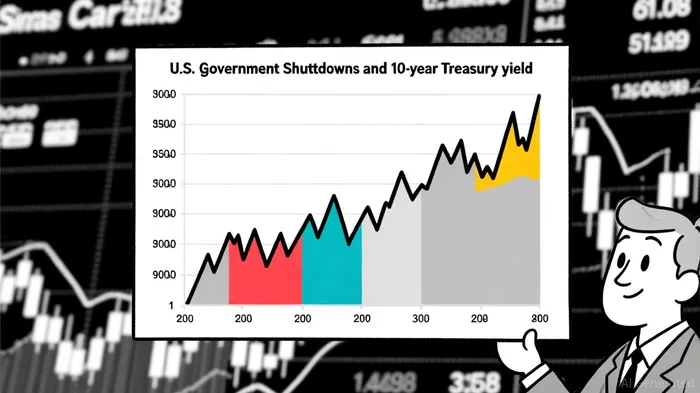





Comentarios
Aún no hay comentarios