
Impact of U.S. Government Shutdown on Crypto ETF Approval Timelines and Market Sentiment
The U.S. government shutdowns of 2025 have created a regulatory vacuum that is directly impacting the approval timelines for cryptocurrency ETFs, compounding market uncertainty and reshaping investor strategies. As the Securities and Exchange Commission (SEC) operates with a skeleton crew, non-essential functions-including the review of S-1 filings for spot crypto ETFs-have been paused, according to a Cryptonews report. This operational slowdown has delayed critical decisions on applications for altcoins like SolanaSOL-- (SOL) and LitecoinLTC-- (LTC), stalling institutional inflows and amplifying volatility in the crypto market, as noted in a CoinJournal analysis.
Historical Precedents and Market Sentiment
The 2018-2019 government shutdown, the longest in U.S. history, offers a cautionary precedent. During this 35-day period, the SEC's ability to process financial product applications was severely curtailed, indirectly affecting crypto ETF regulatory progress, as documented in a timeline by Al Jazeera. While historical data does not explicitly quantify the impact on crypto ETFs, the pattern of delayed approvals during shutdowns suggests a consistent trend: regulatory gridlock disrupts market confidence. In 2025, this dynamic has intensified, with BitcoinBTC-- and EthereumETH-- experiencing heightened price swings as investors grapple with uncertainty over ETF approvals and staking regulations, as reported by Cryptonews.
Strategic Asset Allocation in Regulatory Limbo
Investors are recalibrating their strategies to mitigate risks posed by regulatory delays, shifting capital toward stablecoins and traditional assets like U.S. Treasuries to hedge against crypto market volatility, according to a OneSafe analysis. For example, Canary Capital's pending Litecoin ETF application has prompted a reallocation of funds into less speculative instruments, as market participants await clarity on October 2 deadlines, CoinJournal reported. This trend underscores a broader shift toward risk-averse allocations, with portfolio management systems now prioritizing consolidated risk calculations across crypto and traditional venues, as detailed in Talos insights.
The SEC's evolving enforcement approach further complicates strategic decisions. While the agency has shown a preference for streamlined S-1 filings over 19b-4 forms-a potential catalyst for faster approvals-prolonged shutdowns could negate these gains, according to OneSafe analysis. Analysts warn that delayed economic data releases, a common consequence of shutdowns, exacerbate uncertainty, forcing investors to rely on alternative metrics for decision-making, CoinJournal notes.
Broader Implications and Investor Outlook
The ripple effects of regulatory delays extend beyond crypto ETFs. A prolonged shutdown risks a U.S. credit rating downgrade, increasing borrowing costs and amplifying market fragility, as Talos previously highlighted. International competitors, particularly in Asia and the EU, may capitalize on U.S. inaction, accelerating their own crypto regulatory frameworks and siphoning institutional interest, a trend observed by Cryptonews.
For investors, the path forward hinges on adaptability. Diversification, hedging, and leveraging technology to monitor regulatory updates are now table stakes. As one industry leader noted, "The demand for crypto ETFs remains robust, but approvals will only resume once political gridlock subsides," CoinJournal said. Until then, strategic asset allocation must balance patience with agility, prioritizing liquidity and resilience in an environment where regulatory timelines are as unpredictable as market prices.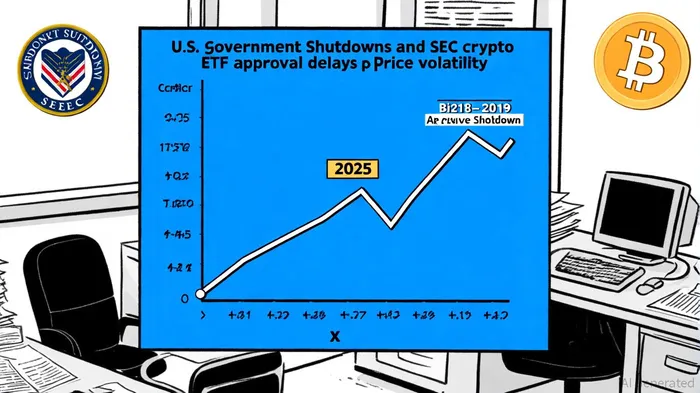






Comentarios
Aún no hay comentarios