
The Impact of Fed Rate Cut Signals on Equity Market Momentum
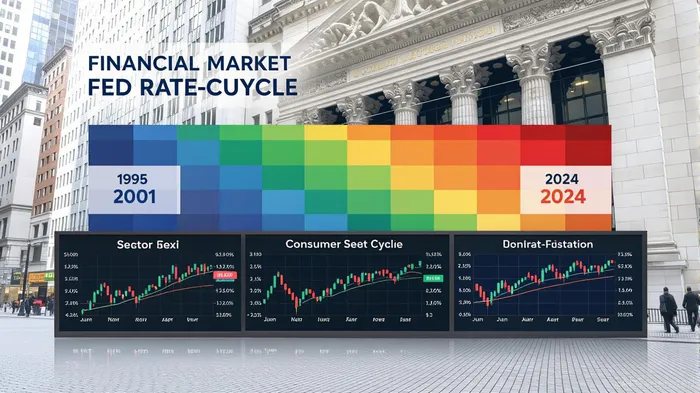
The Federal Reserve's monetary policy decisions have long served as a barometer for equity market momentum, with rate cuts historically acting as catalysts for growth-oriented sectors and broader market participation. As the Fed resumes easing in 2025 after a nine-month pause, investors are recalibrating portfolios to capitalize on the shifting dynamics between high-growth equities and cyclical breadth.
Historical Context: Rate Cuts and Market Returns
According to a report by Bloomberg, U.S. equities have historically delivered robust returns in the 12 months following the initiation of a Fed rate-cut cycle. The S&P 500 Index has averaged a 14.1% return since 1980, with stronger performance in expansionary environments compared to recessionary ones[3]. For instance, in non-recessionary cycles, the index returned an average of 20.6% annually after the first rate cut[2]. This trend underscores the Fed's role in normalizing monetary policy, as seen in 1995 and 2024, where easing cycles coincided with over 21% annual returns for the S&P 500[4]. However, exceptions exist: during the 2001 and 2007 rate-cut cycles, the index declined amid broader economic downturns[4].
Sectoral Shifts: Growth vs. Value
The impact of rate cuts on specific sectors has been uneven. Technology has historically outperformed, particularly during secular booms. In 1998, the sector surged alongside the dot-com revolution[1], and in 2024, AI-driven innovation fueled its dominance[1]. Similarly, Consumer Cyclical and Financials have emerged as beneficiaries of lower borrowing costs, reflecting early-cycle positioning as the economy strengthens[1]. Conversely, sectors like Health Care and Consumer Staples have lagged, often due to regulatory headwinds and limited sensitivity to interest rate changes[1].
Recent data from Reuters highlights this divergence: the S&P 500 Growth Index has risen over 17% in 2025, while homebuilders and banks face mixed outcomes. Banks, for example, grapple with compressed profit margins from lower rates, despite modest gains following dovish signals[1].
Market Breadth: Small-Cap Outperformance
A critical indicator of market health during rate-cut cycles is the shift in breadth from large-cap to small-cap stocks. Historical analysis reveals that small-cap equities often outperform in the months following the first rate cut, particularly in positive economic environments[3]. This trend aligns with the 2024 cycle, where small-cap rallies have been driven by cheaper financing and increased capital availability[1].
Strategic Positioning for Investors
Given these patterns, investors should prioritize strategic positioning in growth-oriented equities while monitoring market breadth. Sectors like Technology and Consumer Cyclical remain compelling, given their alignment with secular trends (e.g., AI adoption) and cyclical tailwinds[1]. However, diversification into quality and low-volatility factors—historically resilient during rate cuts—can mitigate risks[2].
For small-cap exposure, sectors with high capital efficiency, such as industrials and regional banks, may offer asymmetric upside. Conversely, defensive sectors like Utilities and Consumer Staples should be approached cautiously, as their underperformance during rate cuts has been consistent[1].
Conclusion
The Fed's rate-cut signals in 2025 are reshaping equity market dynamics, with growth-oriented sectors and small-cap stocks poised to benefit. While historical data provides a roadmap, investors must remain agile, balancing sector rotation with macroeconomic signals. As the normalization of monetary policy unfolds, the interplay between rate cuts and market breadth will likely define the next phase of equity performance.







Comentarios
Aún no hay comentarios