
Impact of FDA Food Recalls on Consumer Goods Sector Stocks: Assessing Short-Term Volatility and Long-Term Brand Resilience in the Wake of High-Profile Product Safety Events
Short-Term Volatility: Market Reactions to Product Safety Crises
When the FDA announced the Ambriola recall in November 2025, the company's stock faced immediate downward pressure. The recall of its Ambriola, Locatelli, Boar's Head, and Member's Mark cheese products due to Listeria contamination-a pathogen linked to severe health risks for vulnerable populations-triggered operational disruptions, including suspended production and distribution according to the FDA. While specific stock price data is not disclosed in available reports, historical patterns suggest such recalls often lead to sharp declines in investor confidence. For instance, a 2024 survey noted , amplifying the reputational stakes for companies in the sector.
Great Lakes Cheese Co. faced a similar crisis in December 2025, when due to potential metal contamination. The FDA upgraded this to a Class II recall, signaling moderate health risks. Such classifications typically influence investor sentiment, as retailers and consumers reassess product trust. The lack of concrete stock price data for Great Lakes underscores the need for investors to monitor broader sector trends, such as the 2024 decline in consumer confidence, . 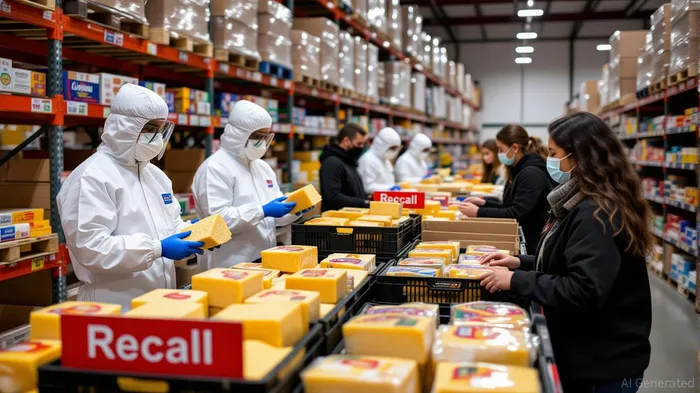
Long-Term Brand Resilience: Rebuilding Trust in a Risk-Averse Market
While short-term volatility is inevitable, long-term brand recovery hinges on transparency, corrective actions, and consumer perception. Ambriola's swift suspension of production and commitment to "thorough sanitation reviews" align with best practices for mitigating reputational damage. However, the company's reliance on high-profile brands like Boar's Head and Member's Mark-distributed through major retailers like Walmart and Kroger-means its recovery will depend on restoring retailer partnerships and consumer trust.
Great Lakes Cheese Co., meanwhile, faces a dual challenge: addressing the technical cause of metal contamination while reengaging consumers wary of repeated safety lapses. The absence of reported illnesses in either recall provides a slight advantage, . Historical data suggests that brands with strong equity, such as Boar's Head, may recover faster than private-label or lesser-known brands according to Boar's Head.
Strategic Implications for Investors
For investors, the 2025 cheese recalls underscore two key principles:
1. Supply Chain Risk Mitigation: Companies with diversified supplier networks and robust quality control systems are better positioned to weather recalls. Ambriola's reliance on a single production line for its affected products highlights the risks of over-concentration.
2. Brand Equity as a Buffer: Established brands with loyal customer bases, such as Boar's Head, may experience less severe long-term damage than generic or private-label products. This aligns with 2024 consumer surveys .
Conclusion
The 2025 FDA cheese recalls serve as a microcosm of the broader challenges facing the consumer goods sector. While short-term stock volatility is a near-universal response to such crises, long-term resilience depends on proactive transparency, operational adjustments, and the strength of brand equity. Investors should prioritize companies that demonstrate agility in crisis management and a commitment to supply chain transparency, as these traits are increasingly critical in an era of heightened consumer scrutiny.







Comentarios
Aún no hay comentarios